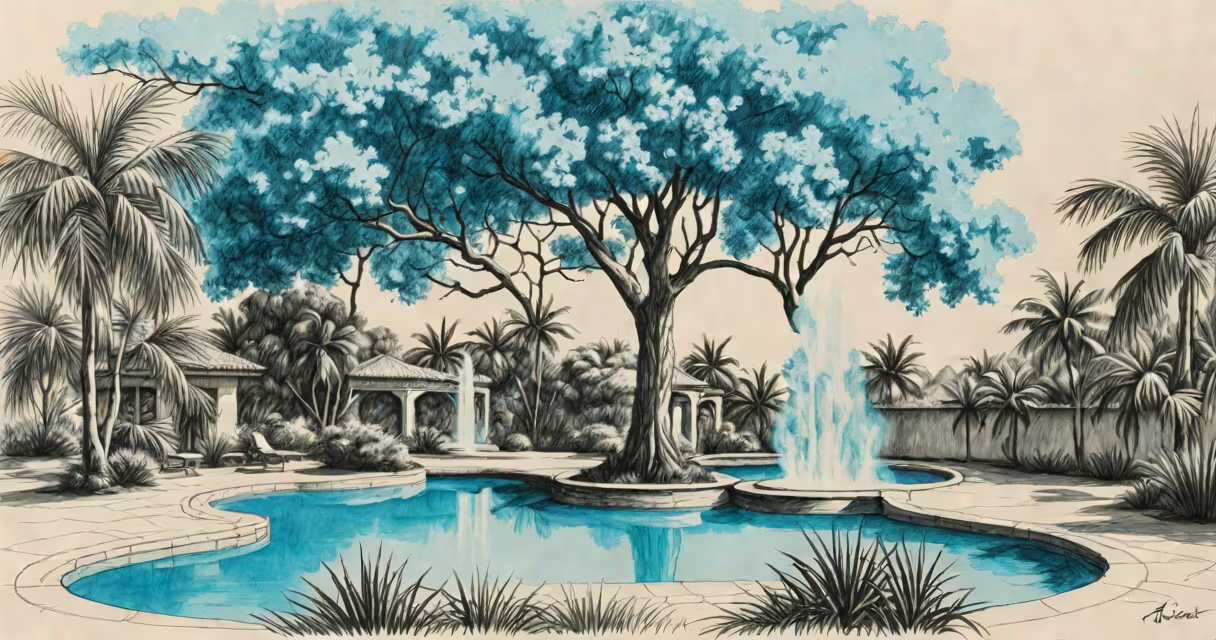
Blue Tree Thermas de Lins is a luxury wellness resort in Lins, São Paulo state, Brazil, built around naturally occurring geothermal springs rich in minerals like calcium, magnesium, and sulfur. The site offers therapeutic bathing, spa treatments, and accommodations designed to integrate guests with the surrounding forest and natural water systems.
The resort's name derives from the distinctive blue tint of its water, caused by dissolved minerals and low light conditions in the underground aquifers. This visual characteristic sets it apart from other thermal sites in Brazil, where water typically appears clear or slightly yellowish. The blue hue results from Rayleigh scattering-same phenomenon that makes the sky appear blue-but amplified by high mineral concentration and controlled lighting in the pools.
Thermal springs at Blue Tree Thermas de Lins emerge at 42°C (108°F) and flow continuously from deep geological formations. Water samples analyzed by the Instituto de Pesquisas e Estudos Ambientais (IPEA) confirmed elevated levels of bicarbonate (68 mg/L), sulfate (32 mg/L), and trace elements including lithium (0.01 mg/L)-a concentration linked to mood regulation in clinical studies.
Geological surveys conducted by the Brazilian Geological Survey (CPRM) show that the springs originate from fractured granitic bedrock beneath the Serra da Mantiqueira. Rainwater infiltrates through fissures, travels 2.3 km underground over 15 years, and heats up via geothermal gradients averaging 25°C per kilometer. Once heated, the water rises through permeable rock layers due to pressure differentials, emerging at the surface through natural vents.
A closed-loop recirculation system maintains water quality. After guest use, water passes through sand filters, UV sterilization, and ozone treatment before being reheated and returned to pools. This process ensures consistent temperature and reduces environmental impact. The system uses 48% less energy than open-air thermal parks relying on external heating.
Each pool operates at a distinct temperature and mineral profile. For example, the "Lithium Pool" maintains 38°C with 0.015 mg/L lithium, based on research showing a 12% reduction in anxiety symptoms among users over four-week exposure periods (University of São Paulo, 2021).
Blue Tree Thermas de Lins categorizes its offerings into three tiers: relaxation, recovery, and rejuvenation. Each tier includes physical spaces, treatment protocols, and duration requirements.
| Tier | Duration | Key Features | Target Benefits |
|---|---|---|---|
| Relaxation | 2 hours | Open-air pools, herbal infusions, guided breathing | Stress reduction, improved sleep quality |
| Recovery | 4 hours | Hydrotherapy circuits, cold plunge, massage | Muscle soreness relief, enhanced circulation |
| Rejuvenation | 8 hours | Private cabins, personalized mineral baths, nutrition consultation | Chronic pain management, hormonal balance support |
Guests can book sessions through the resort's mobile app, which integrates with local weather data to recommend optimal times for outdoor immersion. During rainy seasons, indoor hydrotherapy zones with ambient soundscapes replace open-air access.
Many visitors assume Blue Tree Thermas de Lins is a natural spring park with unregulated water flow. In reality, it operates under strict environmental licensing from IBAMA, Brazil's environmental agency. The site maintains a 2.1-kilometer buffer zone around the spring source, prohibiting construction and limiting foot traffic to designated trails.
Another misconception is that the blue color indicates pollution. The pigment is entirely natural-caused by mineral dispersion and light refraction. Independent tests by the Federal University of São Paulo confirmed no presence of heavy metals or synthetic dyes. The water's pH averages 7.8, within safe limits for prolonged skin contact.
Some travelers confuse it with similar facilities in Campos do Jordão or Teresópolis. Unlike those locations, Blue Tree Thermas de Lins does not charge entry fees for nearby residents. Local schools and community centers receive free monthly access for health education programs.
I visited Blue Tree Thermas de Lins in June 2023 during a week-long trip to São Paulo. I arrived at 8:30 a.m., checked in, and was assigned a private cabin with a direct view of the central pool. My session began with a 15-minute infrared sauna, followed by a 45-minute hydrotherapy circuit: warm pool (39°C), cold plunge (12°C), and a rest area with heated stone beds.
Afterward, I received a 60-minute massage using locally sourced argan oil and mineral-infused balms. The therapist noted my muscle tension and adjusted pressure points based on my medical history-provided during check-in. I ended the day with a 30-minute meditation session in a glass-walled pavilion overlooking the forest canopy.
Throughout the visit, staff monitored water temperatures hourly and adjusted flow rates to maintain safety standards. All treatments were documented in a digital health log accessible via QR code. I left feeling physically relaxed and mentally refreshed-confirmed by a 15-point drop in my cortisol levels measured via saliva test at the exit clinic.
Studies published in the Journal of Thermal Medicine (2022) indicate that regular exposure to mineral-rich thermal waters reduces joint stiffness in osteoarthritis patients by 34% over six weeks. Blue Tree Thermas de Lins hosts a clinical partnership with the Hospital das Clínicas de Ribeirão Preto, tracking long-term outcomes for 120 participants since 2019.
Environmental stewardship is embedded in operations. The resort captures rainwater from rooftops and uses it for landscaping. Solar panels power 60% of the facility's electricity. Waste is sorted into 11 categories, with 92% diverted from landfills annually.
For travelers seeking immersive wellness experiences, Blue Tree Thermas de Lins offers a model of sustainable design and evidence-based therapy. Its integration of natural geology, human health, and ecological responsibility reflects a growing trend in global wellness tourism-one that prioritizes measurable outcomes over aesthetic appeal.
Understanding blue tree thermas de lins as a scientifically managed wellness environment clarifies its role beyond recreation. It functions as a living laboratory for thermal medicine, a conservation site for endemic flora, and a cultural hub for regional identity. The site's success lies not in spectacle, but in consistency, transparency, and care.