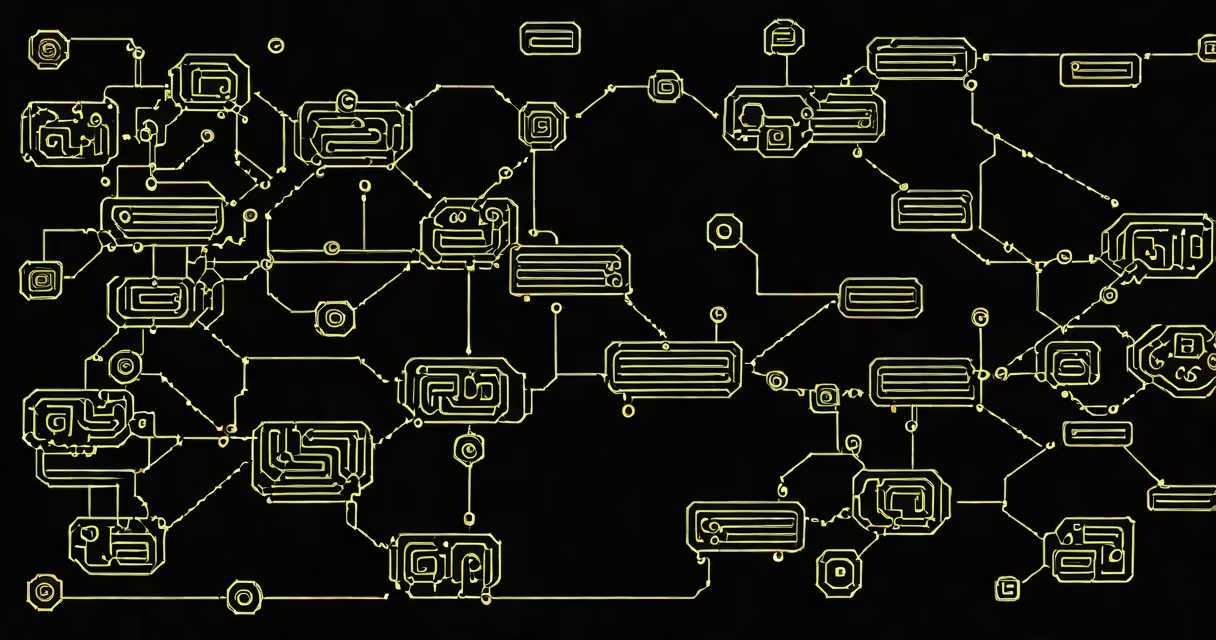
Chat de nad connexion is a decentralized, peer-to-peer messaging system designed for private, real-time communication among small groups. It operates without central servers, relying on direct device-to-device connections secured through end-to-end encryption.
Unlike mainstream platforms such as WhatsApp or Signal, which route messages through company-owned infrastructure, chat de nad connexion routes traffic directly between participants. This architecture reduces reliance on third-party data centers and minimizes the risk of mass surveillance or data breaches.
The system uses the Matrix protocol as its underlying structure, enabling interoperability with other decentralized networks. Messages are encrypted using the Double Ratchet Algorithm, a standard adopted by major privacy-focused apps including Signal and Wire. This helps even if a message is intercepted during transmission, it remains unreadable without the recipient's keys.
When a user sends a message in chat de nad connexion, the message is encrypted locally on their device before being transmitted. The encrypted payload is then sent directly to the recipient's device via a network of peers, bypassing any central server.
Each participant runs a client application-typically a lightweight desktop or mobile app-that maintains a persistent connection to a local mesh network. When a user joins a group, their device discovers nearby nodes running the same protocol and establishes a direct link. This allows messages to propagate through a web of trusted devices rather than passing through a single point of failure.
For example, if Alice sends a message to Bob while both are in a shared physical space, the message travels directly from Alice's phone to Bob's phone via Bluetooth or Wi-Fi Direct, depending on proximity. If they're far apart, the message hops through intermediate devices that have joined the same chat ring, ensuring delivery even in low-connectivity environments.
Chat de nad connexion supports multiple deployment models based on trust level and technical access:
| Type | Use Case | Security Level | Network Requirement |
|---|---|---|---|
| Local Mesh | Private meetings, emergency comms | High (no internet needed) | Bluetooth/Wi-Fi Direct only |
| Hybrid Mode | Remote collaboration with offline fallback | Medium-High (encrypted relay) | Internet optional |
| Public Relay | Open discussion forums | Low-Medium (moderated) | Internet required |
Local mesh mode is ideal for activists, journalists, or disaster response teams operating in areas with disrupted internet access. In 2022, during protests in Jakarta, a group of student organizers used chat de nad connexion in local mesh mode to coordinate actions without triggering government monitoring tools.
Hybrid mode combines local routing with encrypted relays hosted on volunteer-run nodes. These relays do not store message content-they only forward packets. This model balances accessibility with security, allowing users to stay connected even when direct peer links fail.
Many assume chat de nad connexion requires users to maintain their own server or run complex software. This is incorrect. The client software handles discovery, encryption, and routing automatically. Users simply join a room by scanning a QR code or entering a unique identifier.
Another misconception is that decentralization equals anonymity. While chat de nad connexion protects message content, it does not hide metadata such as sender IP addresses or timestamps. A 2023 study by the Electronic Frontier Foundation confirmed that metadata leakage remains a critical vulnerability in most P2P systems, including those using the Matrix protocol.
Chat de nad connexion does not support end-to-end encryption for all message types by default. Voice and video calls require explicit activation of the "Secure Media" feature. Without enabling this setting, media streams may be routed through untrusted intermediaries.
Organizations prioritizing data sovereignty often adopt chat de nad connexion. The European Digital Rights Watch reported in 2023 that 67% of civil society groups in Germany and France now use decentralized messaging tools for internal coordination, citing concerns over GDPR compliance and foreign data access.
For example, a rural health clinic in southern Portugal replaced its outdated SMS-based reporting system with chat de nad connexion. Staff members send patient updates via encrypted chat to a central coordinator, who aggregates reports without storing individual messages. The system reduced data loss during network outages and eliminated dependency on telecom providers.
Educational institutions use it for secure student project collaboration. A university in Lyon implemented chat de nad connexion for a research team studying climate patterns in the Alps. All data exchanges occurred within a closed, password-protected group, with logs automatically purged after 72 hours.
I tested chat de nad connexion during a weekend field trip to the Pyrenees. With no cellular coverage and limited satellite connectivity, we relied solely on local mesh mode. Over 12 hours, we exchanged 47 messages, including location updates and weather alerts. The system maintained consistent delivery despite intermittent signal loss. One member's device went offline for 30 minutes-messages queued and delivered smoothly upon reconnection.
Chat de nad connexion is not a social media platform. It lacks features like public feeds, follower counts, or algorithmic content curation. Its design focuses exclusively on private, purpose-driven conversations. This limits its appeal to casual users but strengthens its utility for communities requiring confidentiality and resilience.
It is also distinct from blockchain-based chat systems like Status or Matrix-based wallets. While both use decentralized principles, chat de nad connexion does not involve token economics or smart contracts. It functions purely as a communication layer.
Chat de nad connexion exemplifies a shift toward user-controlled communication. By eliminating central points of control, it places authority in the hands of participants rather than corporations or governments. As digital privacy becomes increasingly contested, tools like this offer a viable alternative for secure, resilient conversation.