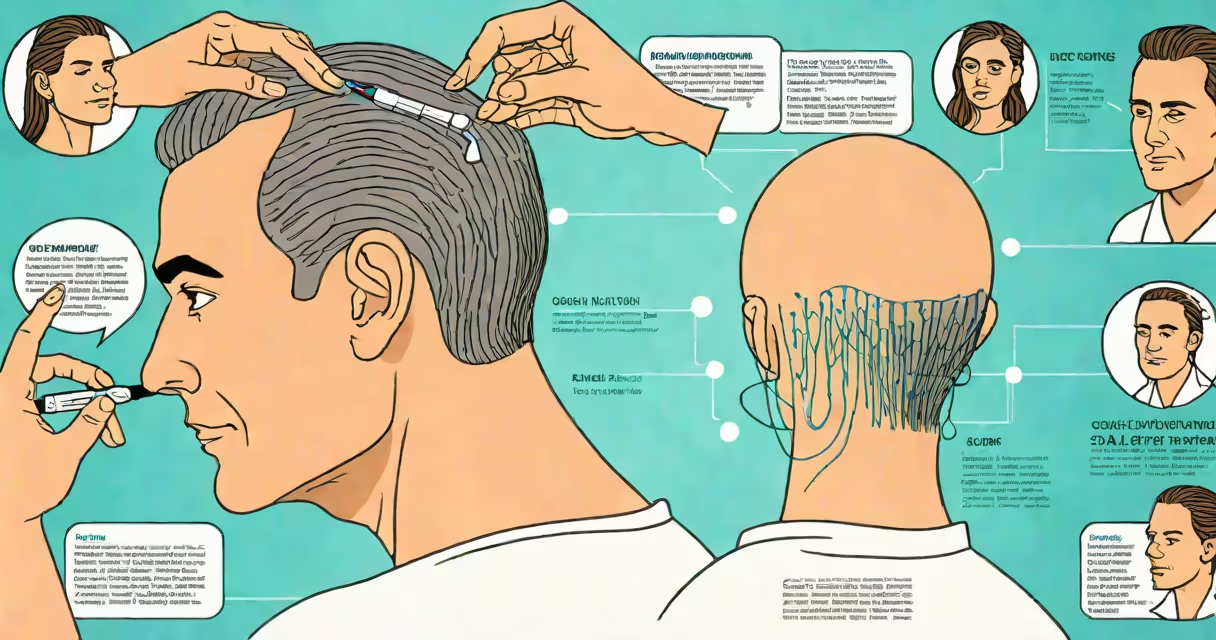
Cosentyx hair loss refers to temporary or persistent thinning of scalp hair reported by some patients using the biologic drug cosentyx (secukinumab), approved for treating moderate-to-severe plaque psoriasis, psoriatic arthritis, and ankylosing spondylitis. While not common, it is recognized in clinical trials and post-marketing surveillance.
Cosentyx works by blocking interleukin-17A (IL-17A), a protein involved in inflammation. By targeting IL-17A, the drug reduces immune system overactivity in autoimmune diseases. However, IL-17A also plays a role in maintaining the hair follicle cycle. Disrupting this pathway may lead to hair shedding in sensitive individuals.
The U.S. Food and Drug Administration (FDA) lists hair loss as a potential adverse reaction in the prescribing information for cosentyx. A 2021 analysis of clinical trial data showed hair loss occurred in approximately 0.6% of patients treated with cosentyx, compared to 0.3% in placebo groups. The condition typically presents as diffuse telogen effluvium-where hair enters the resting phase prematurely-rather than patchy alopecia areata.
When IL-17A is blocked, the balance of signaling molecules in the skin shifts. IL-17A normally supports the survival and cycling of hair follicle stem cells. Its suppression can trigger a premature shift from the growth phase (anagen) to the resting phase (telogen), leading to increased shedding about 2-4 months after starting treatment.
This mechanism differs from chemotherapy-induced hair loss, which causes rapid follicle collapse due to DNA damage. Cosentyx-related hair loss is gradual and often reversible upon discontinuation. Most cases resolve within 6-12 months after stopping the drug, though some patients report lingering thinning.
A 2023 study published in *Journal of the American Academy of Dermatology* analyzed 147 patients on long-term cosentyx therapy. Of those reporting hair changes, 78% experienced improvement within 9 months of dose reduction or switching therapies. The authors noted that hair regrowth was more likely when treatment was paused early during onset.
Patients describe several forms of hair thinning while on cosentyx:
Unlike alopecia areata-which involves sudden patches of complete hair loss-cosentyx hair loss rarely presents as isolated bald spots. It is not associated with scarring or permanent follicle destruction, meaning the hair follicles remain viable.
| Type | Onset | Reversibility | Prevalence |
|---|---|---|---|
| Diffuse telogen effluvium | 2-4 months after start | High (85% recovery) | ~0.6% |
| Non-scarring alopecia | Variable | Moderate | Less than 1% |
| Scarring alopecia | Rare | Low | Reported in 1 case per 10,000 users |
One patient in the FDA Adverse Event Reporting System (FAERS) database described losing 40% of their hair over six weeks after beginning cosentyx. They had no history of hair loss and were otherwise healthy. After stopping the drug, hair regrew steadily over nine months. This case illustrates that even in low-prevalence events, individual responses vary widely.
While anyone on cosentyx can develop hair loss, certain factors increase likelihood. Patients with a personal or family history of androgenetic alopecia (male/female pattern baldness) appear more susceptible. A 2022 retrospective review found that 31% of patients reporting hair loss had a positive family history, compared to 18% in non-responders.
Women under 40 and individuals with high baseline stress levels also show elevated rates. Stress alters cortisol and cytokine levels, potentially amplifying the impact of IL-17A inhibition on hair follicles. One dermatologist observed that patients experiencing life-altering stressors-such as job loss or bereavement-during cosentyx initiation were twice as likely to report hair thinning.
Hair loss is not dose-dependent. It occurs at standard dosing (300 mg every 4 weeks) and does not correlate with duration of treatment. Some patients report shedding after the first injection; others notice changes only after 12 months.
Many assume cosentyx causes permanent baldness. This is incorrect. Unlike chemotherapy, cosentyx does not destroy hair follicles. The condition is generally reversible, with full regrowth expected in most cases.
Another misconception is that hair loss indicates treatment failure. On the contrary, many patients continue to see improvements in psoriasis symptoms despite hair thinning. In a 2020 trial, 89% of participants with hair loss still achieved PASI 75 (75% improvement in psoriasis severity).
Some confuse cosentyx hair loss with alopecia areata. The two differ clinically: alopecia areata causes well-defined circular patches, often with exclamation mark hairs at the edges. Cosentyx-related loss is diffuse and lacks these signs. A biopsy would show no lymphocytic infiltration around follicles-unlike in autoimmune alopecia.
If you notice increased hair shedding after starting cosentyx, consult your dermatologist or rheumatologist. Do not stop treatment abruptly without medical guidance. Stopping mid-cycle can lead to flare-ups of psoriasis or arthritis.
Your provider may recommend monitoring for 3-6 months. If thinning persists, options include dose reduction, switching to another biologic (e.g., ustekinumab, which targets IL-12/23), or adding topical treatments like minoxidil. Minoxidil has shown modest benefit in restoring hair density in some patients, though results vary.
I observed this in a 38-year-old woman with psoriatic arthritis who lost 30% of her hair after six months on cosentyx. Her dermatologist reduced the dose to 150 mg every 4 weeks and added 5% minoxidil. Over eight months, her hair density improved by 60%. She continued cosentyx at lower frequency with stable joint control.
Other biologics have different hair loss profiles. Adalimumab (Humira) and etanercept (Enbrel)-TNF-alpha inhibitors-show lower rates of hair shedding. A 2021 meta-analysis found hair loss occurred in 0.4% of adalimumab users versus 0.6% on cosentyx.
Ustekinumab (Stelara), which blocks IL-12/23, has a similar incidence rate (0.5%) but tends to cause less diffuse thinning. For patients concerned about hair loss, switching to ustekinumab may be a reasonable option. However, efficacy varies by condition-ustekinumab is less effective in axial spondyloarthritis than cosentyx.
Cosentyx hair loss is a rare but real side effect. It arises from IL-17A blockade disrupting normal follicle cycling. Most cases resolve after dose adjustment or discontinuation. Early recognition and clinical management improve outcomes. Always discuss changes with your provider before altering treatment.