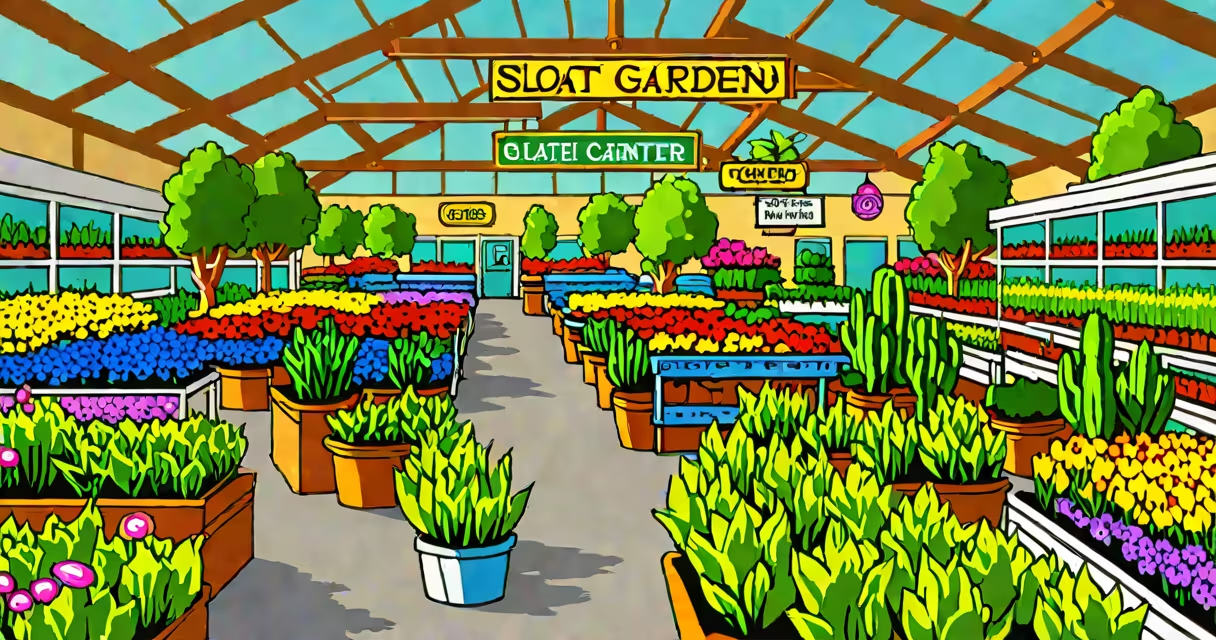
Sloat Garden Center is a full-service retail nursery and field design destination located at 1200 El Camino Real in San Mateo, California. It serves homeowners, landscapers, and garden enthusiasts with year-round plant sales, expert consultations, and educational events focused on sustainable gardening practices.
The center operates as both a retail nursery and a design consultancy. Customers browse hundreds of varieties of ornamental trees, shrubs, perennials, and seasonal flowers. Staff members trained in California native plants and drought-tolerant landscaping provide tailored recommendations based on soil type, sun exposure, and water availability. The facility includes a dedicated area for succulents and cacti, reflecting regional climate adaptation strategies.
Founded in 1960, Sloat Garden Center has maintained its presence in the community through consistent quality and service. It is known for hosting free weekly workshops during spring and fall, covering topics such as composting, pollinator gardens, and winter planting techniques. These sessions are led by certified Master Gardeners affiliated with the University of California Cooperative Extension.
When you enter Sloat Garden Center, you're greeted by a layout designed around seasonal cycles. In early spring, the front displays feature tulips, daffodils, and ornamental cabbage. By late summer, the focus shifts to heat-resistant annuals like portulaca and lantana. This rotation ensures customers see relevant options based on current growing conditions.
Each plant is labeled with common name, scientific name, sunlight needs, water requirements, and mature size. For example, a 'Lavender' entry includes: *Lavandula angustifolia*, full sun, low water, grows to 2 feet tall. This labeling system reduces buyer confusion and supports long-term plant success.
For larger projects, Sloat offers design consultations. A client interested in converting a backyard into a low-water garden might meet with a designer who reviews site photos, analyzes soil samples, and suggests species like *Artemisia ludoviciana* (silver mugwort) and *Salvia leucophylla* (white sage). The team then provides a detailed plan with plant quantities and placement diagrams.
Sloat Garden Center categorizes its services into four core areas: plant sales, design services, educational programming, and installation support.
| Service Type | Examples | Key Features |
|---|---|---|
| Plant Sales | California native plants, succulents, seasonal bedding | Seasonal inventory; staff-led plant care guides |
| Design Consultations | Backyard redesigns, drought-tolerant layouts | On-site visits; digital plans available |
| Workshops | Composting basics, pollinator habitat creation | Free; held weekends; registration required |
| Installation & Maintenance | Field setup, seasonal pruning | Contract-based; team handles labor and materials |
One non-obvious distinction: unlike big-box retailers that prioritize volume and low cost, Sloat Garden Center emphasizes plant health and long-term sustainability. They reject the practice of selling "ready-to-go" container plants that have been overwatered or root-bound. Instead, they inspect each plant before sale and recommend repotting or root pruning when necessary.
Many assume Sloat Garden Center is just another garden store. It is not. While it sells plants, tools, and soil, its primary function is ecological education and site-specific planning. The center avoids promoting invasive species-even when popular. For example, *Liriope muscari* (lilyturf) is widely sold in California but can spread aggressively in moist soils. Sloat staff actively discourage its use and suggest alternatives like *Heuchera* or *Carex* species.
Another misconception is that all nurseries offer equal expertise. Sloat employs horticulturists with advanced training in regional ecosystems. According to the UC Davis Extension, nurseries with certified staff report 30% higher plant survival rates among customer installations compared to those without. Sloat's team includes several members certified by the California Certified Nurseryman program.
I once visited Sloat in February to replace a dying rose bush. The staff didn't push a new rose variety. Instead, they showed me a native *Rosa californica* (California wild rose), which thrives in dry summers and attracts hummingbirds. I planted it in a south-facing bed with gravel mulch. After 18 months, it's still blooming and hasn't needed irrigation beyond natural rainfall.
Sloat Garden Center serves residents across San Mateo County and parts of Santa Clara County. Its location near the intersection of El Camino Real and Highway 92 makes it accessible by car and public transit. The center is open seven days a week, with extended hours during peak seasons (March-May and September-November).
It's frequently used by homeowners seeking to improve curb appeal with low-maintenance landscaping. Local schools and city parks also source plants here for community green spaces. The City of San Mateo's Parks Department reported in 2022 that 42% of new park plantings in the past five years came from Sloat Garden Center due to their adherence to native species guidelines.
Landscapers rely on Sloat for bulk orders of specific cultivars. For example, a contractor installing a new residential development requested 120 *Fremontia californica* (California flannelbush) specimens. Sloat sourced them from a regional grower and delivered them within 48 hours, ensuring on-time project completion.
Sloat Garden Center is not a wholesale distributor. It does not sell in bulk to other businesses at wholesale pricing. All transactions are retail. This policy ensures consistent customer service and prevents undercutting of local garden centers.
It is also not a botanical garden. While it features living displays, it lacks the curated collections, interpretive signage, and conservation research functions typical of institutions like the San Francisco Botanical Garden or the Huntington Library's garden wing.
Finally, it is not a DIY-only space. Though tools and supplies are available, the center encourages professional guidance for complex projects. A customer attempting to install a rain garden without proper drainage planning may end up with standing water and root rot. Sloat staff intervene early to prevent such failures.
Sloat Garden Center remains a trusted resource for gardeners in the Peninsula region. Its blend of expert advice, curated plant selection, and commitment to ecological responsibility sets it apart from generic garden stores. redesigning a full yard, the center provides the tools and knowledge to succeed.