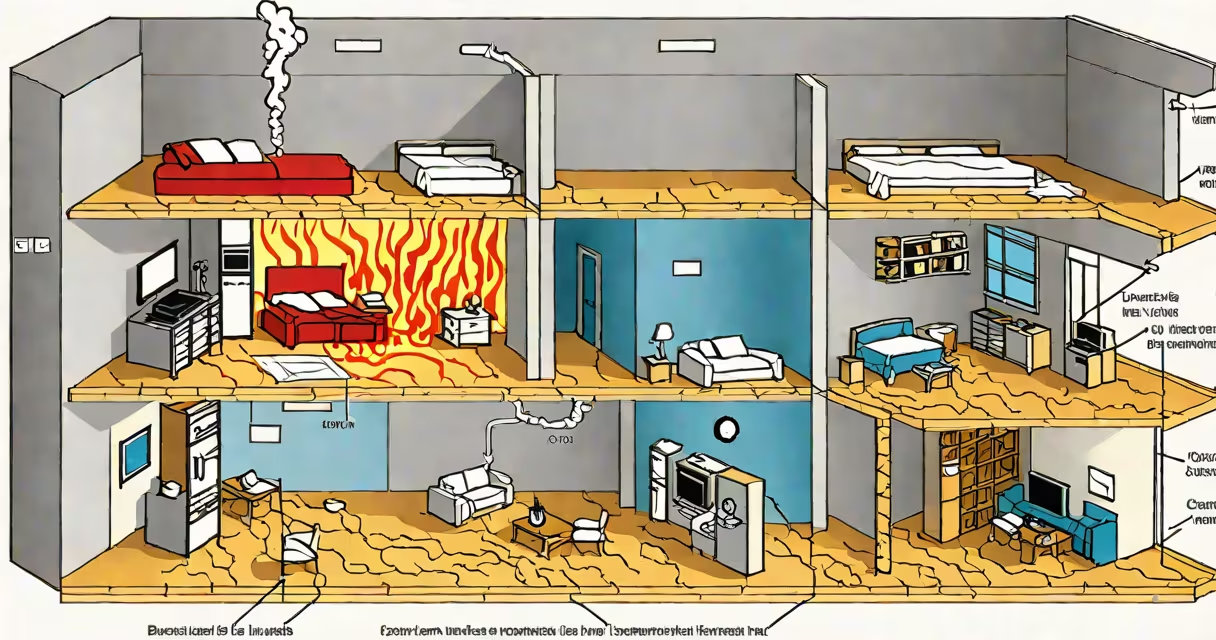
Convection heat transfer is the movement of thermal energy through a fluid-liquid or gas-due to the combined effects of conduction within the fluid and the bulk motion of the fluid itself. It occurs when temperature differences cause density variations, leading to fluid flow that transports heat. This process is central to everyday phenomena like boiling water, wind chill, and climate patterns.
Unlike conduction, which relies solely on molecular collisions, or radiation, which transfers energy via electromagnetic waves, convection requires physical fluid motion. The fluid acts as a carrier, moving heated particles from one location to another. This mechanism dominates in systems involving air, water, or other flowing media.
For example, when a pot of water heats on a stove, the water near the bottom warms, becomes less dense, and rises. Cooler water sinks to replace it, creating a circular current. This circulating motion transfers heat rapidly throughout the liquid-this is convection in action. Without fluid movement, heat would spread much slower via conduction alone.
Convection begins when a fluid layer adjacent to a hot surface gains thermal energy. As molecules absorb heat, they move faster and push apart, reducing local density. Buoyancy forces then lift the warmer fluid upward. Simultaneously, cooler, denser fluid flows downward to fill the space, forming a continuous loop known as a convection current.
This process is governed by Newton's law of cooling, which states that the rate of heat loss from a surface is proportional to the temperature difference between the surface and the surrounding fluid. The proportionality constant is the convective heat transfer coefficient, measured in watts per square meter per Kelvin (W/m²·K). This coefficient depends on fluid properties, flow velocity, and geometry.
A practical example: a car radiator uses forced convection. A fan blows air over hot metal fins, increasing airflow speed. Higher velocity raises the heat transfer coefficient, allowing more efficient cooling of engine coolant. Without forced flow, the system would rely on natural convection, which is slower.
Convection is divided into two primary categories based on the driving force behind fluid motion:
| Type | Driving Force | Examples | Typical Applications |
|---|---|---|---|
| Natural convection | Fluid density changes due to temperature gradients | Warm air rising from a heater, ocean currents | Building heating, atmospheric circulation |
| Forced convection | External mechanisms like fans or pumps | Car radiators, HVAC systems, industrial heat exchangers | Engine cooling, climate control, power plant condensers |
Natural convection occurs spontaneously when gravity acts on density differences. It's common in still air or stagnant liquids. For instance, in a room with a baseboard heater, warm air rises along walls, creating a slow but steady circulation pattern. The flow rate is limited by buoyancy and viscosity, making it less effective than forced methods.
Forced convection uses mechanical devices to drive fluid motion. This increases the heat transfer coefficient dramatically. In a forced-air furnace, a blower pushes air over heated coils. The increased flow rate enhances heat exchange by up to tenfold compared to natural convection alone.
There's also mixed convection, where both natural and forced flows contribute. This happens in vertical pipes with heated fluid and external pumping. The relative strength of each mode determines performance. Engineers model this using dimensionless numbers like the Grashof and Reynolds numbers.
Many confuse convection with conduction. While both involve heat transfer, conduction happens through direct contact without net fluid movement. In a metal spoon left in hot soup, heat travels up the handle via conduction. But the swirling liquid around it-carrying heat away-is convection.
Another error is assuming convection only applies to gases. Liquids conduct heat poorly, so convection dominates in water-based systems. Boiling water in a kettle is driven by convection currents, not conduction through the pot wall alone. The same principle applies to geothermal systems, where hot water circulates underground due to temperature-driven flow.
A lesser-known fact: convection efficiency drops sharply in microgravity environments. On Earth, gravity enables buoyancy-driven flow. In orbit, such flow ceases because there's no gravitational reference frame to create density gradients. This limits heat dissipation in spacecraft, requiring active cooling systems like liquid loops or fans.
I once observed this during a lab experiment on heat transfer in a sealed chamber under simulated zero-G conditions. Without gravity, the fluid remained stratified-hot fluid stayed at the top, cold at the bottom. Heat transfer rates dropped by over 60% compared to normal gravity tests. This demonstrated that natural convection is gravity-dependent, a key consideration in aerospace design.
Convection governs heat management in nearly every engineered system involving fluids. In HVAC systems, forced convection ensures even temperature distribution across rooms. In power plants, water circulates through reactors via pumps, removing heat efficiently. In electronics, fans blow air over heat sinks to prevent overheating.
Weather systems depend heavily on convection. Warm air rising from equatorial regions creates low-pressure zones, driving global wind patterns. Thunderstorms form when moist air rises rapidly, cools, and releases latent heat-fueling further uplift. These processes are modeled using Navier-Stokes equations and thermodynamic principles.
Understanding convection is essential for designing safe, efficient systems. Poor convection modeling leads to equipment failure, energy waste, or safety hazards. For instance, inadequate cooling in a data center can cause server crashes. Overheating in nuclear reactors results from insufficient convective flow, risking core damage.
Convection heat transfer is not just a classroom concept-it shapes how we live, build, and operate. From keeping homes warm to powering cities, it's a fundamental force in nature and engineering.