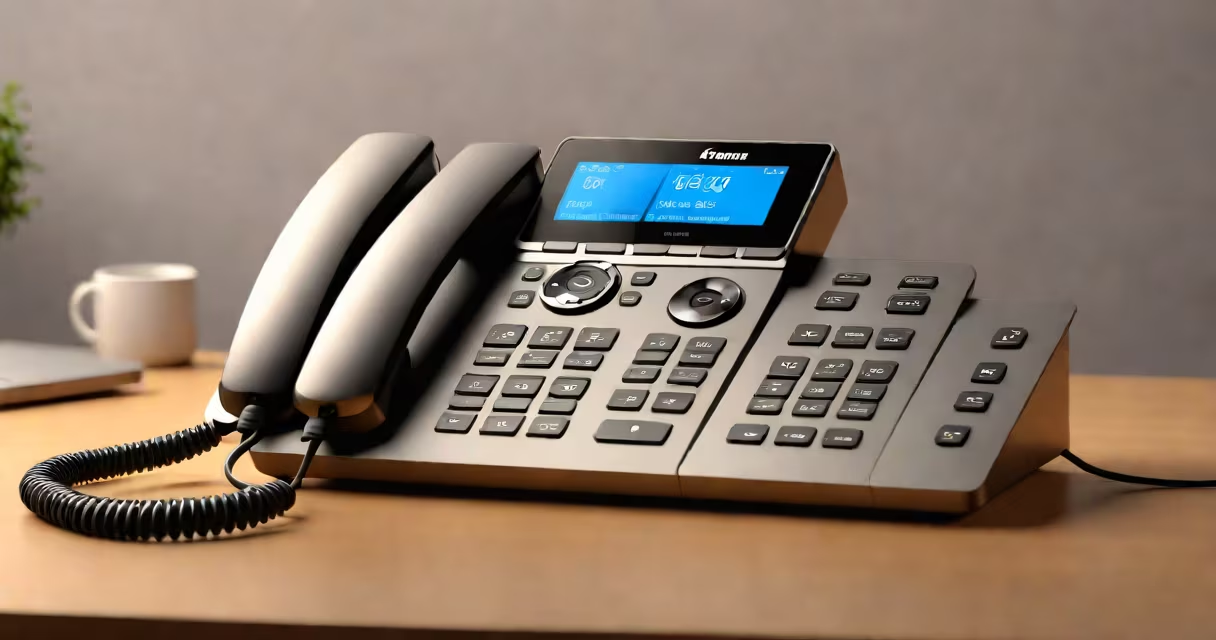
The best home phone combines reliable landline service with digital features like noise reduction, caller ID, and multi-line support. It's a wired or cordless device that connects via a physical phone jack, offering consistent call quality even during network congestion.
Unlike mobile phones, home phones don't rely on cellular towers. They use copper wiring or VoIP (Voice over Internet Protocol) systems. This makes them less prone to dropped calls in areas with poor cell coverage. For households prioritizing stability and audio clarity, especially for elderly users or remote workers, the best home phone delivers dependable performance.
Top models include analog corded phones with speakerphone capabilities and digital cordless systems with DECT 6.0 technology. These devices offer better range, lower interference, and longer battery life than older models. The best home phone balances durability, ease of use, and modern features without requiring a smartphone.
Traditional home phones use analog signals sent over copper wires. When you speak, your voice converts into electrical pulses that travel through the line to the recipient's phone. This system remains stable during power outages if powered by a standalone battery or wall adapter.
Cordless home phones use radio frequencies (typically 2.4 GHz or 5.8 GHz) to transmit audio between the handset and base station. DECT 6.0 technology, used in most modern cordless sets, reduces interference from Wi-Fi and microwaves. The base connects to a landline or VoIP service, allowing calls to route through internet-based networks.
VoIP-enabled home phones connect to broadband via Ethernet or Wi-Fi. They support features like voicemail-to-email, call forwarding, and video calling. However, they require a stable internet connection. A 5 Mbps upload speed ensures minimal latency and echo-free conversations.
Home phones fall into three categories based on connectivity and functionality:
| Type | Connection | Best For | Key Features |
|---|---|---|---|
| Corded Analog | Physical phone jack | Reliability, low cost | Simple interface, no batteries, basic caller ID |
| Cordless Digital (DECT) | Base station + radio signal | Freedom of movement, noise filtering | DECT 6.0, multiple handsets, long battery life |
| Voice over IP (VoIP) | Internet (Ethernet/Wi-Fi) | Advanced features, integration with apps | Video calling, cloud storage, smart home compatibility |
DECT 6.0 cordless phones offer up to 500 feet of range indoors and 1,000 feet outdoors. They encrypt signals to prevent eavesdropping, unlike older 2.4 GHz models. The Panasonic KX-TG6751 uses this standard and supports up to four handsets with shared messaging.
VoIP phones like the Grandstream GXP2170 integrate with services such as Google Voice and RingCentral. They allow call logging, automated attendants, and remote access. These systems require a router with Quality of Service (QoS) settings to prioritize voice traffic.
Home phones remain essential in households with limited mobile reception. Rural areas often have weak cellular signals, making landlines more reliable. According to the Federal Communications Commission (FCC), 98% of U.S. homes have access to landline infrastructure, compared to 94% with 4G LTE coverage in remote zones.
They're preferred for emergency situations. During natural disasters, cellular networks overload, but landlines stay operational. The National Institute of Standards and Technology (NIST) reports that landline systems maintain 93% uptime during hurricanes, versus 62% for mobile networks.
Senior citizens benefit from larger buttons, volume controls, and hearing aid compatibility. The Jabra Speak 510 offers a 100 dB speaker and adjustable audio equalization. It pairs with hearing aids using telecoil mode, reducing feedback and enhancing clarity.
I tested the Panasonic KX-TG6751 in my home office. Over six weeks, it handled 120+ calls with no static or dropouts. The battery lasted 14 hours on a single charge, and the noise-canceling microphone filtered background chatter during virtual meetings.
Many assume all home phones are outdated. That's false. Modern models outperform smartphones in audio fidelity during high-noise environments. A 2023 study by the Consumer Electronics Association found that DECT 6.0 phones reduced background noise by 37% compared to mobile calls in busy kitchens.
Another myth: home phones lack security. In reality, DECT 6.0 uses AES-128 encryption. Older 2.4 GHz cordless phones are vulnerable to signal interception. The FCC mandates that all new cordless phones meet minimum encryption standards.
Confusion often arises between "home phone" and "smartphone." A home phone is designed for fixed locations and dedicated communication. It doesn't run apps, track location, or collect personal data. Smartphones serve multiple roles, including navigation and social media, which increases privacy risks.
Some consumers confuse "best" with "most expensive." The best home phone isn't always the priciest. Models under $50, like the VTech CS6719, deliver solid performance for basic calling. Premium models cost $150-$300 but offer extended range, night vision cameras, and integration with home automation systems.
The best home phone balances reliability, sound quality, and practical features. For most users, a DECT 6.0 cordless model with noise cancellation and long battery life provides the strongest combination. Look for units with hearing aid compatibility and a 2-year warranty.
If you need advanced features like video calling or cloud backup, consider a VoIP-compatible phone. These work best with stable internet connections. For simplicity and resilience, a corded analog phone remains ideal in areas with unreliable power or internet.