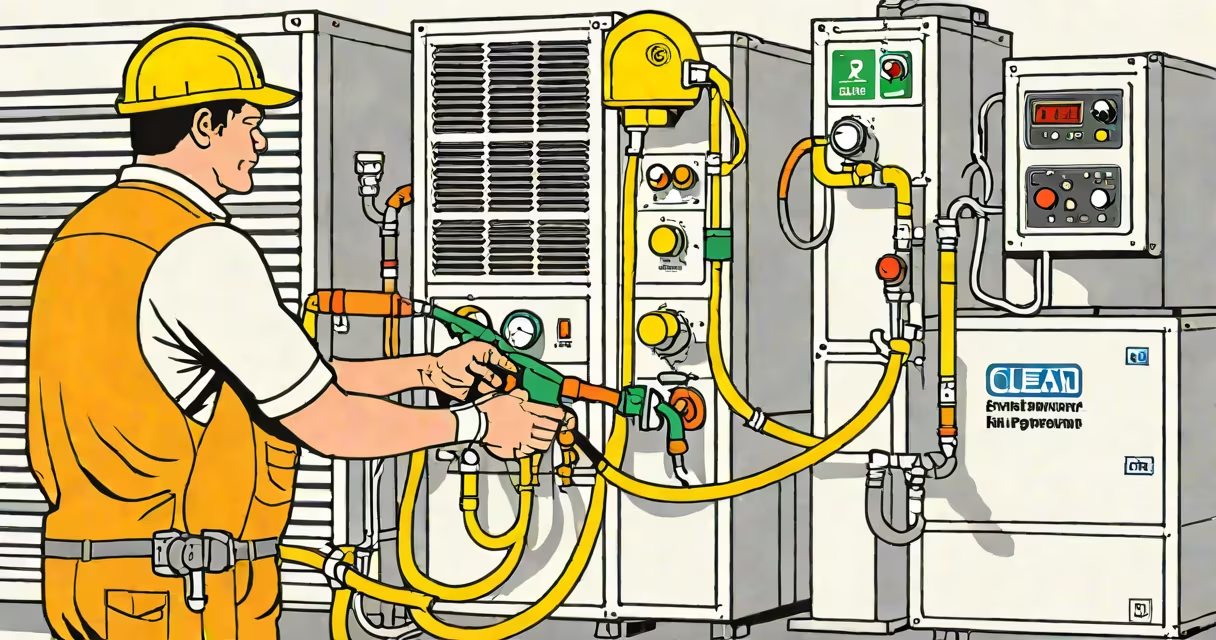
No refrigerant can be safely mixed with R22. Mixing R22 with any other refrigerant-such as R410A, R32, R134a, or R404A-creates hazardous conditions, damages equipment, and violates environmental regulations. R22 is a hydrochlorofluorocarbon (HCFC) phased out under the Montreal Protocol due to ozone depletion. Its use is restricted, and mixing it with newer refrigerants voids warranties and compromises system integrity.
R22 systems require dedicated refrigerant handling. The refrigerant charge must match the original specification. Introducing even small amounts of another refrigerant alters pressure, temperature, and lubrication properties. This leads to compressor failure, oil breakdown, and potential refrigerant leaks. The Environmental Protection Agency (EPA) prohibits mixing refrigerants under Section 608 of the Clean Air Act. Violations result in fines and liability for environmental harm.
Technicians must recover existing R22 using certified recovery equipment before servicing or replacing components. Any new refrigerant added must be compatible with the system's design. R22 cannot be topped off with R410A or R32-even in trace amounts. These refrigerants operate at different pressures and temperatures. R410A runs at roughly 50% higher pressure than R22. Using it in an R22 system causes rapid component failure and poses explosion risks.
Refrigeration systems rely on precise thermodynamic cycles. A compressor pressurizes refrigerant vapor, which flows through a condenser where heat is released. The liquid then passes through an expansion valve, reducing pressure and temperature before entering the evaporator. There, it absorbs heat from indoor air and returns to the compressor as low-pressure vapor.
Each refrigerant has unique physical properties: boiling point, critical temperature, viscosity, and miscibility with lubricating oils. R22 boils at -40.8°C at atmospheric pressure. R410A boils at -51.5°C. Their differing behaviors mean mixing them disrupts phase changes and flow dynamics. For example, R410A requires POE (polyolester) oil, while R22 uses mineral oil. Mixing oils causes sludge formation and reduced heat transfer efficiency.
When refrigerants mix, they form non-azeotropic blends with variable composition during phase change. This creates temperature glide-temperature shifts during evaporation or condensation. Glide reduces cooling capacity and increases energy consumption. A system designed for R22 cannot handle glide, leading to uneven cooling and frost buildup on coils.
Refrigerants are categorized by chemical family and environmental impact. R22 belongs to the HCFC group. Newer refrigerants fall into HFC (hydrofluorocarbons) or HFO (hydrofluoroolefins). Each has distinct safety, performance, and regulatory profiles.
| Refrigerant | Chemical Family | Ozone Depletion Potential (ODP) | Global Warming Potential (GWP) | Compatibility with R22 |
|---|---|---|---|---|
| R22 | HCFC | 0.055 | 1810 | None - system-specific |
| R410A | HFC | 0 | 2088 | Not compatible - high pressure |
| R32 | HFC | 0 | 675 | Not compatible - flammable, high pressure |
| R134a | HFC | 0 | 1430 | Not compatible - lower pressure, different oil |
| R404A | HFC | 0 | 3922 | Not compatible - very high pressure |
Even R134a, used in older automotive systems, cannot be mixed with R22. R134a operates at lower pressures and uses POE oil. Mixing it with R22's mineral oil results in poor lubrication and rapid bearing wear. Similarly, R404A is designed for industrial freezers and runs at pressures exceeding 300 psi-far beyond R22 system limits.
Some technicians mistakenly believe blending refrigerants extends system life. This is false. The EPA reports that improper refrigerant use causes 40% of HVAC failures in commercial buildings. A 2021 study by the American Society of Heating, Refrigerating and Air-Conditioning Engineers (ASHRAE) confirmed that mixed refrigerants reduce system efficiency by 25-35% and increase maintenance costs by 60%.
R22 was widely used in residential and light commercial air conditioners from the 1990s until 2020. It remains in older systems installed before 2010. However, its production ended in 2020 under the Montreal Protocol. Only reclaimed or recycled R22 is legally available for servicing existing units.
Using R22 in new installations is banned. The EPA mandates that all new HVAC systems use low-GWP refrigerants. R410A and R32 are standard replacements. R32 has a GWP of 675-lower than R410A's 2088-and offers better energy efficiency. But neither can be used in R22 systems without complete retrofitting.
Common misconceptions include thinking R22 can be blended with R410A for temporary fixes. This is not only ineffective-it's dangerous. A technician in Florida reported a compressor explosion in 2022 after topping off an R22 system with R410A. The pressure differential caused a rupture. The system had to be replaced at $5,200 cost.
People often confuse "mixing" refrigerants with "recharging" or "topping off." Recharging means adding pure refrigerant to correct a low charge. Topping off involves adding small amounts of refrigerant to maintain proper levels. Both require the correct refrigerant type and must follow manufacturer specifications.
Another confusion arises around "refrigerant blends." Some refrigerants are intentionally blended-like R410A (50% R32, 50% R125)-but only when designed for specific systems. These blends are stable and predictable. R22 cannot be part of such blends because it is incompatible with their formulation.
A key distinction: R22 is not a blend. It is a single compound (CHClF₂). Blends like R410A are mixtures of multiple compounds. Mixing R22 with any blend introduces instability. The resulting mixture may separate or form corrosive byproducts under pressure.
In 2021, a retail store in Arizona experienced a complete HVAC failure during summer peak. The technician discovered that a previous worker had added R410A to an R22 system during a routine service. The system ran for 12 hours before the compressor seized. Oil analysis revealed sludge formation from mineral and POE oil incompatibility.
Diagnosis took four days. The system required full evacuation, cleaning, and replacement of the condenser coil and receiver. Total repair cost: $8,700. The facility lost 48 hours of cooling during a heatwave. The technician faced disciplinary action under EPA Section 608 certification rules.
This case highlights that mixing refrigerants is not just a technical error-it's a legal and financial risk. Even small amounts of foreign refrigerant cause irreversible damage.
Refrigerant systems using R22 must be retrofitted or replaced. The most common replacements are R410A and R32. R410A is used in modern split-system air conditioners and heat pumps. R32 is gaining popularity due to its lower GWP and improved efficiency. Both require system modifications: new compressors, different tubing, and POE oil.
Proper retrofitting includes evacuating all R22, cleaning the system with nitrogen, replacing filters and driers, and installing new seals. A technician must verify the system's pressure rating and check for leaks before charging with the new refrigerant. The process takes 4-6 hours and costs $1,200-$2,500 depending on size.
Never mix refrigerants. R22 cannot be mixed with any other refrigerant. The only safe path forward is full replacement or authorized retrofit. Compliance protects equipment, ensures safety, and meets global environmental standards.