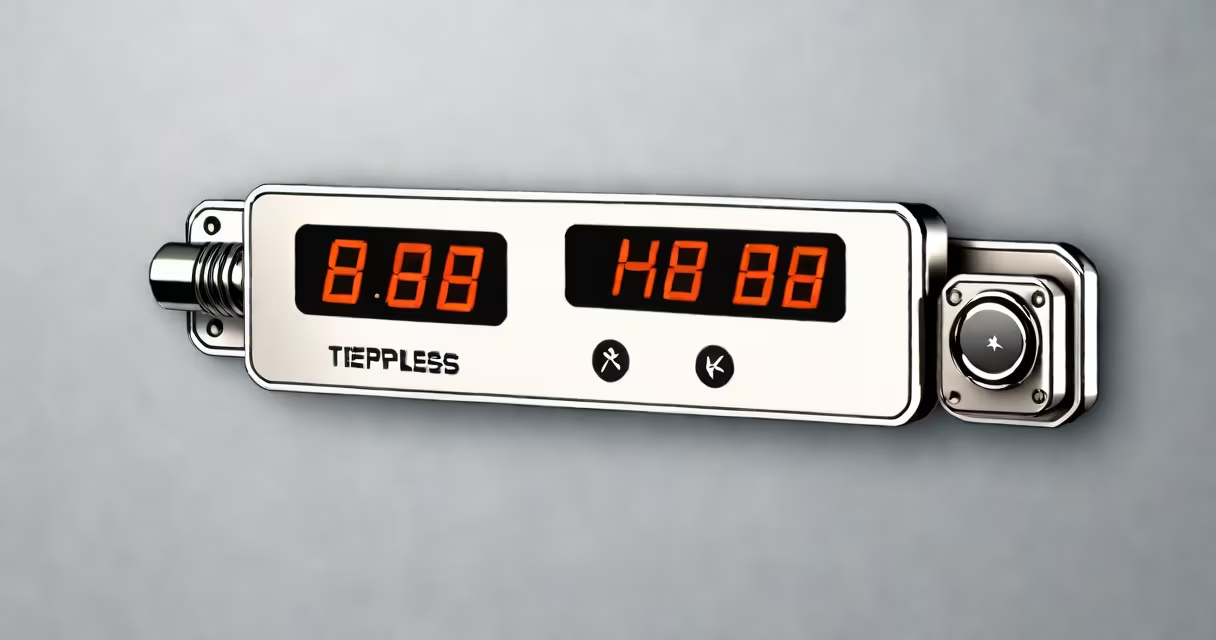
A wireless temperature sensor is a device that measures ambient or material temperature and transmits the data via radio signals-typically Bluetooth, Wi-Fi, or cellular-to a receiver or cloud platform, eliminating the need for physical wiring.
These sensors convert thermal energy into electrical signals using a thermistor, RTD, or thermocouple. The signal is processed, digitized, and sent wirelessly to a gateway, smartphone app, or centralized system. Data is often displayed in real time, logged over time, or used to trigger alerts when thresholds are exceeded.
Common applications include cold chain logistics, HVAC systems, food storage, manufacturing processes, and environmental monitoring. They are especially useful in locations where running cables is impractical or costly.
At its core, a wireless temperature sensor uses a temperature-sensitive element-such as a platinum RTD (resistance temperature detector)-to detect changes in heat. When temperature rises or falls, resistance in the RTD changes proportionally. This analog signal is converted into a digital value by an onboard microcontroller.
The digital reading is then packaged into a wireless transmission protocol. For short-range setups, Bluetooth Low Energy (BLE) is common. For longer distances or networked environments, Wi-Fi or LoRaWAN may be used. Some models support cellular connectivity for remote or outdoor deployment.
Data reaches a central hub-like a Raspberry Pi, industrial gateway, or cloud server-where it can be visualized, stored, or analyzed. Alerts can be triggered automatically if readings exceed preset limits, such as a freezer going above -18°C.
Wireless temperature sensors differ based on communication method, power source, accuracy, and environment tolerance. Below is a comparison of common types:
| Technology | Range | Power Source | Best Use Case |
|---|---|---|---|
| Bluetooth Low Energy (BLE) | up to 30 meters indoors | Battery (3-5 years) | Lab equipment, small warehouses |
| Wi-Fi | up to 100 meters (through walls) | AC adapter or battery | Smart buildings, HVAC monitoring |
| LoRaWAN | up to 10 km in rural areas | Battery (5+ years) | Large farms, remote industrial sites |
| Cellular (LTE-M, NB-IoT) | Global coverage | Battery or solar | Transportation, offshore platforms |
For high-precision applications-such as pharmaceutical storage or semiconductor manufacturing-RTD-based sensors outperform thermistors due to better long-term stability and repeatability. A PT1000 sensor, for example, offers ±0.1°C accuracy over a wide range and is commonly used in industrial-grade wireless units.
One non-obvious distinction: many consumers assume that "wireless" means "battery-powered." But some models run on external power and still transmit wirelessly. Conversely, not all battery-powered devices are truly wireless-they may require tethering to a base station for data retrieval.
In cold chain logistics, wireless temperature sensors monitor refrigerated trucks transporting vaccines. A single sensor placed inside a shipment can send updates every 15 minutes. If the temperature spikes above 8°C during transit, an alert triggers instantly, allowing the carrier to take corrective action before product spoilage occurs.
According to the World Health Organization, 30% of vaccine doses are lost annually due to temperature excursions during transport. Wireless sensors reduce this risk by providing continuous visibility. A 2022 study by the National Institute of Standards and Technology (NIST) confirmed that BLE-based sensors maintained accuracy within ±0.2°C over 12 months under controlled lab conditions.
In manufacturing, sensors track oven temperatures during curing cycles. A deviation of just 5°C can compromise material integrity. Real-time feedback allows operators to adjust settings before defects occur. One factory reported a 17% reduction in scrap rate after deploying wireless sensors across five production lines.
Another use case: smart greenhouses. Sensors placed in soil and air monitor growing conditions. Data integrates with automated irrigation and ventilation systems. A farmer in California reduced water usage by 22% and increased crop yield by 14% after implementing a LoRaWAN-based sensor network.
Many people mistake wireless temperature sensors for basic thermometers with Bluetooth. While both measure temperature, only the sensor includes data logging, cloud integration, and alerting capabilities. A standalone thermometer may show current temperature but won't notify you if it drops below freezing overnight.
Another misconception: all wireless sensors are low-cost. High-accuracy models with NIST-traceable calibration, IP67 enclosures, and industrial certifications can cost $200-$500 each. A consumer-grade model may fail in harsh environments-such as a meat processing plant with constant moisture and vibration-due to inadequate sealing or unstable battery performance.
I once installed a batch of BLE sensors in a university lab. All showed correct readings initially. After three weeks, several began reporting erratic values. Investigation revealed interference from nearby MRI machines. The solution was switching to shielded sensors with frequency-hopping spread spectrum (FHSS) protocols, which are less prone to RF noise.
Start by defining your environment: indoor vs. outdoor, static vs. mobile, clean room vs. dusty warehouse. Then assess required precision. A ±0.5°C tolerance may suffice for climate control, but pharmaceutical storage demands ±0.1°C.
Consider data retention and access. Can you view historical trends? Do you need API access for integration with enterprise software? Some models offer local storage with fallback to cloud syncing if the internet fails.
For long-term deployments, battery life matters. A sensor with a 5-year battery life reduces maintenance overhead. Look for models rated for 50,000+ transmission events over their lifespan.
Finally, ensure compatibility with your existing infrastructure. A sensor that uses proprietary software may lock you into a single vendor. Open standards like MQTT over Wi-Fi or LoRaWAN enable interoperability across platforms.
Wireless temperature sensors are not just convenience tools-they are mission-critical components in safety, quality, and efficiency. Their ability to provide accurate, timely data without physical constraints makes them essential in modern monitoring systems.