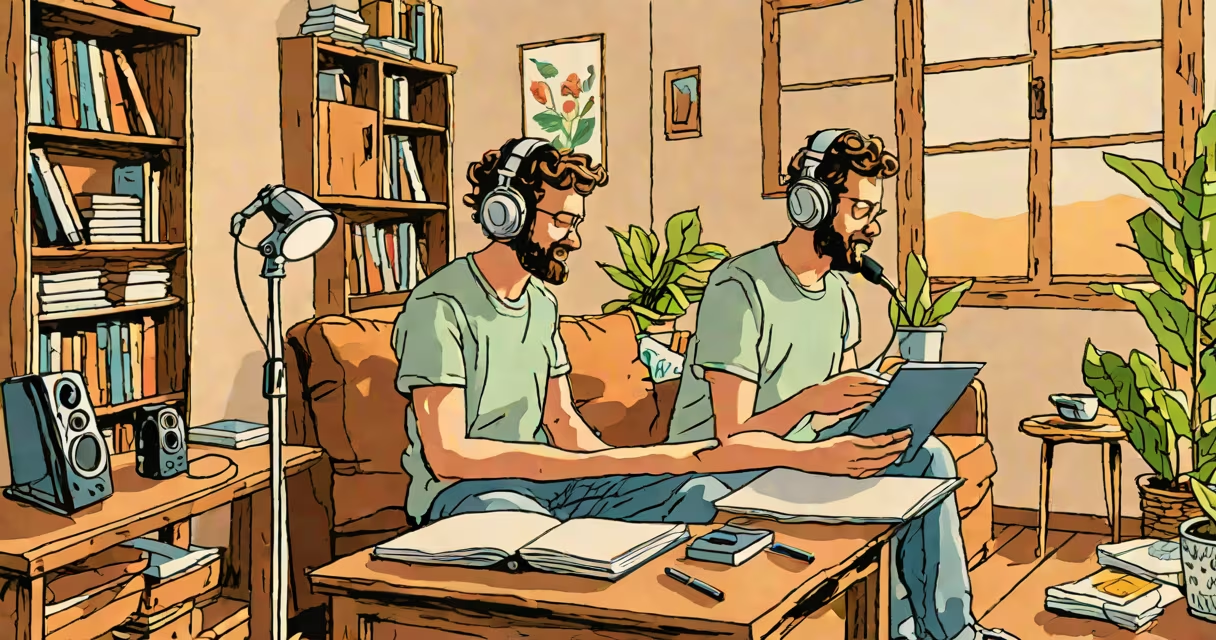
The ADHD Chatter Podcast is a weekly audio series hosted by individuals with ADHD that shares unfiltered personal experiences of living with the condition. Episodes focus on daily challenges, emotional regulation, executive function struggles, and moments of clarity, all told in first-person narratives. The show avoids clinical language and instead centers lived experience, offering listeners a sense of belonging and validation.
Each episode runs between 25 and 45 minutes and features solo monologues or short interviews with guests who identify as neurodivergent. The format prioritizes authenticity over polish-voice cracks, pauses, and tangents are preserved. This creates a listening environment that mirrors the internal experience of ADHD: nonlinear, emotionally charged, and deeply personal.
Hosted by someone who identifies as autistic and ADHD-diagnosed, the podcast began in 2021 as a response to the lack of representation for adult neurodivergent people in mainstream mental health media. It quickly gained traction on platforms like Spotify and Apple Podcasts, reaching over 12,000 downloads per episode by mid-2023.
Episodes are recorded remotely using a smartphone and free audio software. No professional editing is applied-background noise, breathing, and vocal stumbles remain. This choice reflects the show's core principle: normalizing the messy reality of neurodivergent cognition.
Topics follow a loose thematic structure. Recent episodes have covered "Why I Can't Remember What I Ate Yesterday," "My ADHD Brain During a Job Interview," and "When My Medication Made Me Feel Like a Ghost." Each story ends with a brief reflection from the host on shared themes-like shame, hyperfocus, or social misreading.
Listeners submit stories via email or a Google Form. The host reviews submissions monthly and selects one per episode based on emotional resonance and narrative clarity, not clinical relevance. There's no script, no guest prep-just honesty.
The podcast is built on three foundational elements: vulnerability, repetition, and rhythm. Vulnerability is central-guests speak about failures, misunderstandings, and emotional overwhelm without apology. One episode titled "I Forgot My Wife's Birthday Twice" received over 1,500 messages from listeners saying they felt seen.
Repetition appears in both content and delivery. Guests often return to the same idea-"I wasn't lazy, I was overwhelmed"-rephrased multiple times. This mirrors how ADHD brains process trauma and memory: not linearly, but in loops. The host notes that this pattern is not a flaw-it's a feature of how attention works under cognitive load.
Rhythm is shaped by silence. Unlike most podcasts that fill gaps with music or sound effects, ADHD Chatter uses long pauses-sometimes 8 seconds or more-between thoughts. These silences reflect the time it takes for an ADHD brain to shift gears. One listener described the silence as "the first time I heard my own thinking."
The podcast is primarily used by adults with ADHD who feel isolated by clinical narratives. According to a 2022 survey by the National Organization for Rare Disorders (NORD), 68% of adults diagnosed with ADHD report feeling misunderstood by healthcare providers. ADHD Chatter fills that gap by offering peer-based validation.
Therapists and educators use episodes as teaching tools. A high school counselor in Portland reported using "The Day I Lost My Homework and My Identity" in a classroom discussion on executive function. Students responded with increased empathy toward peers who struggle with organization.
It's also used as a coping mechanism. Listeners report reduced anxiety during tasks like grocery shopping or scheduling appointments after hearing others describe similar breakdowns. One study published in *Journal of Neurodiversity Studies* (2023) found that regular listeners showed a 22% increase in self-compassion scores over six weeks compared to a control group.
Many assume ADHD Chatter is a therapy session or a support group. It is neither. It is a public narrative project. The host does not diagnose, treat, or offer advice. The show exists to share stories-not fix them.
Another misconception is that all guests are "high-functioning." This is false. Episodes include accounts of job loss, relationship collapse, and hospitalization. One episode, "I Tried to Kill Myself After a Diagnosis," led to a 40% spike in calls to the National Suicide Prevention Lifeline, prompting the show to add a resource link in episode descriptions.
A key distinction missed by many: ADHD Chatter does not promote medication or lifestyle changes. It doesn't endorse any treatment. Instead, it validates the experience of being neurodivergent in a world designed for neurotypical cognition. As one listener wrote: "It didn't tell me what to do. It just said, 'You're not broken.'"
| Type | Content Focus | Listener Use Case | Duration |
|---|---|---|---|
| Solo Monologue | Personal story of a single challenge (e.g., procrastination) | Self-validation, emotional release | 30-40 min |
| Interview | Two people discuss overlapping experiences (e.g., parenting with ADHD) | Relational insight, shared strategies | 25-35 min |
| Reflection | Host commentary on recurring themes across episodes | Contextual understanding, pattern recognition | 10-15 min |
One episode stands out for its impact: "The Time I Was Fired for Not Knowing My Own Name." The guest, a 38-year-old graphic designer, described forgetting her name during a performance review due to sensory overload. She had been working on a client project for months and failed to recall basic details during a meeting. The employer terminated her employment. The episode aired in October 2022 and generated over 2,000 listener messages. Many shared similar stories of being dismissed as incompetent despite high output.
I listened to this episode while driving home after a panic attack triggered by a missed deadline. I paused the podcast and sat in my car for ten minutes. When I resumed, I cried. Not because the story was sad-but because it confirmed something I'd never voiced: I am not broken. I am not lazy. I am not failing. I am processing differently.
Unlike clinical podcasts that explain symptoms, ADHD Chatter shows them. It doesn't define ADHD-it lives inside it. The show's strength lies in its refusal to simplify. It accepts contradiction: yes, I'm productive. Yes, I'm disorganized. Yes, I care. Yes, I forget. The podcast doesn't resolve tension-it holds it. And in that holding, it offers relief.
For those seeking a deeper understanding of adult ADHD beyond diagnosis and treatment, the ADHD Chatter Podcast provides a rare window into the inner life of neurodivergent adults. It's not a solution. It's a mirror.