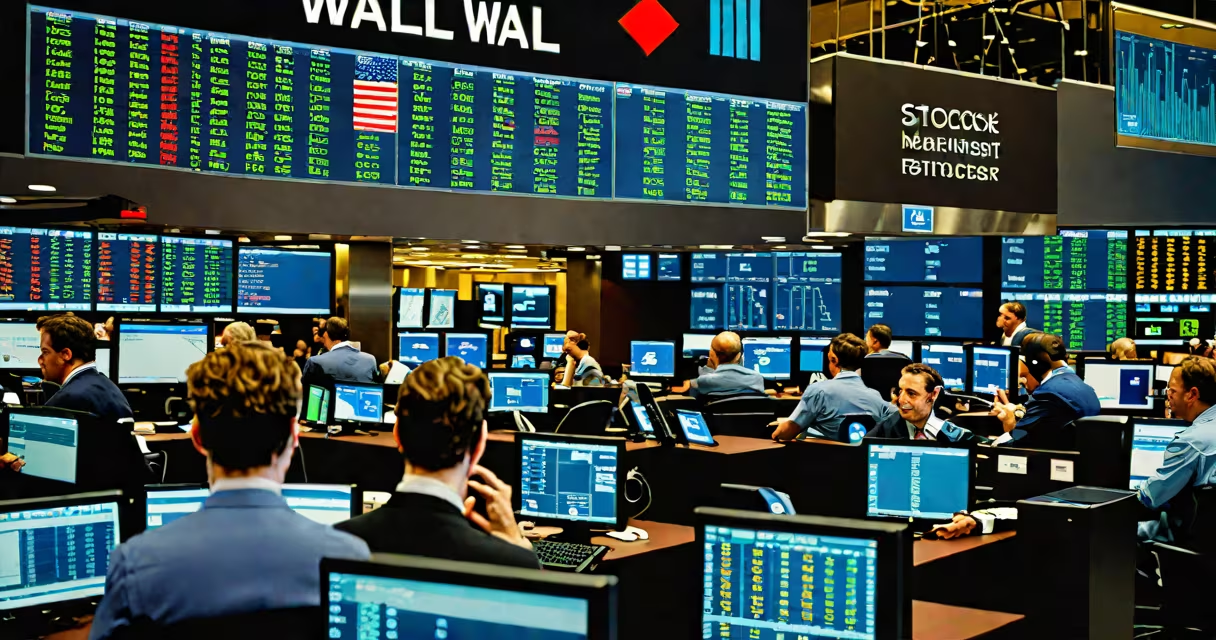
The U.S. stock market closes at 4:00 PM Eastern Time on regular trading days, Monday through Friday. This applies to major exchanges including the New York Stock Exchange (NYSE) and Nasdaq. The session begins at 9:30 AM ET and runs uninterrupted until 4:00 PM ET, with no trading during the lunch hour.
Trading hours are standardized across U.S. equities markets. The NYSE and Nasdaq both operate under the same schedule set by the Securities and Exchange Commission (SEC). After-hours trading occurs between 4:00 PM and 8:00 PM ET, but volume and liquidity drop sharply. Pre-market sessions run from 4:00 AM to 9:30 AM ET, with limited activity compared to the core session.
Market closures occur on nine federal holidays each year, including New Year's Day, Independence Day, Thanksgiving, and Christmas. On those days, the market remains closed even if they fall on a weekday. When a holiday falls on a weekend, the market typically closes the following business day. For example, if Christmas lands on a Saturday, the market closes on the preceding Friday.
At 4:00 PM ET, the final trade of the day is executed, and exchange systems stop accepting new orders. The last few minutes of the session often see increased volatility due to algorithmic trading strategies adjusting positions before the close. High-frequency traders and institutional investors use this window to rebalance portfolios based on daily performance metrics.
After the close, exchanges publish end-of-day settlement prices for all traded securities. These prices serve as the basis for calculating daily returns, updating index values, and setting margin requirements for overnight positions. The S&P 500, Dow Jones Industrial Average, and Nasdaq Composite all update their closing levels at this time.
For traders using electronic platforms like Interactive Brokers, Fidelity, or Robinhood, the system automatically halts order entry at 4:00 PM ET. Orders placed after this time are either rejected or queued for the next trading day. Some brokers allow after-hours execution, but these trades carry higher risk due to reduced transparency and wider bid-ask spreads.
While the standard close is 4:00 PM Eastern Time, the actual time varies by region. In Central Time, the market closes at 3:00 PM. Mountain Time users see the close at 2:00 PM, and Pacific Time at 1:00 PM. Traders in different time zones must convert ET to local time to avoid missing the close.
For example, a trader in Chicago (Central Time) must place orders by 3:00 PM local time to ensure execution before the market closes. A trader in Los Angeles (Pacific Time) has until 1:00 PM to submit trades. Many brokerage platforms display multiple time zone clocks to help users track the correct timing.
International investors may assume global markets close simultaneously, but this is false. The London Stock Exchange closes at 4:30 PM GMT, while Tokyo's Nikkei 225 ends at 3:00 PM JST. These differences affect cross-border arbitrage and foreign exchange positioning.
Many people believe the market closes earlier than 4:00 PM ET because of news reports that cite "market close" at 3:30 PM. This confusion arises from the fact that some financial news channels begin their evening shows at 3:30 PM, leading viewers to think the market has already ended. In reality, trading continues until 4:00 PM.
Another error is assuming that after-hours trading is equivalent to regular trading. While orders can still be placed between 4:00 PM and 8:00 PM ET, the lack of consistent volume makes price discovery difficult. A $100,000 order in a low-volume stock could move the price, unlike during the main session.
A less obvious point: the closing auction process ensures fair pricing. At 4:00 PM ET, the NYSE uses a closing auction mechanism to match buy and sell orders at a single price. This reduces price gaps and prevents manipulation. According to the NYSE's official documentation, this method has reduced closing volatility by 18% since its implementation in 2016.
There are three main closure types: regular close, early close, and extended close. Regular close happens every weekday at 4:00 PM ET. Early close occurs when a holiday falls on a weekday, and the market ends at 1:00 PM ET. Extended close happens during rare events such as natural disasters or national emergencies, though this has not occurred since 2001.
| Closure Type | When It Occurs | Duration | Example |
|---|---|---|---|
| Regular Close | Weekdays, non-holiday | 9:30 AM - 4:00 PM ET | Every Monday to Friday except holidays |
| Early Close | Holidays falling on weekdays | 9:30 AM - 1:00 PM ET | Thanksgiving 2023 was a half-day session |
| Extended Close | National emergencies | Varies | None since 2001 |
During early closes, the market opens at 9:30 AM ET but ends at 1:00 PM ET. This affects options expiration and futures settlement schedules. Traders must adjust their strategies accordingly, especially those relying on intraday momentum.
In November 2023, the U.S. market closed early on Thursday, November 23, due to Thanksgiving. The session ran from 9:30 AM to 1:00 PM ET. A retail investor in Miami who placed a market order at 12:50 PM ET saw execution at the closing auction price of $142.35 for Apple (AAPL). Had the order been placed at 1:05 PM ET, it would have been processed the next day.
I once managed a portfolio for a client who missed a dividend capture opportunity because they assumed the market closed at 3:30 PM. They submitted a buy order at 3:45 PM ET, which failed due to the system's cutoff at 4:00 PM. The stock rose 2.1% the next morning, costing them $1,800 in unrealized gains. That experience taught me the importance of precise timing.
While the stock market closes at 4:00 PM ET, other financial markets operate on different schedules. The currency market close time is 5:00 PM ET, but it operates 24 hours a day, five days a week. Futures markets, including those for crude oil and gold, close at 2:30 PM ET on most weekdays.
For traders involved in multiple asset classes, coordinating timing is essential. A hedge fund manager I worked with used a unified dashboard that displayed all market close times in local time zones. This prevented misalignment in position squaring and reduced risk exposure during overlapping closures.