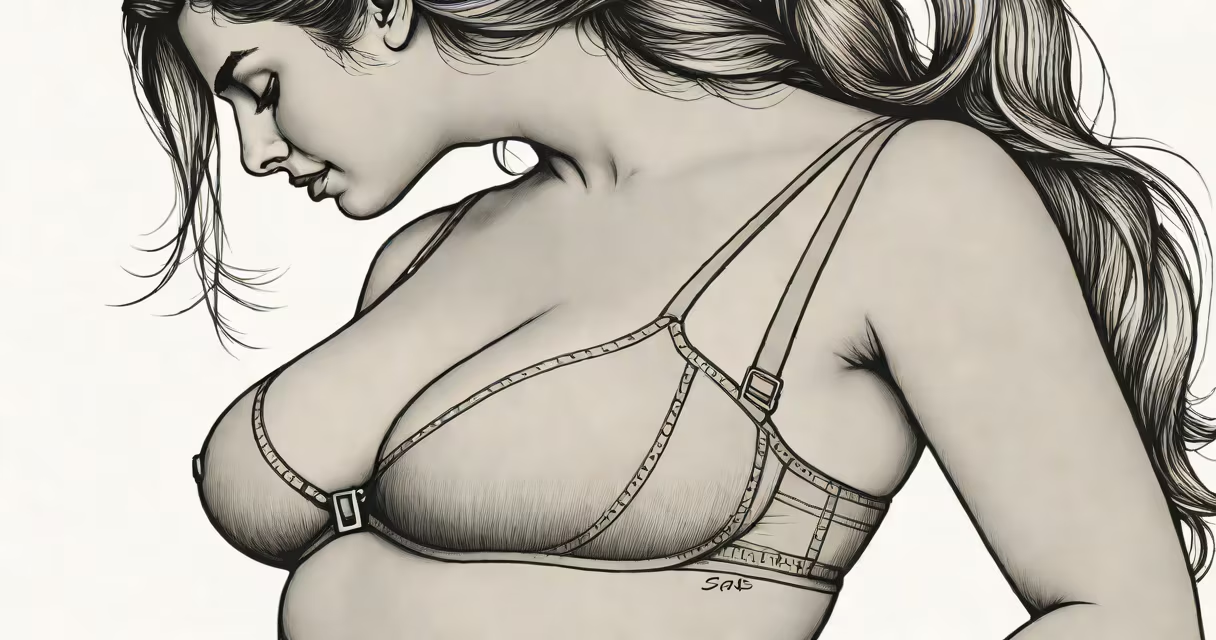
A boob size guide translates physical measurements into standardized bra sizes, helping people select properly fitting bras based on band and cup dimensions. It uses actual bust and underbust measurements to determine size, avoiding assumptions based on clothing labels or visual appearance.
Standard bra sizing divides the body into two parts: the band (around the ribcage just below the breasts) and the cup (the space above the band that holds the breast tissue). The band size is measured in inches, typically in whole numbers (e.g., 32, 34, 36). The cup size is determined by the difference between the bust measurement and the band measurement. A 1-inch difference equals an A cup, 2 inches equals a B cup, and so on.
For example, someone with a 32-inch underbust and a 36-inch bust has a 4-inch difference. That corresponds to a D cup. Their full size is 32D. This system applies globally, though some countries use different lettering sequences or metric units. The United States and Canada use the standard system, while the UK and Europe have slight variations in sizing standards.
Every boob size guide begins with two precise measurements: underbust and bust. Underbust is taken snugly around the torso, just below the breasts, using a flexible tape measure. Bust is measured at the fullest part of the chest, keeping the tape level and parallel to the floor. These values form the foundation for calculating size.
Cup size is calculated by subtracting the underbust measurement from the bust measurement. Each inch of difference represents one cup size. A 1-inch gap is an A cup, 2 inches is a B, 3 inches is a C, 4 inches is a D, 5 inches is DD/E, 6 inches is F/G, and so on. Some brands extend beyond G, especially in plus-size ranges.
Not all bodies fit neatly into standard categories. For instance, a person with a 34-inch underbust and a 38-inch bust has a 4-inch difference, which is a D cup. But if their breasts are wide and low-set, they may need a full-coverage bra or a style with wider bands and deeper cups. A guide doesn't account for breast shape, density, or positioning-only volume and placement relative to the ribcage.
There are several formats for boob size guides, each suited to different needs. The most common are:
Standard charts assume even distribution of breast tissue. They fail when breasts are uneven or sit far apart. Body shape-specific guides address this by including recommendations for styles like plunge bras, balconette cuts, or front-fastening models. These guides often include photos or diagrams showing ideal fit points.
Some brands publish proprietary sizing systems. For example, Victoria's Secret uses a "full figure" line with extended band sizes (up to 48) and cup sizes (up to H). These aren't interchangeable with standard sizing. A 36H from Victoria's Secret may differ from a 36H in a European brand due to construction methods and fabric stretch.
Many people assume that bra size correlates directly with clothing size. A woman who wears a size 10 in jeans may wear a 34D in bras-but that's not guaranteed. Clothing sizes are arbitrary and vary widely between brands. A size 10 dress from one label may fit like a size 12 from another. Bra size is not tied to fashion size.
Another myth is that breast size changes dramatically with weight gain or loss. While fat contributes to breast volume, the majority of breast mass comes from glandular and connective tissue. A 10-pound weight gain may increase bust size by only half an inch, depending on body composition. Conversely, losing 10 pounds might reduce cup size by one full size, but not always.
One overlooked fact: band size matters more than cup size for support. A 34B with a loose band provides less lift than a 32D with a snug band. Support comes from the band, not the cups. A poorly fitting band causes strain on shoulders and back. This is why many experts recommend getting professionally fitted at a specialty store rather than relying solely on online tools.
Take Sarah, who measures 32 inches around her underbust and 37 inches around her bust. She subtracts 32 from 37, gets 5 inches. That's a DD/E cup. Her size is 32DD. But she feels uncomfortable-her band rides up and her cups spill over. She tries a 34DD. The band fits snugly, and the cups hold the tissue without bulging. The band size increased by two inches, but the cup stayed the same. This shows that band size adjustment can fix fit issues even when cup size seems correct.
I once helped a friend measure herself after years of wearing ill-fitting bras. She thought she was a 36C. Her actual underbust was 34 inches, and her bust was 39 inches-a 5-inch difference. That's a 34DD. When she tried a 34DD, the band sat flat, and the cups enclosed her breasts fully. She hadn't realized how much strain she'd been putting on her spine and shoulders.
Always measure in the morning, when breasts are least swollen. Wear a non-padded bra or none at all. Keep the tape measure level and firm-not tight, not loose. Measure twice to confirm accuracy.
Using a boob size guide correctly requires attention to detail and willingness to try multiple sizes. The goal isn't to match a label-it's to find a bra that supports, shapes, and feels comfortable. Always prioritize fit over brand, style, or price. A well-fitted bra reduces back pain, improves posture, and enhances confidence.
When in doubt, consult a professional fitter. Many lingerie stores offer free fittings. Use a guide as a starting point, not a final answer. The best size is the one that allows you to move freely, breathe deeply, and feel secure in your body.