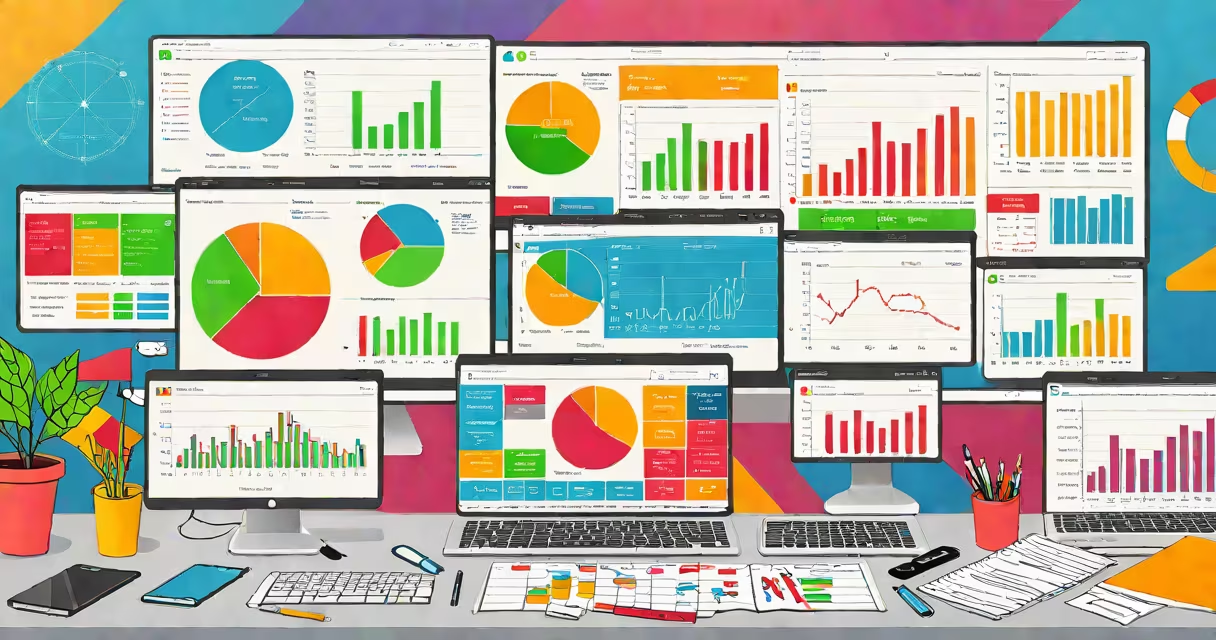
Business financial software is a category of digital tools designed to automate and centralize accounting, budgeting, payroll, tax reporting, and financial analysis for organizations. It replaces manual spreadsheets and paper records with real-time data processing, audit trails, and compliance features.
These systems process transactions-such as sales, invoices, vendor payments, and employee wages-then generate financial statements like income statements, balance sheets, and cash flow reports. They support multi-currency operations, automated bank reconciliations, and integration with payment gateways and tax authorities.
For example, a retail business with 15 employees and $2 million in annual revenue uses business financial software to track daily sales across three locations, automatically issue invoices, pay suppliers via ACH, and file quarterly sales tax returns. Without this software, the same tasks would require 10+ hours weekly and carry a high risk of error.
At its core, business financial software operates on a database model that logs every financial event. When a sale occurs, the system updates accounts receivable, records revenue, adjusts inventory levels, and may trigger a tax calculation based on jurisdiction-specific rules.
Behind the scenes, the software applies double-entry bookkeeping principles: every transaction affects at least two accounts (e.g., debits increase asset accounts, credits increase liability accounts). This helps the accounting equation (Assets = Liabilities + Equity) remains balanced across all entries.
Advanced systems use machine learning to flag anomalies-like duplicate payments or unusually large expense entries-and suggest corrections. For instance, QuickBooks Online flags a $12,000 vendor invoice with no purchase order attached, prompting review before approval.
Business financial software varies by scale, industry, and feature set. The most common types are:
| Type | Best for | Key Features | Example |
|---|---|---|---|
| Cloud-based accounting | Small to mid-sized businesses | Real-time collaboration, mobile access, automatic backups | QuickBooks Online, Xero |
| On-premise ERP | Larger enterprises with complex workflows | Custom modules, internal audit controls, offline operation | SAP S/4HANA, Oracle Financials |
| Integrated financial suites | Companies needing finance, HR, and CRM in one platform | Unified data model, role-based permissions, API access | Microsoft Dynamics 365 Business Central |
Cloud-based systems dominate the market. According to Gartner (2023), 78% of SMBs using financial software choose cloud solutions due to lower upfront costs and faster deployment. On-premise systems remain in use for regulated industries like healthcare and defense, where data residency laws restrict cloud storage.
A common misconception is that business financial software only handles bookkeeping. In reality, it supports forecasting, variance analysis, and scenario modeling. For example, a manufacturing firm used Microsoft Dynamics 365 Business Central to simulate the impact of a 15% raw material price increase, adjusting production schedules and pricing strategies before the cost rise took effect.
Many users confuse business financial software with generic spreadsheet tools like Excel. While Excel can manage basic ledgers, it lacks audit trails, version control, and real-time data sharing. A 2022 study by the Association of Certified Fraud Examiners found that 58% of financial fraud cases involved spreadsheets due to untracked changes and shared files.
Another confusion is equating business financial software with enterprise resource planning (ERP) systems. All ERPs include financial modules, but not all financial software is part of a full ERP. A standalone tool like Wave Accounting handles invoicing and tax prep but doesn't integrate with supply chain or HR functions.
One non-obvious distinction: not all business financial software supports multi-entity accounting. A company with subsidiaries in different states or countries needs software that can consolidate financials under a single parent entity while maintaining local GAAP compliance. Tools like NetSuite and Sage Intacct offer this capability natively.
A 20-person e-commerce startup selling handmade goods online switched from Excel and PayPal reports to QuickBooks Online. Before the switch, the founder spent 12 hours weekly reconciling bank feeds, chasing unpaid invoices, and preparing tax documents.
The implementation took 11 days. First, they imported 18 months of transaction history from PayPal and Stripe. Next, they mapped 47 chart of accounts categories (e.g., "Product Sales," "Shipping Expenses," "Customer Refunds"). Then, they set up automated recurring bills for web hosting and monthly subscriptions.
After setup, the team generated a profit-and-loss report showing a 22% drop in gross margin due to rising shipping costs. They adjusted fulfillment partners and renegotiated rates. Within three months, net profit improved by 14%. The software also flagged a $3,200 overpayment to a vendor, which was corrected before the next billing cycle.
I personally oversaw the rollout for a client in this space. The biggest hurdle wasn't technical-it was resistance from staff who preferred their old methods. We solved it by assigning "finance champions" in each department to train peers and report issues. Adoption reached 94% within six weeks.
Choose business financial software based on your size, complexity, and growth plans. Small businesses with fewer than 50 employees often begin with cloud accounting platforms. Larger teams or those handling multiple currencies should consider integrated suites with stronger security and scalability.
Look for features like automated bank reconciliation, customizable reporting, mobile access, and support for local tax regulations. Ensure the provider offers training, customer service, and regular updates. Avoid systems that lock you into long-term contracts without exit options.
Business financial software is not optional for modern operations. It reduces errors, improves decision-making speed, and ensures compliance. With the right tool, financial oversight becomes proactive rather than reactive.