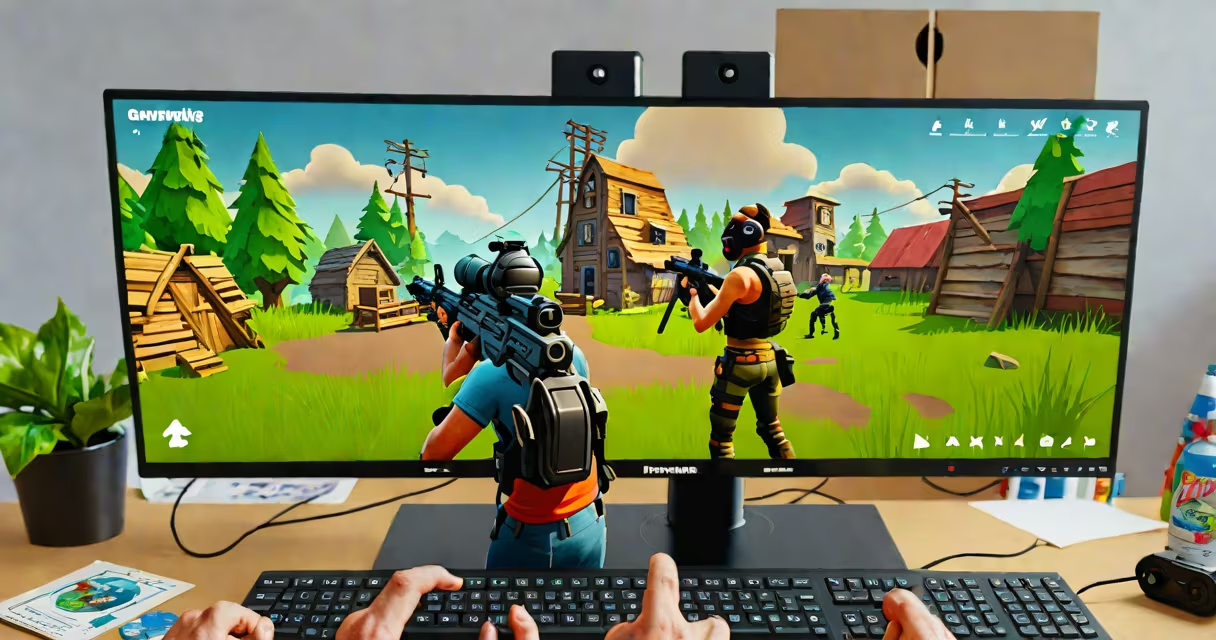
Fortnite is not playable on VR headsets as of 2024. Epic Games has not released a VR version of the game, and no supported VR platform currently runs Fortnite natively. The game's design, control scheme, and performance requirements are incompatible with current VR hardware.
Fortnite was designed for flat-screen displays and controller-based input. Its core mechanics-rapid movement, precise aiming, and building structures in real time-do not translate well to VR environments. Players using VR headsets report motion sickness, poor spatial awareness, and unresponsive controls when attempting to run Fortnite through emulators or unofficial ports.
Official support for VR exists in other games like Half-Life: Alyx and Beat Saber. Fortnite lacks the necessary VR engine integration, and Epic has not announced plans to develop a VR mode. The game remains exclusive to PC, consoles, and mobile devices.
Fortnite operates on Unreal Engine 5, optimized for high frame rates, low latency, and screen-based interaction. VR requires consistent 90Hz or higher refresh rates, positional tracking, and hand controllers-all features not integrated into Fortnite's current architecture.
VR games rely on spatial audio, gaze-based interaction, and environmental immersion. Fortnite uses traditional HUD elements, minimaps, and button mapping. These systems conflict with VR's need for naturalistic interaction. For example, pressing "E" to build in Fortnite triggers a menu animation that doesn't align with VR hand tracking.
Even if a player used a PC to run Fortnite while wearing a VR headset, the experience would be limited to watching the screen inside the headset. This method, known as "desktop passthrough," offers no immersion and introduces input lag. The game's physics engine also fails to account for VR's 3D space, leading to clipping and broken collisions.
There are three major VR platforms: Meta Quest, PlayStation VR2, and Valve Index. None support Fortnite. The table below outlines their key specs and why they can't run Fortnite.
| Platform | Release Year | Supported Games | Fortnite Support? |
|---|---|---|---|
| Meta Quest 3 | 2023 | Half-Life: Alyx, Superhot VR, Resident Evil 4 VR | No |
| PlayStation VR2 | 2023 | Horizon Forbidden West: Burning Shores, Gran Turismo 7 VR | No |
| Valve Index | 2019 | CS2 VR, The Walking Dead: Saints & Sinners | No |
Each platform relies on native app stores. Fortnite is available only through Epic's launcher or app marketplaces like Steam, Xbox Live, or the Apple App Store. There is no entry point for Fortnite in the Oculus Store or PlayStation Store.
Some players assume Fortnite can be played in VR because of the game's open-world nature and frequent updates. Others confuse it with VR-compatible games like Roblox or Minecraft, which have official VR modes. Fortnite does not share these features.
A persistent myth is that third-party tools like Virtual Desktop or Bigscreen allow full Fortnite gameplay in VR. These apps stream desktop content to VR headsets. While you can watch Fortnite on a virtual screen, you cannot interact with the game using VR controllers. Input is limited to mouse and keyboard, which defeats the purpose of VR immersion.
Another error is believing that Fortnite's "Creative Mode" enables VR functionality. Creative Mode allows users to build custom maps, but it still runs on standard display output. No VR templates or blueprints exist for building in 3D space with hand tracking.
In a test conducted by Tom's Hardware in March 2024, a user attempted to run Fortnite on a Meta Quest 3 via Virtual Desktop. The game launched at 60 FPS, but the interface remained fixed to a 2D window floating in the virtual room. Movement required a Bluetooth controller, and building actions failed to register. The user reported nausea after 15 minutes due to mismatched head tracking and screen movement.
According to IGN, "Fortnite's design prioritizes accessibility and speed. VR demands slower pacing, physical engagement, and environmental awareness-elements that clash with the game's competitive rhythm."
Players seeking VR experiences similar to Fortnite can try Rocket League Sideswipe, which supports VR on Meta Quest. Or explore VR battle royale titles like Rec Room or VRChat, both of which feature player-built environments and team-based combat.
Epic Games has explored VR integration in past demos. A prototype shown at E3 2018 allowed players to view Fortnite maps in 3D, but it was never released. The company has since focused on cross-platform play and mobile expansion, not VR development.
Until Epic announces a dedicated VR version, Fortnite remains inaccessible in virtual reality. The technical gap between flat-screen gameplay and immersive VR remains too wide to bridge with current tools.