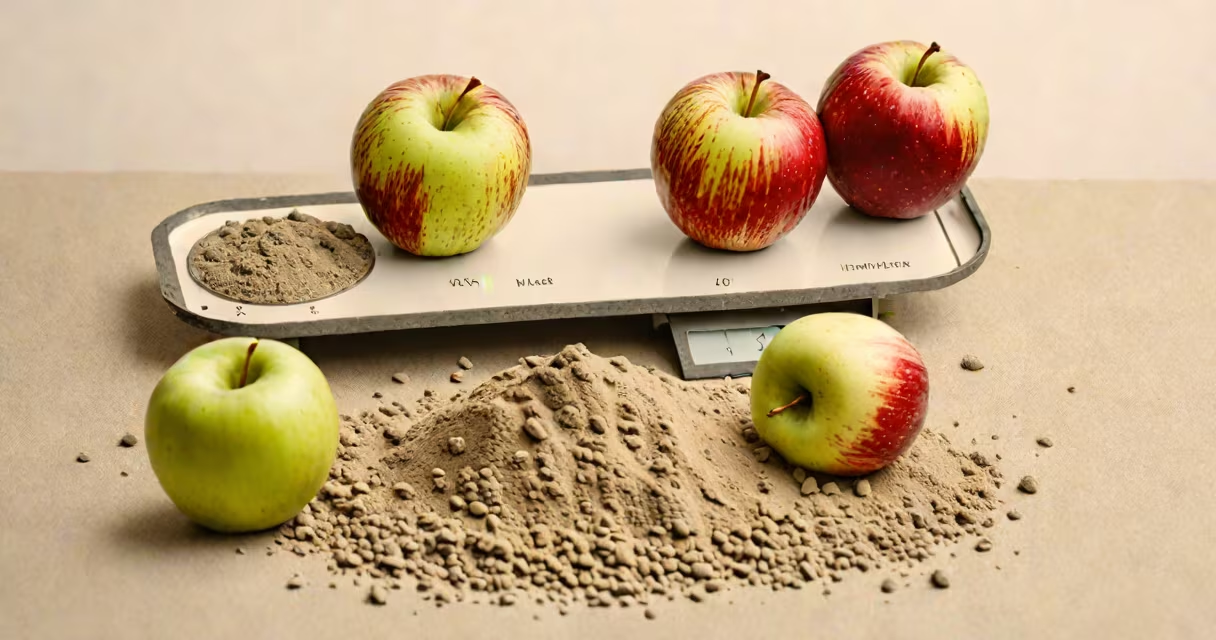
Countable and uncountable refer to two categories of nouns in English based on whether they can be counted using numbers or quantifiers like "some" or "much." Countable nouns name distinct, individual items-like books or cars-and take plural forms. Uncountable nouns describe substances, concepts, or masses that aren't divided into separate units-like water or happiness-and do not have plural forms.
Countable nouns exist in singular and plural forms. You can say "one book," "two books," "three books." Each unit is distinct and measurable. Uncountable nouns don't follow this pattern. You cannot say "one water" or "five happinesses." Instead, you use quantity words like "a glass of water" or "a lot of happiness."
The distinction affects article usage too. Countable nouns take "a" or "an" in singular form ("a dog"), while uncountable nouns usually don't ("some milk"). Plural countable nouns take "these" or "those" ("those shoes"), but uncountable nouns use "this" or "that" ("this sugar").
Countable nouns represent discrete, identifiable entities. You can touch them, see them as separate units, and assign numbers to them. For example, "I have five pens." Each pen is a single, countable object. You can ask "how many?" and expect a number.
Uncountable nouns refer to things that lack clear boundaries or individual units. Water, air, advice, information, and furniture are uncountable. You can't count "a water" or "an air." Instead, you measure them indirectly: "a cup of water," "a breath of air," "some advice."
Some nouns switch between countable and uncountable depending on context. "Time" is uncountable when referring to duration ("I don't have time") but countable when talking about specific instances ("We had three good times at the concert"). "Work" is uncountable as effort ("She's doing work") but countable as tasks ("He completed two works this week").
Use the table below to compare common countable and uncountable nouns. The examples show correct usage with quantifiers and articles.
| Noun Type | Examples | Correct Usage |
|---|---|---|
| Countable | book, chair, idea, problem | "I read three books." "There are two chairs." "She has a new idea." |
| Uncountable | water, music, information, advice | "I drank some water." "The music was loud." "I need more information." "Can you give me advice?" |
| Both (context-dependent) | time, work, food, hair | "I have time to finish." (uncountable) vs. "We had a great time." (countable) "He did a lot of work." (uncountable) vs. "She finished her first work." (countable) |
When using uncountable nouns, avoid plural markers. Saying "many waters" is incorrect. Use "a lot of water" or "several bottles of water." For countable nouns, use "few" or "many" ("few books," "many problems").
Many learners incorrectly treat uncountable nouns as if they were countable. A frequent error is saying "I need a milk" instead of "I need some milk." The word "milk" is uncountable-it doesn't take "a" in this context.
Another mistake is misusing quantifiers. "Much" goes with uncountable nouns ("I don't have much time"), while "many" goes with countable ones ("There are many people"). Using "much" with countable nouns leads to errors like "much books" instead of "many books."
A subtle but important point: some nouns are always uncountable even when they seem divisible. "Furniture" is uncountable. You can't say "a furniture" or "two furnitures." Instead, say "a piece of furniture" or "several pieces of furniture." Similarly, "luggage" is uncountable-say "a suitcase" or "a bag of luggage," not "two luggages."
I once helped a student write a short essay on daily routines. She wrote: "I drink a coffee every morning." That's incorrect. "Coffee" is uncountable. The correct version: "I drink coffee every morning." Or, if she wanted to specify amount: "I drink a cup of coffee."
Another example: "She gave me a advice." This is wrong. "Advice" is uncountable. Correct: "She gave me some advice."
Language learning apps often fail to explain the logic behind countability. But understanding the rule isn't about memorizing lists-it's about recognizing whether something exists as a whole or as parts. If you can divide it into equal, separate units, it's likely countable.
Countable and uncountable nouns affect sentence structure, verb agreement, and article choice. Misusing them leads to unnatural-sounding English. For example:
Bread is uncountable. You can't say "breads" unless you mean different types-"I like sourdough, rye, and multigrain breads." Even then, "breads" refers to varieties, not individual loaves.
According to the Cambridge Grammar of English (Cambridge University Press, 2002), countable and uncountable distinctions are fundamental to accurate spoken and written English. The Oxford Advanced Learner's Dictionary (Oxford University Press, 2020) includes countability notes for nearly every entry, underscoring their importance in vocabulary acquisition.
Non-native speakers often struggle most with abstract nouns. "Love," "hope," "knowledge," "progress"-all uncountable. You can't say "a love" or "three hopes." But you can say "a moment of love" or "a few hopeful moments."
Final clarification: Some nouns are countable in one language but not in another. For example, "information" is uncountable in English but countable in German ("Informationen"). This cross-linguistic difference causes confusion among learners who transfer rules from their native language.
Understanding countable and uncountable nouns isn't about rigid rules-it's about matching language to reality. If you can count it, use numbers and plurals. If it flows as a mass or concept, use "some," "much," or "a lot of."
Mastering this distinction improves accuracy in both speaking and writing. It's not just grammar-it's communication.