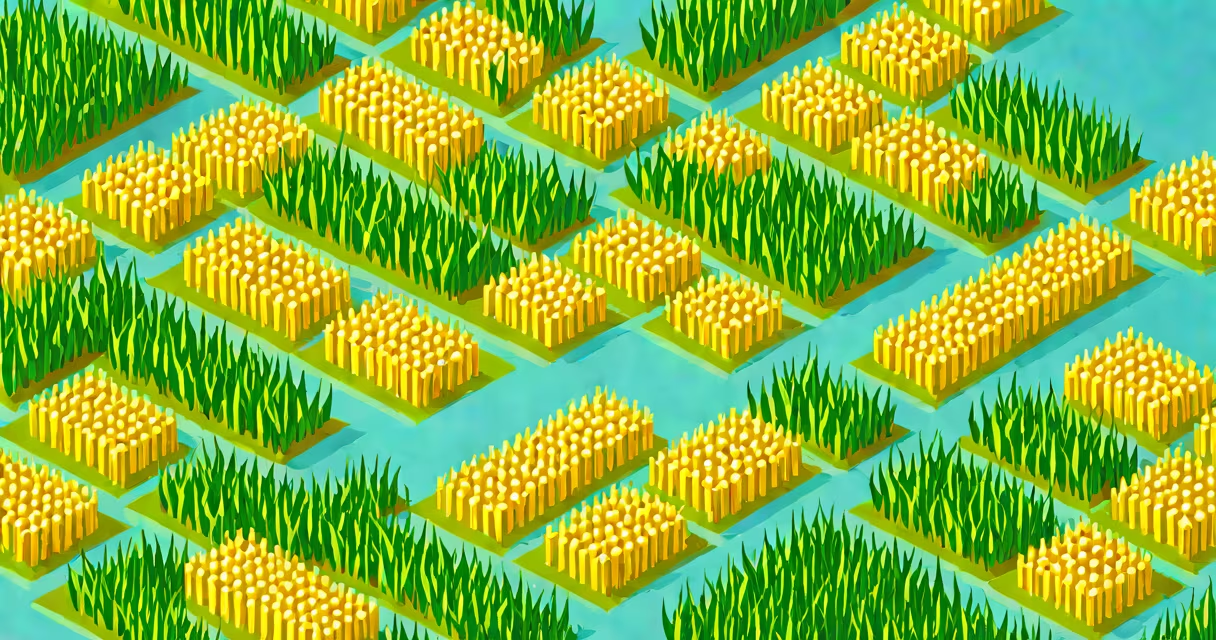
Crop rotation in agriculture is the practice of growing different crops in a specific order on the same land over several growing seasons to improve soil health, manage pests, and increase yields. This method prevents nutrient depletion and reduces reliance on synthetic fertilizers and pesticides.
The core principle behind crop rotation is that plants have varying nutrient demands and pest profiles. By rotating crops, farmers disrupt pest life cycles, balance soil nutrients, and promote microbial diversity. For example, legumes fix nitrogen in the soil, which benefits subsequent nitrogen-hungry crops like corn or wheat.
According to the USDA Natural Resources Conservation Service, crop rotation improves water infiltration and reduces erosion by maintaining consistent root structure across seasons. The practice is a foundational element of sustainable agriculture and is recommended in conservation planning frameworks.
Crop rotation operates on the principle of ecological succession in farming systems. When a crop is harvested, it leaves behind residues and alters soil chemistry. Repeating the same crop on the same plot leads to nutrient imbalances and buildup of pathogens and weeds adapted to that crop's environment.
A typical rotation cycle includes three to four crops. A common sequence in temperate regions is corn → soybean → winter wheat → cover crop (such as rye or clover). Corn depletes nitrogen; soybeans replenish it through symbiotic nitrogen fixation. Winter wheat adds organic matter and stabilizes soil during fallow periods. Cover crops protect soil from erosion and suppress weeds.
Each crop in the rotation plays a role in breaking disease and pest cycles. For instance, planting potatoes after a non-host crop like oats reduces the risk of potato scab and late blight. The timing and sequence matter-rotations must align with local climate, soil type, and market demand.
Farmers use several rotation models based on purpose and scale. The most common are:
| Type | Description | Best For |
|---|---|---|
| Simple Rotation | Two or three crops rotated annually (e.g., corn → soybean → wheat) | Small to mid-sized farms with limited equipment |
| Complex Rotation | Four or more crops, including cover crops and diverse rotations (e.g., corn → soybean → oats → alfalfa) | Larger operations aiming for high sustainability and reduced inputs |
| Double Cropping | Growing two crops in one season (e.g., wheat → soybean → sorghum) | Warm climates with long growing seasons |
| Intercropping with Rotation | Planting compatible crops together, then rotating them (e.g., maize and beans in a relay system) | Subsistence and smallholder farming systems |
Research from the University of Illinois shows that farms using a four-year rotation (corn-soybean-wheat-clover) saw a 15% reduction in nitrogen fertilizer use and a 12% increase in yield stability over ten years compared to continuous corn systems.
Modern agriculture faces challenges like declining soil organic matter, pesticide resistance, and rising input costs. Crop rotation addresses these issues directly. The FAO reports that farms using diversified rotations experience 20-30% lower rates of soil-borne diseases and 25% less weed pressure than monoculture systems.
One key benefit is nutrient cycling. Legumes such as peas and vetch host rhizobia bacteria that convert atmospheric nitrogen into usable forms. When these crops are plowed under or left as residue, they enrich the soil for later crops. A 2021 study in Soil Science Society of America Journal found that fields with legume inclusion had 30% higher available nitrogen levels at planting time.
Another advantage is improved soil structure. Deep-rooted crops like alfalfa or sunflowers break up compacted layers, enhancing water infiltration and root development. This reduces runoff and increases drought resilience.
Many assume crop rotation requires complex planning or large land areas. In reality, even small-scale gardens can implement simple rotations. A home gardener might rotate tomatoes (nightshade family) with carrots (umbellifer family), then plant lettuce (aster family), preventing disease carryover and nutrient competition.
Some confuse crop rotation with intercropping. While both involve multiple species, intercropping grows them simultaneously in the same space. Crop rotation changes crops sequentially over time. Mixing the two is possible-planting beans between rows of corn in spring, then harvesting and rotating to a cover crop in fall-but they are distinct practices.
A common error is assuming all crops can be rotated freely. Certain crops share pathogens. Planting potatoes after tomatoes increases the risk of late blight. The USDA advises avoiding consecutive planting of crops within the same family unless disease-resistant varieties are used.
In a 30-year trial at the Rodale Institute, researchers compared conventional corn-soybean systems with a diversified rotation including oats, alfalfa, and cover crops. The rotation system produced 30% higher net income per acre due to lower input costs and better yields during dry years.
During a drought year in 2012, the rotated plots maintained 22% higher corn yields than continuous corn fields. Soil organic matter increased by 1.5% over the study period, while the control plots lost 0.8%. These results demonstrate that crop rotation enhances both economic and environmental performance.
I observed this firsthand during a visit to a certified organic farm in Pennsylvania. They rotated corn, soybeans, and rye on 120-acre fields. Their soil tests showed consistently higher phosphorus and potassium levels compared to nearby conventional farms using continuous corn. The farmer reported fewer insect outbreaks and reduced need for tillage.
It also intersects with animal agriculture. Rotated pastures support livestock grazing, and manure from animals can be integrated into crop systems. For example, a dairy farm may grow silage corn, then rotate to a grass-legume mix for pasture, returning nutrients to the soil. This closed-loop system reduces waste and improves efficiency.
While crop rotation doesn't eliminate all risks, it lowers them. It's not a magic solution, but a proven tool backed by decades of field research and real-world success.
Crop rotation definition in agriculture is not just a historical practice-it's a living strategy that sustains soil, boosts yields, and reduces environmental harm. Its effectiveness lies in respecting natural cycles rather than overriding them.