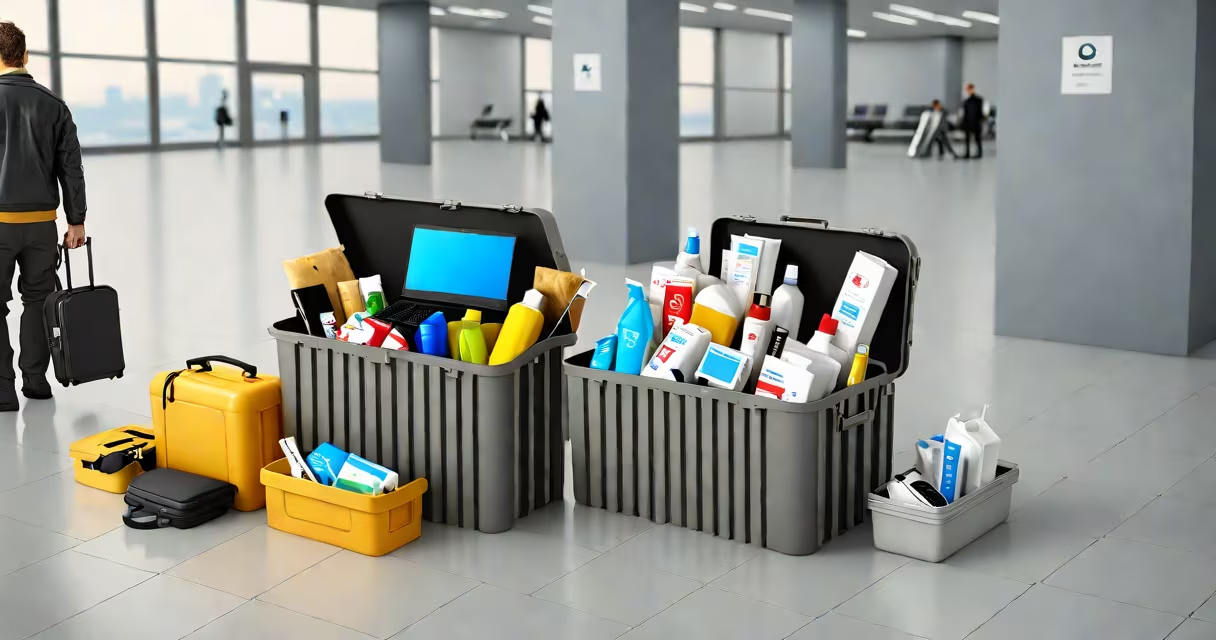
To get through TSA screening, you must have a valid government-issued photo ID, remove electronics larger than a smartphone from your carry-on, place all liquids in containers under 3.4 ounces inside a single clear quart-sized plastic bag, and remove your shoes, jacket, and belt at the checkpoint. All items must go through X-ray inspection.
TSA (Transportation Security Administration) is the U.S. federal agency responsible for screening passengers and baggage at commercial airports. Its primary goal is to prevent threats to civil aviation. The process begins when you reach the security checkpoint, where you'll go through a series of steps designed to detect prohibited items and verify identity.
The most common mistake travelers make is assuming that all personal items are allowed in carry-ons. This is false. Items such as knives, scissors with blades longer than 4 inches, and certain tools are banned. Even seemingly harmless items like nail clippers and pocket knives are restricted. Knowing what's permitted prevents delays and potential confiscation.
Every traveler must present a valid photo ID at the checkpoint. Acceptable forms include a U.S. passport, driver's license, state-issued ID, military ID, or permanent resident card. TSA does not accept expired IDs or digital copies unless they're part of a trusted traveler program.
Carry-on bags must contain only approved items. Liquids, gels, and aerosols must be in containers no larger than 3.4 ounces (100 milliliters) and placed in a single clear quart-sized plastic bag. This rule applies to shampoo, toothpaste, lotion, and even small bottles of perfume. A single bag per passenger is required - multiple bags result in additional screening.
Electronics larger than a smartphone must be removed from your bag and placed in a separate bin. This includes laptops, tablets, e-readers, and cameras. TSA recommends turning devices on during screening to avoid confusion. If your device won't power on, inform the officer - failure to comply may trigger a manual search.
Many travelers assume that TSA agents can see everything on-screen. This is incorrect. While X-ray machines show density and shape, operators rely on training and pattern recognition. A bottle of water in a reusable container may appear suspicious if it's not labeled or if it's in a non-standard shape.
Another widespread error is carrying oversized batteries. Lithium-ion batteries over 100 watt-hours are banned from carry-ons. Most consumer devices fall below this limit, but power banks and camera batteries often exceed it. Always check battery specifications before packing.
A lesser-known rule: TSA allows passengers to carry up to 3.4 ounces of liquid medication in their carry-on, even if it exceeds the standard liquid limit. This exception applies only if the medication is necessary for medical treatment and is declared at the checkpoint. Keep prescriptions in original packaging and have them ready for inspection.
Standard screening requires removing shoes, belts, jackets, and electronics. With TSA PreCheck, passengers can keep on their shoes, belts, and jackets, and leave laptops and liquids in their bags. To qualify, applicants must apply online, pay a $85 fee, and attend an in-person interview.
PreCheck reduces average wait times by 40%. According to a 2023 TSA report, PreCheck lanes processed 60% of screened passengers at major hubs. However, PreCheck does not guarantee immediate passage - all bags still undergo X-ray scanning, and random secondary screenings occur.
| Screening Type | Remove Shoes? | Remove Electronics? | Liquids in Bag? | Wait Time (Avg) |
|---|---|---|---|---|
| Standard | Yes | Yes | Yes | 25 minutes |
| TSA PreCheck | No | No | No | 12 minutes |
PreCheck is not available at all airports. As of 2024, it operates at 200+ U.S. airports. Check the TSA website for current locations.
In March 2023, a traveler at Los Angeles International Airport (LAX) was delayed because they carried a 4.5-inch pocket knife in their coat pocket. The knife was discovered during a manual search. The passenger was not arrested but had to surrender the item. TSA reported that 12% of all confiscated items in 2022 were knives or sharp objects.
Another incident involved a woman who brought a 12-ounce bottle of hand sanitizer in her carry-on. Despite being under the 3.4-ounce limit, the bottle was in a non-transparent container. TSA officers flagged it for inspection. After verification, it was allowed through. This shows that container transparency matters - opaque bottles may be treated as suspicious.
I once watched a family at Chicago's O'Hare Airport struggle with a 5-liter water jug in their carry-on. The child had a medical condition requiring hydration. The bag was sent to secondary screening. Officers eventually allowed the jug after confirming it was for medical use. This case highlights that exceptions exist - but only with documentation and cooperation.
Prohibited items include firearms, explosives, flammable liquids, and pressurized cans. Even aerosol sprays like deodorant or hair spray are limited to 3.4 ounces. Larger quantities must be packed in checked luggage.
Alcohol is allowed in carry-ons only if it's in sealed containers and under 100 proof (50% alcohol by volume). Any alcohol above that must be checked. For example, a 750ml bottle of 80-proof whiskey cannot be carried on - it must be packed in checked baggage.
Food items are generally allowed, but liquids like sauces or soups may be questioned. A traveler once had a jar of homemade salsa seized because it was in a glass container and appeared to contain a thick liquid. The officer asked for a sample, which was then tested. The item was returned after confirmation it was food, not a hazardous substance.
Following this list ensures minimal delay. If you're unsure about an item, check the TSA's official website before traveling. The site includes a searchable database of over 10,000 items.
When preparing for travel, always test your bag setup at home. Place all items in a bin and simulate the screening process. This habit catches issues early - like a hidden metal item in a backpack.
Understanding what you need to get through TSA avoids stress and saves time. Know your ID requirements, pack liquids correctly, and remove electronics. These steps ensure a smooth process through the checkpoint.