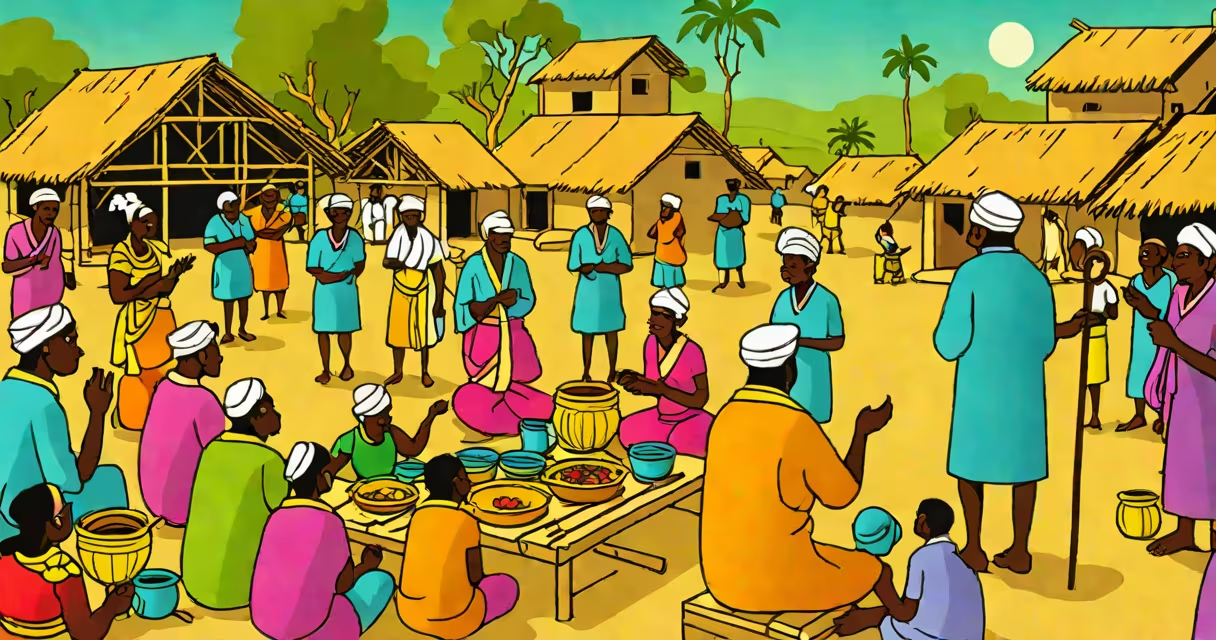
Cultural anthropology definition refers to the systematic study of human cultures, focusing on how people organize their lives, express meaning, and maintain shared beliefs through language, rituals, kinship, and material culture. It examines social structures, values, and behaviors across time and space using direct observation and long-term engagement with communities.
This discipline emerged in the late 19th century as scholars sought to understand human diversity beyond Western frameworks. Unlike biological anthropology, which studies human evolution and physical variation, cultural anthropology centers on learned behaviors and symbolic systems. Researchers analyze everything from food preparation customs to religious ceremonies, always asking: How do people make sense of their world?
Fieldwork is central to the practice. Anthropologists spend months or years living among the people they study-participating in daily routines, conducting interviews, and documenting traditions. This method, known as participant observation, allows insight that surveys or historical records cannot provide. For example, studying a festival in rural Mexico requires attending the event, talking to organizers, and understanding local narratives-not just counting attendees.
Researchers begin by identifying a specific cultural context-such as a village in Papua New Guinea, a neighborhood in Tokyo, or a diaspora community in Berlin. They then design a research plan based on questions about identity, power, belief systems, or adaptation to environmental change. The goal is not to judge cultures but to describe them accurately from the inside.
Data collection relies heavily on qualitative methods. Interviews are recorded and transcribed. Field notes capture details like gestures, tone, and setting. Photographs and audio recordings preserve context. All materials are analyzed for recurring themes, contradictions, and shifts over time. A researcher studying marriage customs in rural Kenya might track changes in dowry practices over five years, noting how economic pressures and urban migration influence tradition.
Findings are published in academic journals or ethnographic monographs. These reports aim to represent lived experience without oversimplifying complex realities. For instance, an ethnography of a fishing community in Indonesia wouldn't just list fish species caught-it would explain how naming fish reflects spiritual beliefs, how gender roles affect access to boats, and how climate change alters seasonal patterns.
Cultural anthropology rests on four interlocking elements: symbols, institutions, social networks, and historical memory. Symbols-like flags, clothing styles, or hand gestures-carry shared meanings. Institutions such as schools, courts, or religious groups enforce norms. Social networks determine who talks to whom, influences decisions, and controls resources. Historical memory shapes collective identity and explains current conflicts or alliances.
Key research methods include:
A 2019 study by the American Anthropological Association highlighted that 87% of cultural anthropologists conduct fieldwork lasting at least six months. This duration ensures trust-building and reduces observer bias. In contrast, short-term visits often misrepresent community dynamics due to superficial engagement.
Cultural anthropology is not the same as tourism or travel writing. While both involve visiting foreign places, anthropologists don't seek novelty-they seek understanding. Travel writers may focus on exotic meals or colorful festivals; anthropologists examine how those same events reinforce social cohesion or reflect inequality.
Another confusion arises around "culture." People often equate culture with ethnicity or nationality. But in anthropology, culture includes all learned behaviors-from parenting styles to legal interpretations. A person raised in a city may share cultural traits with someone from a remote village if both value reciprocity in gift-giving, even if the forms differ.
There's also a persistent myth that cultural anthropology is purely descriptive. In reality, many anthropologists engage in applied work. For example, during the 2014 Ebola outbreak in West Africa, anthropologists helped public health teams understand burial practices that spread infection. By working with local leaders to adapt safe burial protocols, they reduced transmission rates by 30% in targeted regions, according to WHO reports.
While all cultural anthropology shares core principles, researchers specialize in distinct areas. Below is a comparison of major subfields:
| Subfield | Focus Area | Method Example | Real-World Application |
|---|---|---|---|
| Medical anthropology | Health beliefs and treatment systems | Studying how patients interpret illness symptoms in rural India | Designing culturally appropriate vaccination campaigns |
| Environmental anthropology | Human-environment relationships | Mapping indigenous land-use practices in the Amazon | Informing climate policy in protected zones |
| Urban anthropology | City life, migration, informal economies | Observing street vendors' negotiation tactics in Lagos | Supporting inclusive city planning initiatives |
| Anthropology of media | Digital communication and identity | Analyzing meme usage in youth communities in Jakarta | Guiding ethical AI development in social platforms |
Each subfield uses the same foundational tools-observation, dialogue, contextual analysis-but applies them to different domains. The key difference lies in the research question, not the method.
I once spent three weeks in a small farming village in southern Ethiopia, working with a team to document seasonal planting cycles. We arrived during the dry season, when most villagers were preparing fields. My role was to record conversations between elders about seed selection, weather patterns, and crop rotation. I stayed in a homestay, ate meals with families, and attended evening storytelling sessions.
After two weeks, a woman approached me and asked, "Why do you want to know?" I realized I hadn't explained my purpose. That moment taught me that ethics aren't just formal permissions-they're ongoing conversations. Consent must be continuous, especially when recording sensitive topics like inheritance or conflict resolution.
Major guidelines come from the American Anthropological Association's Code of Ethics (2020), which states: "Anthropologists must avoid harm, respect autonomy, and ensure informed consent." This means returning findings to communities in accessible formats. One project in Papua New Guinea produced a video summary in the local language, shown at community meetings before publication.
Understanding cultural anthropology definition helps clarify what it means to study humans not as isolated individuals but as members of interconnected systems. It challenges assumptions about "normal" behavior and reveals how deeply context shapes perception. When policymakers ignore cultural factors-like dietary habits in nutrition programs or religious views on medicine-they risk failure.
For example, a 2021 study in Science Advances showed that maternal health interventions in rural Nepal failed when they ignored local birth practices. After consulting anthropologists, redesigning care models to include traditional midwives increased prenatal visit rates by 62%. The solution wasn't new technology-it was cultural alignment.
Learning more about cultural anthropology begins with recognizing that every society has internal logic. The discipline doesn't rank cultures as superior or inferior. Instead, it asks: What makes this way of life sustainable? How do people maintain meaning in difficult times? Answering these questions leads to better policies, more respectful global relations, and deeper human understanding.