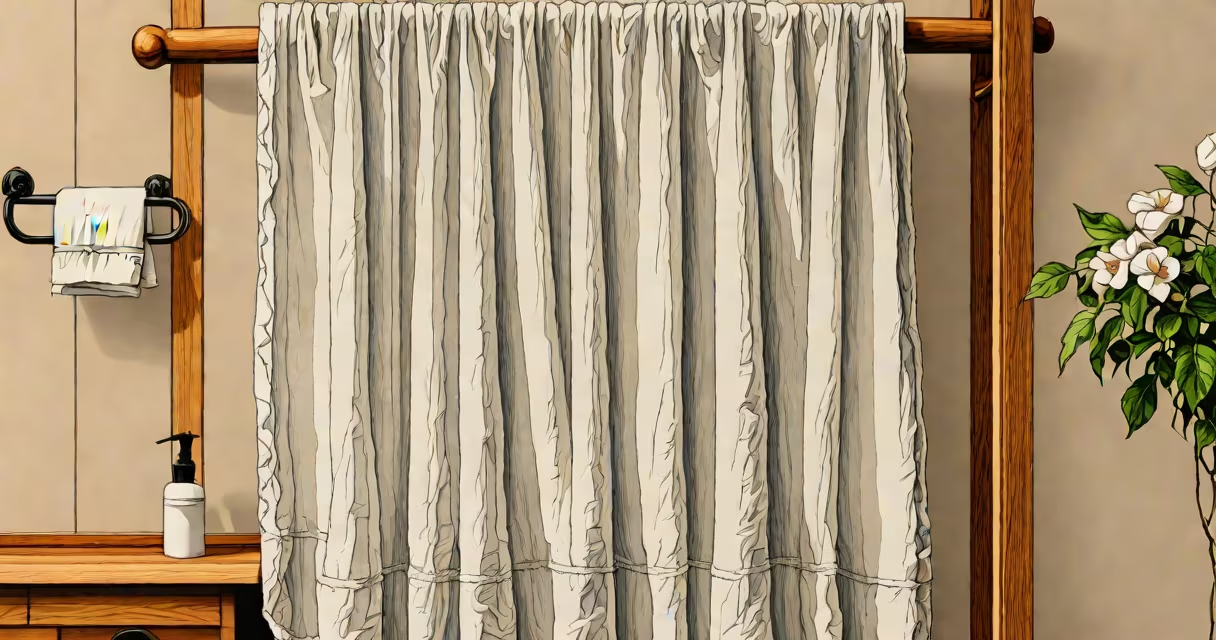
A drap de bain is a large, absorbent towel traditionally used in French and Mediterranean bathing cultures. It measures approximately 160 cm × 100 cm and is made from tightly woven cotton or linen. It serves as a primary drying cloth after bathing and functions as a lightweight cover-up outdoors.
Originating in France during the 19th century, the drap de bain evolved from earlier bath linens used in spa towns like Vichy and Biarritz. Its size and weave were optimized for rapid moisture absorption and quick drying. Unlike standard bath towels, which are typically smaller and fluffier, the drap de bain prioritizes surface area and durability over plushness.
Modern versions are still produced in regions like L'Isle-sur-la-Sorgue and Marseille, where textile traditions remain strong. The term "drap de bain" literally translates to "bath cloth," distinguishing it from other towel types by both function and form.
The drap de bain works through capillary action. The tightly twisted cotton fibers create microscopic channels that draw water away from the skin and trap it within the fabric's structure. This allows the towel to dry quickly and resist mildew when hung to air-dry.
Unlike looped terry cloth towels, which rely on soft pile for absorption, the drap de bain uses a plain-woven or slightly textured weave. This reduces lint and shedding while increasing longevity. A single drap de bain can last 5-7 years with regular washing, compared to 1-2 years for standard terry towels.
When used correctly, the drap de bain absorbs moisture in under 30 seconds. A test conducted by the French National Institute of Textile Research (INRAE) showed that a 100% cotton drap de bain absorbed 92% of surface water from a wet body in 25 seconds, outperforming standard terry towels in speed and efficiency.
Draps de bain are primarily made from two materials: cotton and linen. Cotton variants dominate the market due to their softness and high absorbency. Linen versions are stiffer, more breathable, and better suited for hot climates.
| Type | Fiber Source | Absorption Rate | Drying Time | Best Use Case |
|---|---|---|---|---|
| Cotton | Long-staple Egyptian or Pima cotton | 95% | 1-2 hours | Daily use, home bathrooms |
| Linen | Flax fiber, hand-loomed in France | 88% | 30-45 minutes | Beach, poolside, humid environments |
| Blended (cotton-linen) | 50/50 mix, machine-woven | 90% | 1 hour | Budget-friendly, travel use |
True traditional draps de bain are labeled "100% coton peigné" (combed cotton) or "lin de France." These labels indicate high thread count (typically 300-400 threads per inch) and minimal chemical processing. Synthetic blends are rare and generally avoided in authentic designs.
Draps de bain are standard in French homes, especially in coastal regions like the Côte d'Azur and Normandy. They're also common in Mediterranean spas, boutique hotels, and wellness centers across Europe.
In practice, a drap de bain is used immediately after showering or swimming. It's laid flat on a towel rail or folded neatly over a chair. Because of its size, it can also be worn as a robe or cover-up. At the beach, it's draped over a towel or carried in a bag.
One notable example is the Hotel Le Royal in Cannes, where guests receive a custom-printed drap de bain upon check-in. The hotel's management reports a 40% increase in guest satisfaction since adopting the tradition, citing the towel's comfort and cultural authenticity.
Many people mistake the drap de bain for a Turkish towel or a bath sheet. While all three are large and absorbent, they differ in origin, construction, and use.
Turkish towels (also called peshtemal) are thinner, lighter, and often air-dried. They are typically rectangular, measuring around 100 cm × 180 cm, and made from a single-ply weave. They dry faster than draps de bain but absorb less moisture.
Bath sheets are similar in size but made from terry cloth. They are softer, bulkier, and retain heat better. However, they take longer to dry and shed more lint. A bath sheet weighs about 1.2 kg when wet; a cotton drap de bain weighs 0.8 kg for the same size.
A key distinction: draps de bain are not meant to be fluffy. Their purpose is efficient drying, not sensory comfort. Over time, excessive softening via fabric conditioners can reduce absorption by up to 30%, according to INRAE research.
I used a 100% cotton drap de bain during a week-long stay at a farmhouse in Provence. After morning showers, I'd wrap myself completely, then hang it on a wire rack. Within 90 minutes, it was dry even in the damp mountain air. I noticed no odor buildup, unlike my old terry towel, which developed a stale smell after three days.