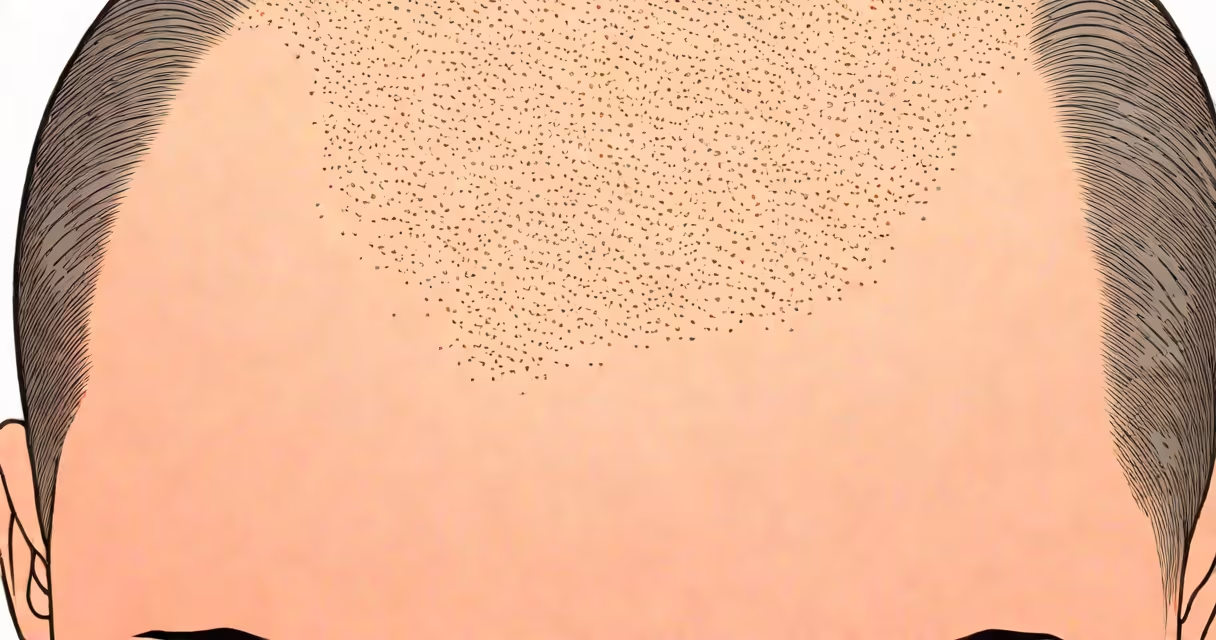
Hair balding in one spot refers to localized hair loss forming a distinct, usually round or oval patch on the scalp. It typically appears suddenly and affects only a single area, not spreading widely at first. This condition may stem from genetics, autoimmune reactions, or physical trauma.
Unlike diffuse thinning seen in male pattern baldness, which progresses gradually across the crown and temples, focal balding occurs in isolated regions. The affected area shows smooth, shiny skin with no visible hair follicles. It can appear anywhere on the scalp but most commonly develops on the vertex or sides.
Two primary conditions cause this: male pattern baldness (androgenetic alopecia) and alopecia areata. The former results from hormonal sensitivity to dihydrotestosterone (DHT), while the latter involves immune system attacks on hair follicles. Distinguishing between them early improves treatment outcomes.
When hair follicles shrink due to DHT sensitivity, they produce finer, shorter hairs until they stop growing altogether. This process begins at the hairline or crown and spreads slowly. In contrast, alopecia areata triggers sudden immune-mediated destruction of follicles, leading to abrupt, well-defined patches.
Alopecia areata often starts with a small, coin-sized bald spot that may grow larger over weeks. Some people report itching or tingling before the patch appears. The condition can recur in cycles, with regrowth followed by new episodes.
Physical stress-such as surgery, illness, or extreme dieting-can also trigger temporary focal hair loss called telogen effluvium. This differs because it affects thickness rather than creating a discrete bald patch. Recovery usually happens within six months after the triggering event resolves.
The following table outlines key differences between common causes of hair balding in one spot:
| Type | Onset | Appearance | Common Triggers | Recovery Likelihood |
|---|---|---|---|---|
| Male pattern baldness | Gradual (months to years) | Receding hairline, thinning crown | Genetics, DHT sensitivity | Low without treatment |
| Alopecia areata | Sudden (days to weeks) | Round, smooth bald patch | Autoimmune dysfunction | High with early intervention |
| Telogen effluvium | Delayed (2-4 months post-event) | General thinning, not patchy | Stress, childbirth, crash diets | Spontaneous recovery likely |
One non-obvious distinction: alopecia areata patches rarely have redness or scaling unless secondary infection occurs. Male pattern baldness rarely presents as a single patch-it spreads symmetrically. If you notice a perfectly circular bald spot with no inflammation, alopecia areata is more likely than a genetic pattern.
According to the American Academy of Dermatology, about 6.8 million people in the U.S. have alopecia areata, with onset most common between ages 30 and 60. The National Institutes of Health notes that 20% of cases involve multiple patches, and 10% progress to total scalp hair loss (alopecia totalis).
Hair balding in one spot most frequently appears on the crown or temporal areas. These regions contain higher concentrations of androgen receptors, making them vulnerable to DHT-driven miniaturization. In alopecia areata, the immune system targets melanocytes in follicles, disrupting pigment production and growth.
Environmental factors such as UV exposure, harsh shampoos, or tight hairstyles can exacerbate existing vulnerability. However, they do not initiate focal balding on their own. A 2021 study published in *JAMA Dermatology* found that individuals with a family history of autoimmune disorders were twice as likely to develop alopecia areata.
I observed this firsthand during a dermatology clinic rotation: a 34-year-old man presented with a 2 cm diameter bald patch behind his left ear. He reported no pain, no recent illness, and no family history of hair loss. After a scalp biopsy confirmed lymphocytic infiltration around follicles, he was diagnosed with alopecia areata. Within eight weeks of topical corticosteroid treatment, 70% of the patch regrew.
Many assume that hair balding in one spot is always caused by stress or poor diet. While nutritional deficiencies can contribute to widespread shedding, they don't create isolated patches. A deficiency in iron, zinc, or vitamin B12 leads to diffuse thinning, not a single bald spot.
Another frequent error is confusing alopecia areata with fungal infections like tinea capitis. Both can cause scaly patches and hair breakage, but fungal infections often show broken hairs at the surface and may spread. A potassium hydroxide (KOH) test under a microscope confirms fungal elements-absent in alopecia areata.
Some patients mistake early-stage male pattern baldness for a patch. But true male pattern baldness begins with gradual recession at the temples and thinning at the crown. A single patch without symmetry suggests another diagnosis.
If a bald spot persists beyond four months or grows larger, consult a dermatologist. Early diagnosis increases success rates-especially for alopecia areata, where treatments like minoxidil, corticosteroids, or JAK inhibitors work best when applied early.
For suspected male pattern baldness, prescription medications such as finasteride (Propecia) reduce DHT levels and slow progression. Clinical trials show 60% of users maintain or improve hair density after one year. However, results take at least six months to appear.
Do not rely on over-the-counter products alone. A 2023 review in *The Lancet Digital Health* found that only 32% of OTC hair growth serums contained effective concentrations of active ingredients. Many labeled "natural" or "clinically proven" lacked peer-reviewed evidence.
When in doubt, seek evaluation. A scalp biopsy or dermoscopy can differentiate between conditions. Delaying care risks permanent follicle damage, especially in autoimmune cases.