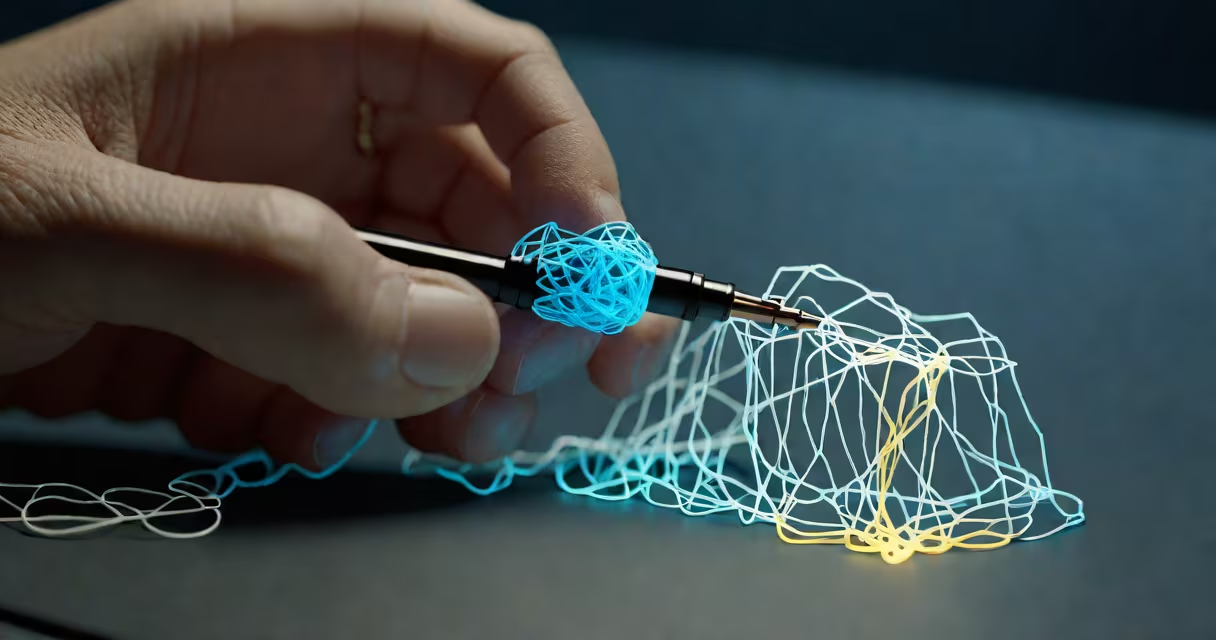
A 3d pen is a handheld device that melts plastic filament and extrudes it in real time to form three-dimensional objects layer by layer. It functions like a glue gun but uses thermoplastic material such as PLA or ABS to build solid structures directly in midair or on a surface.
Unlike traditional 3d printers that build objects inside a confined chamber, a 3d pen lets users draw shapes manually. The pen heats filament to around 200°C (392°F), turning it into a viscous liquid that hardens quickly upon cooling. This allows immediate shaping and manipulation during use.
Popular among artists, educators, and hobbyists, 3d pens enable rapid prototyping and tactile creativity. They're especially useful for creating custom sculptures, jewelry, and architectural models without relying on software or complex setup.
The core mechanism involves a motorized feed system that pulls filament through a heated nozzle. Once inside the heating chamber, the plastic melts and is pushed out under pressure. As the molten plastic exits, it cools rapidly-typically within 1-2 seconds-solidifying into a stable structure.
Most pens operate on a 12V DC power supply via USB or AC adapter. The temperature control is usually adjustable between 160°C and 230°C depending on the filament type. Using the wrong temperature causes poor adhesion or clogging.
For example, PLA filament requires about 200°C and sets in 1.5 seconds. ABS filament needs higher heat-around 230°C-and takes longer to cool, making it more challenging for beginners. Always match the pen's temperature setting to the filament specifications.
Three main categories exist based on performance and application:
| Type | Best For | Common Filament | Speed & Precision |
|---|---|---|---|
| Entry-level | Beginners, kids, crafts | PLA | Slow, low precision |
| Mid-range | Artists, educators, prototypes | PLA, ABS | Moderate, better control |
| High-end | Industrial design, detailed models | PLA, ABS, PETG, flexible filaments | Fast, high precision |
Entry-level pens like the 3Doodler Start are designed for safety and ease. They feature lower heat settings and automatic shut-off. Mid-range models such as the 3Doodler Create offer variable speed controls and dual-speed motors. High-end devices like the 3Doodler PRO support multiple filament types and have advanced temperature sensors.
One non-obvious fact: many pens don't accept mixed filaments. Switching between PLA and ABS without cleaning the nozzle can cause clogs due to differing melting points and chemical compositions. Always clean the tip with a metal wire brush after changing materials.
3d pens are used in classrooms to teach spatial reasoning and geometry. A teacher in Chicago used a 3d pen to demonstrate how polygons form 3D shapes by building a cube from six connected squares. Students reported better retention compared to static diagrams.
Artists use them to create kinetic sculptures. One sculptor in Berlin built a rotating gear assembly using only PLA and hand-guided layers. The final piece weighed less than 100 grams but held together under moderate stress.
Designers use 3d pens for quick mockups. Instead of waiting hours for a 3D print, they sketch a handle shape in 10 minutes. This speeds up iteration cycles in product development.
When used correctly, a 3d pen produces results faster than desktop 3D printers for small-scale projects. A 3-inch model took 12 minutes to draw versus 45 minutes to print on a standard FDM machine.
Many assume a 3d pen works like a regular pen. It doesn't. You must move slowly and steadily-too fast causes thin, weak layers. A beginner trying to draw a spiral may produce a wobbly structure because of inconsistent speed.
Another misconception: 3d pens can make anything. They cannot. Overhangs greater than 45 degrees often collapse unless supported by temporary scaffolding. Using a backing sheet or cardboard base prevents drooping.
Some users think all filaments are interchangeable. That's false. Mixing PLA and ABS without cleaning the nozzle leads to blockages. A test run with a scrap piece of filament is essential before starting a project.
I once tried to build a miniature bridge using only a single strand of PLA. After 20 minutes, the center collapsed. The fix was adding vertical supports every 1.5 cm. This reinforced the structure and prevented failure.
To make a simple 3D heart:
This process takes under 5 minutes. The result is a lightweight, stable object suitable for display or gift-giving.
Always work on a non-stick surface like glass or ceramic tile. Avoid wood or paper-they can catch fire if the pen tips over. Keep a fire extinguisher nearby when operating at high temperatures.
Using a 3d pen effectively requires practice, proper material selection, and awareness of limitations. It's not a substitute for industrial 3D printing but excels in hands-on creation, education, and rapid ideation. Mastering how to use a 3d pen unlocks direct, physical expression of digital ideas.