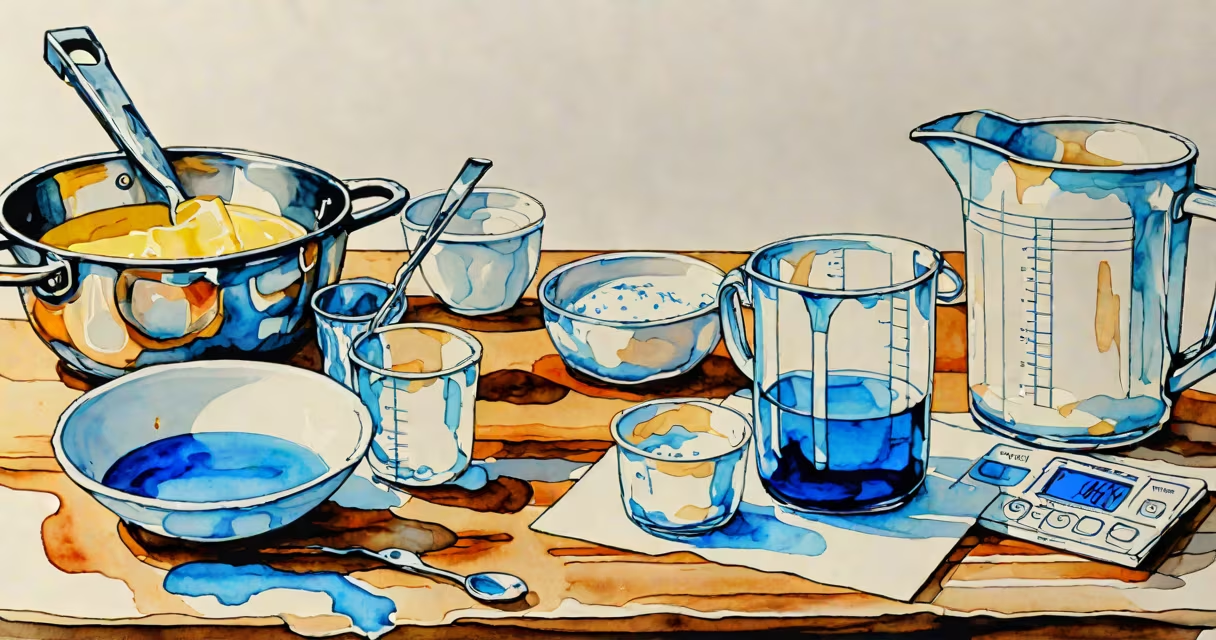
225 ml equals approximately 0.95 cups in U.S. customary units, or just under 1 cup. This conversion is essential for accurate baking and cooking when recipes use metric volume measures.
Volume conversions between metric (milliliters) and imperial (cups) are common in kitchens worldwide. The U.S. standard cup holds 236.588 ml, so 225 ml falls slightly below one full cup. This difference matters in precision baking, where even small deviations affect texture and rise.
For most home cooks, rounding 225 ml to 1 cup is acceptable. But for consistent results-especially in baked goods like cakes or breads-using the precise value ensures reliability. The difference between 225 ml and 236.588 ml is about 11.6 ml, roughly two tablespoons, which can alter outcomes in sensitive recipes.
The U.S. cup is defined as 8 fluid ounces, or exactly 236.588 milliliters. To convert milliliters to cups, divide the volume in milliliters by 236.588. For 225 ml:
225 ÷ 236.588 = 0.951This gives 0.951 cups, or 0.95 cups when rounded to two decimal places. In practical terms, this is 15/16 of a cup, or ¾ cup plus 2 tablespoons.
Some recipes use the metric system exclusively. A recipe calling for 225 ml of milk or water requires a precise measure. Using a measuring cup marked in both milliliters and cups avoids error. Always check the markings-some plastic measuring cups have inconsistent gradations.
For dry ingredients, volume varies by density. 225 ml of flour weighs less than 225 ml of sugar. When converting, always consider whether the ingredient is wet or dry. Volume-based conversions assume uniform density, which doesn't hold across all substances.
Not all "cups" are equal. The U.S. customary cup differs from the UK imperial cup, which is 284.131 ml. Using a UK cup would make 225 ml appear smaller than it actually is-about 0.8 cups in UK terms. This mismatch causes errors in international recipe sharing.
Some countries use the metric cup, defined as 250 ml. In this system, 225 ml is 0.9 of a metric cup. This variation confuses users who assume "cup" means the same globally. Always verify the system your recipe uses.
| Cup Type | Volume in ml | 225 ml Equivalent |
|---|---|---|
| U.S. Customary Cup | 236.588 | 0.95 cups |
| UK Imperial Cup | 284.131 | 0.79 cups |
| Metric Cup (used in Australia, Canada) | 250 | 0.90 cups |
A common mistake is assuming all cups are interchangeable. A recipe written in grams or milliliters assumes a specific system. If a U.S. recipe says "1 cup," it means 236.588 ml. If a European recipe says "1 cup," it may mean 250 ml. Misalignment leads to failed batches.
Another confusion arises with dry vs. liquid measuring tools. Dry ingredients require level scooping; liquid measures are read at eye level. Using a dry measuring cup for liquids introduces error. Always match the tool to the task.
In a cake recipe requiring 225 ml of whole milk, using a U.S. measuring cup marked in cups and milliliters gives a clear reading. Fill the cup to the 225 ml mark-just below the 1 cup line. This yields 0.95 cups, close enough for most purposes.
When scaling a recipe, such as doubling a cookie dough that calls for 225 ml of butter, accuracy prevents overmixing. Butter at room temperature should be measured by volume or weight. 225 ml of butter is 200 grams-this dual measurement confirms correctness.
I once baked chocolate chip cookies using a recipe from a British site that listed 225 ml of cream. I assumed the U.S. cup. After mixing, the batter was too runny. Checking the source revealed they used the UK imperial cup (284 ml). I recalculated and reduced the cream to 180 ml-equivalent to 0.79 U.S. cups-to fix the issue. The second batch rose properly.
Milliliters measure volume, while cups are volume units. But weight-measured in grams or ounces-differs by substance. 225 ml of honey weighs 330 grams; 225 ml of flour weighs 130 grams. Converting volume to weight requires density data.
For consistency, professional bakers use weight. A 225 ml portion of flour is 130 grams. A 225 ml portion of sugar is 225 grams. This eliminates variability due to packing or air pockets.
According to the U.S. Department of Agriculture's Food Safety Education resources, volume-based measurements are acceptable for casual cooking but unreliable for scientific or commercial applications. Weight is preferred for accuracy.
For reference, 225 ml in cups is 0.95 U.S. cups. Use this value when adjusting recipes. If a recipe calls for 1 cup, substitute 225 ml only if the ingredient is neutral (like water or oil). For flour, sugar, or cocoa, weigh instead.