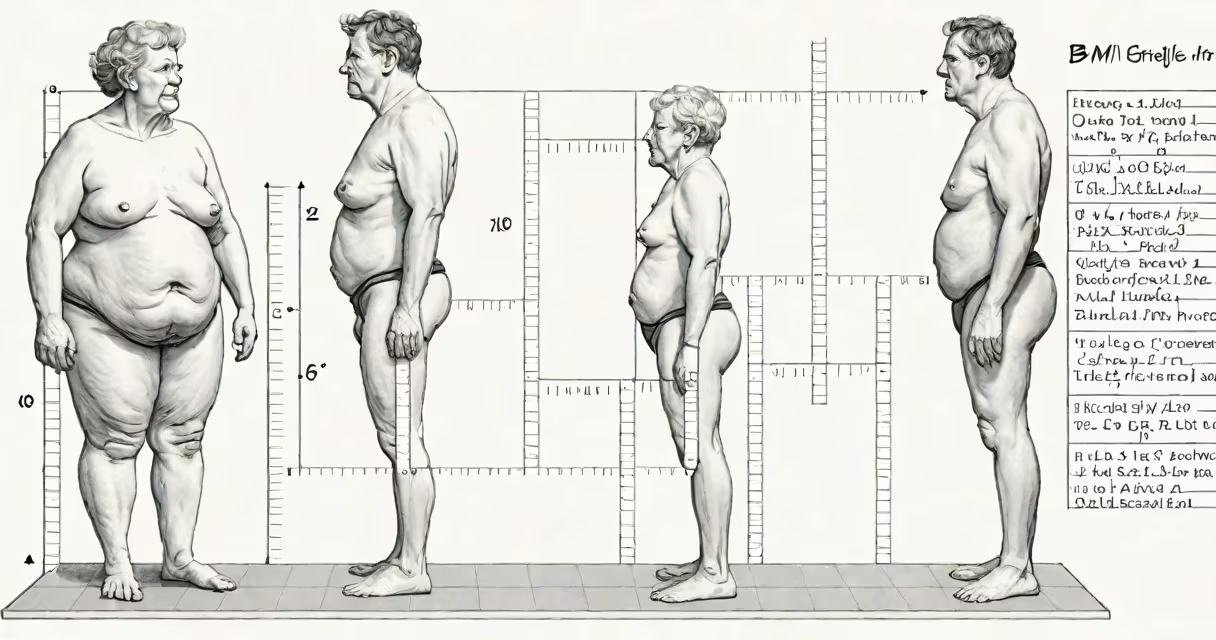
Your ideal weight varies by age, sex, height, and body composition. There's no single number that fits everyone, but general guidelines based on body mass index (BMI) offer a starting point for assessing whether your weight falls within a healthy range for your age group.
BMI is calculated using height and weight. A score between 18.5 and 24.9 is considered normal for most adults aged 20 and older. This range correlates with lower risks of chronic diseases such as heart disease and type 2 diabetes. The Centers for Disease Control and Prevention (CDC) uses these thresholds to define healthy weight across age groups, though they emphasize that BMI doesn't measure body fat directly.
For people under 20, BMI percentiles are used instead of fixed ranges. The CDC provides age- and sex-specific growth charts that show where a child or teen's BMI stands compared to peers. For example, a 16-year-old boy who is 5'7" tall and weighs 150 pounds has a BMI of 22.4, placing him in the 75th percentile-within the healthy range. A 14-year-old girl who is 5'3" and weighs 120 pounds has a BMI of 21.7, which is also in the healthy range.
BMI is not a diagnostic tool but a screening method. It's widely used because it's simple, low-cost, and correlates well with body fat levels in large populations. However, it doesn't account for muscle mass, bone density, or fat distribution.
For example, a 35-year-old man who is 5'10" and weighs 180 pounds has a BMI of 25.7-just above the upper limit of normal. He may still be healthy if he has low body fat and high muscle mass. Conversely, someone with a normal BMI but high visceral fat (fat around organs) may face increased health risks.
The National Institutes of Health (NIH) notes that waist circumference is a better predictor of metabolic risk than BMI alone. For men, a waist measurement over 40 inches increases risk for heart disease and diabetes. For women, over 35 inches is concerning. These measurements are especially useful for people in their 40s and 50s, when abdominal fat tends to increase.
Healthy weight ranges differ across life stages due to changes in metabolism, activity levels, and body composition. Below is a breakdown of general weight ranges based on height and age, derived from CDC and NIH data.
| Age Group | Average Height (US) | Healthy Weight Range (lbs) | Normal BMI Range |
|---|---|---|---|
| 18-24 years | 5'4" (women), 5'7" (men) | 110-150 (women), 130-170 (men) | 18.5-24.9 |
| 25-34 years | 5'5" (women), 5'8" (men) | 115-155 (women), 135-175 (men) | 18.5-24.9 |
| 35-44 years | 5'5" (women), 5'8" (men) | 120-160 (women), 140-180 (men) | 18.5-24.9 |
| 45-54 years | 5'5" (women), 5'8" (men) | 125-165 (women), 145-185 (men) | 18.5-24.9 |
| 55-64 years | 5'4" (women), 5'7" (men) | 125-165 (women), 145-185 (men) | 18.5-24.9 |
These ranges reflect averages. Individual variation is significant. A 40-year-old woman who is 5'5" and weighs 145 pounds has a BMI of 24.3-well within the healthy range. She may feel energetic and have good blood pressure and cholesterol levels. But a 50-year-old man who is 5'7" and weighs 180 pounds has a BMI of 27.4, which is overweight. His doctor may recommend lifestyle changes even if he feels fine.
One common mistake is assuming that weight should stay constant across decades. In reality, metabolism slows by about 2% per decade after age 20. This means a 30-year-old who maintains the same calorie intake as at 20 may gain 1-2 pounds per year unless activity levels rise.
"Ideal weight" is often misunderstood. It's not a medical term. The term appears in outdated weight charts from the 1950s that assumed a "perfect" body type. These charts don't consider diversity in body shapes, muscle mass, or cultural differences in healthy weight.
For example, a 28-year-old woman who is 5'6" and weighs 135 pounds has a BMI of 22.3. She's in the healthy range. But if she sees a 1950s chart that says her "ideal" weight is 125 pounds, she may feel pressured to lose five pounds-even if she's healthy. That pressure can lead to disordered eating patterns.
Another misconception is equating weight with health. A 55-year-old man who is 5'10" and weighs 190 pounds has a BMI of 26.4-overweight. But if his blood work shows normal glucose, triglycerides, and blood pressure, he may be metabolically healthy despite the label. The NIH states that up to 20% of people with overweight or obesity have normal metabolic profiles.
I worked with a client who was 42, 5'5", and weighed 165 pounds. Her BMI was 27.8-classified as overweight. She felt sluggish and had elevated blood sugar during a routine checkup. We reviewed her diet and activity level. She exercised three times a week but ate processed foods most days.
We focused on reducing added sugars and increasing protein and fiber. After six months, she lost 12 pounds-down to 153 pounds-with no extreme dieting. Her BMI dropped to 25.4, still in the overweight range, but her blood sugar normalized. Her energy improved. She didn't obsess over the number on the scale. Instead, she tracked how clothes fit and how she felt.
This case illustrates that weight is not the only indicator of health. Changes in body composition, activity, and biomarkers matter more than a single number.
If you're concerned about your weight relative to your age, talk to a healthcare provider. They can assess your BMI, waist size, blood tests, and family history. A registered dietitian can help create a personalized plan based on your goals, not a generic chart.
Remember: how much should I weigh for my age isn't a fixed number. It's a range shaped by biology, lifestyle, and personal health. Focus on sustainable habits-not a magic weight.