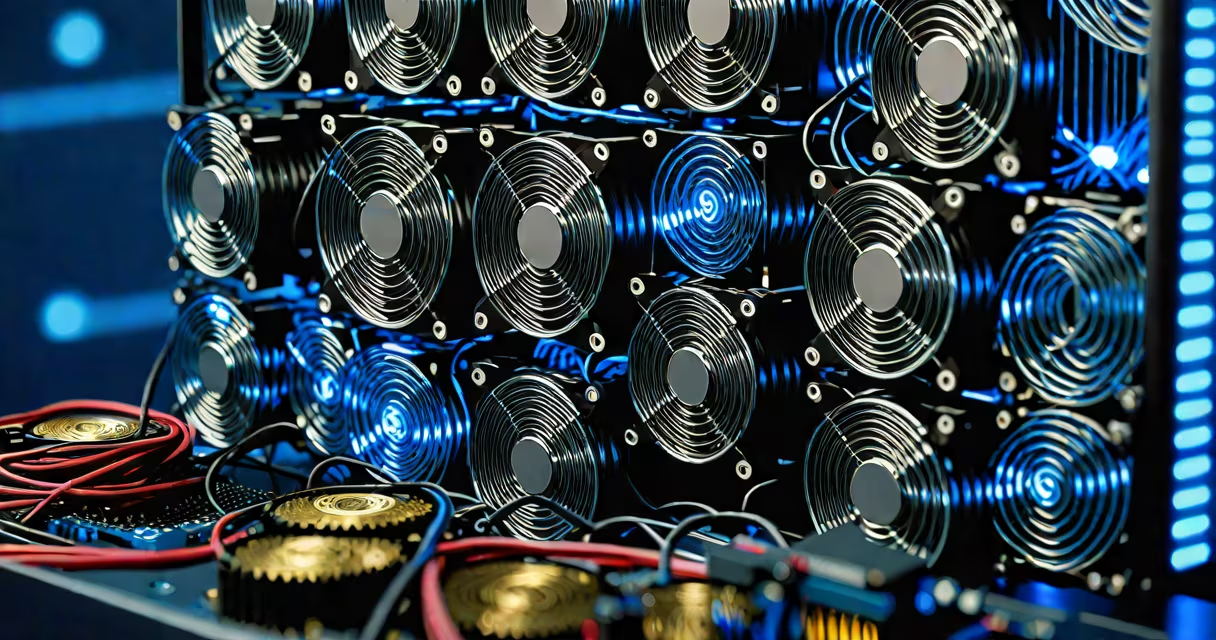
Mineable crypto coins are digital assets secured by proof-of-work consensus, where participants use computational power to validate transactions and secure the network in exchange for newly minted coins. These coins rely on decentralized mining rather than centralized issuance.
Proof-of-work requires miners to solve complex cryptographic puzzles using specialized hardware. The first to solve the puzzle adds a new block to the blockchain and receives a block reward plus transaction fees. This process ensures network integrity and prevents double-spending.
Bitcoin (BTC) was the first mineable coin, launched in 2009. Since then, thousands of alternative mineable cryptocurrencies have emerged, including Ethereum (ETH) before its 2022 transition to proof-of-stake, Litecoin (LTC), and Monero (XMR). Not all cryptocurrencies are mineable-some, like Solana (SOL) or Cardano (ADA), use different consensus mechanisms.
Each mineable coin operates on a public blockchain governed by a set of open-source rules. Miners run software that connects to the network and competes to solve cryptographic challenges tied to the latest block of transactions.
The challenge involves finding a hash-a unique string of characters-that meets specific criteria based on the previous block's hash, current transaction data, and a random number called a nonce. Finding such a hash requires massive trial-and-error computation. The difficulty adjusts periodically to maintain a consistent block time, typically 10 minutes for Bitcoin.
When a miner finds a valid solution, they broadcast it to the network. Other nodes verify it quickly. Once confirmed, the block is added to the chain, and the miner earns the block reward. For Bitcoin, this reward halves roughly every four years in an event known as the halving. The last halving occurred in April 2024, reducing the reward from 6.25 BTC to 3.125 BTC per block.
While all mineable coins use proof-of-work, their underlying algorithms differ, affecting hardware compatibility and energy efficiency.
| Coin | Algorithm | Hardware Type | Difficulty Trend |
|---|---|---|---|
| Bitcoin (BTC) | SHA-256 | ASIC miners | High and rising |
| Ethereum (pre-merge) | EtHash | GPU rigs | High, but declined post-merge |
| Litecoin (LTC) | Scrypt | ASICs and GPUs | Moderate, stable |
| Monero (XMR) | CryptoNight (now RandomX) | CPUs and GPUs | Resistant to ASIC dominance |
Some coins, like Monero, were designed to resist centralization by ASICs. Their algorithms prioritize CPU accessibility, enabling wider participation. Others, like Bitcoin, now require expensive ASIC machines, making entry difficult for casual miners.
Energy consumption is a key concern. Bitcoin mining consumed an estimated 110 terawatt-hours annually in 2023, according to the Cambridge Centre for Alternative Finance. That's comparable to the annual electricity usage of countries like Norway or Argentina. However, a growing share of mining now uses renewable energy-over 58% of Bitcoin mining was powered by renewables in 2023, per the same report.
Many confuse mineable coins with all cryptocurrencies. Not all digital assets are mined. Tokens issued on platforms like Ethereum (e.g., ERC-20 tokens) are not mined-they're created through smart contracts and distributed via sales, airdrops, or staking.
Another misunderstanding is that mining equals ownership. A miner earns new coins, but those coins are subject to market volatility and tax reporting. The IRS treats mined cryptocurrency as taxable income at fair market value upon receipt, per IRS Publication 525 (2023).
A lesser-known fact: some mineable coins use "difficulty adjustment" not just to regulate block times, but to prevent rapid concentration of mining power. For example, Bitcoin's difficulty adjusts every 2,016 blocks (roughly every two weeks). This mechanism prevents short-term manipulation by large mining pools.
In 2022, I ran a small Litecoin mining setup using two used AMD Radeon RX 580 GPUs. I purchased them for $150 each, totaling $300. Power costs averaged $0.12/kWh, and the GPUs consumed about 180 watts combined.
At peak performance, the setup produced around 120 MH/s (megahashes per second). With Litecoin's current difficulty and block reward of 12.5 LTC per block, the expected daily yield was approximately 0.0004 LTC. At $70 per LTC, that equates to about $0.028 per day-just under $10 annually.
After accounting for electricity ($30/month), maintenance, and depreciation, the return was negative. The project taught me that profitability depends heavily on local electricity rates, coin price, and hardware efficiency. Only miners in low-cost regions with high-value coins can sustain operations profitably.
Despite the rise of proof-of-stake systems, mineable coins remain important for decentralization. Proof-of-work distributes control across global participants, reducing reliance on a few validators. This aligns with the original vision of blockchain: trustless, permissionless networks.
Bitcoin's security model relies on mining. As of 2024, Bitcoin's network hashrate exceeds 100 exahashes per second (EH/s), meaning over 100 quintillion calculations per second. This level of computational effort makes it nearly impossible to alter past transactions.
Mineable crypto coins are digital currencies secured by decentralized mining using proof-of-work. They form the foundation of many blockchain networks, offering transparency and resistance to censorship. Understanding their mechanics reveals how trust is built in a digital economy.