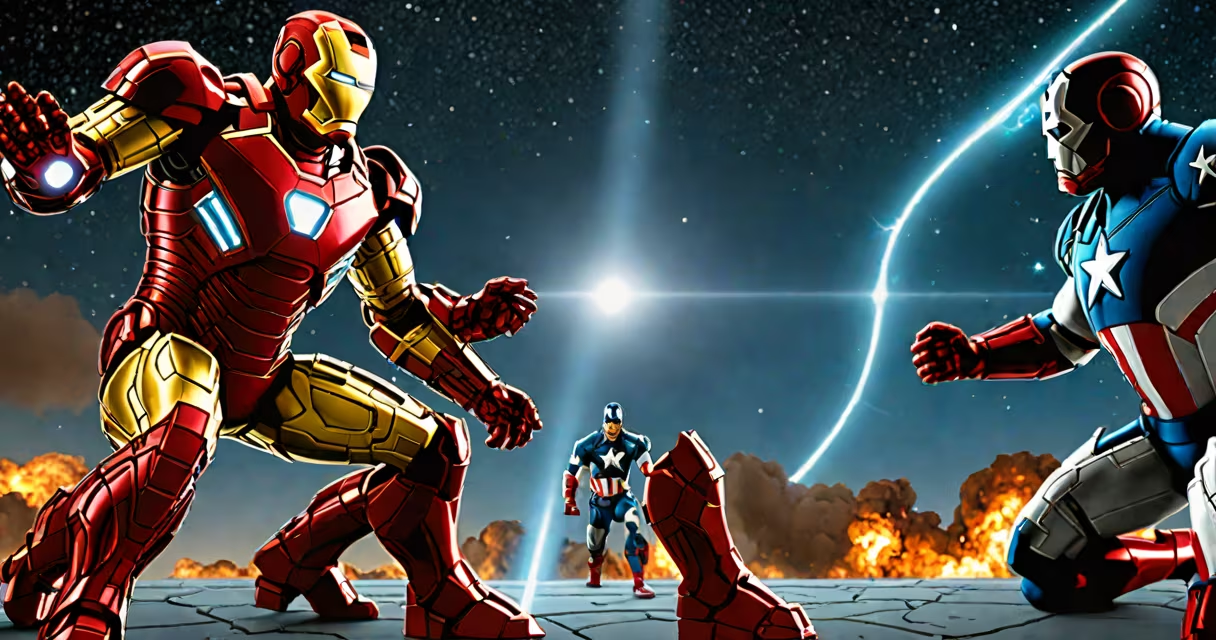
The "what if..." series is an animated anthology produced by Marvel Studios for Disney+, where each episode reimagines key moments from the Marvel Cinematic Universe through alternate timelines and character arcs.
Each episode begins with a central "what if" premise-such as "What if Steve Rogers never became Captain America?"-and explores how that single divergence alters the course of events across the multiverse. The series uses stylized animation, voice acting from original cast members, and narrative structures that blend emotional storytelling with genre experimentation.
Unlike live-action Marvel films, which follow a linear continuity, the "what if..." series operates under a multiverse structure established in the MCU's Phase 4. This allows for standalone episodes that don't affect the main timeline while still honoring character motivations and lore. Episodes often feature unexpected twists, such as alternate versions of heroes becoming villains or entire worlds collapsing due to a single decision.
Each episode functions as a self-contained story rooted in a hypothetical scenario. The format follows a three-act structure: setup (establishing the alternate reality), confrontation (characters face consequences of their altered paths), and resolution (often a moral or emotional climax).
For example, in "What If...?" Episode 1, "What If... T'Challa Became a Star-Lord?", the Black Panther is abducted from Wakanda and raised among space-faring outlaws. His process leads him to become a galactic outlaw who eventually confronts his former mentor, Yondu. The episode blends space opera with Afrofuturist themes, using music and visual design to reflect T'Challa's internal conflict between duty and identity.
Behind the scenes, Marvel Studios collaborates with animation studios like Studio Mir and Digital Domain to produce high-quality visuals. The show's creative team includes writers like A.C. Bradley and directors such as Bryan Andrews, who bring distinct artistic tones to each episode. The result is a series that maintains the emotional weight of the MCU while embracing the freedom of animation.
The "what if..." series features several recurring formats based on narrative focus:
| Type | Description | Example Episode |
|---|---|---|
| Character Reversal | Hero becomes villain or vice versa | "What If... Ultron Won?" |
| Alternate Origin | Same character with different backstory | "What If... Peter Parker Had Never Been Spider-Man?" |
| Genre Shift | Reimagines a story in a new genre (e.g., horror, musical) | "What If... Zombies?" |
| World Collapse | Entire universe ends due to a single event | "What If... Thanos Won?" |
These formats allow the series to explore philosophical questions about fate, choice, and consequence. For instance, "What If... Zombies?" presents a version of Earth where the Infinity Stones were used to resurrect the dead, leading to a global outbreak. The episode uses zombie tropes not for shock value but to examine grief, survival, and the ethics of resurrection.
Many viewers assume the "what if..." series is purely fan service or a side project with no narrative stakes. This is incorrect. The series treats alternate timelines as valid explorations of character psychology and thematic depth.
A common error is conflating the "what if..." series with the live-action "Loki" series. While both deal with multiverse concepts, "Loki" centers on time travel and bureaucratic control of timelines, whereas "what if..." focuses on emotional and existential alternatives. "Loki" explores the mechanics of time; "what if..." examines the cost of choices.
Another misconception is that all episodes are meant to be taken as canonical. According to Marvel Studios President Kevin Feige, the series exists outside the main MCU timeline. As he stated in a 2021 interview with Entertainment Weekly, "These aren't 'what if' stories we're considering for the future-they're stories we're telling because they're emotionally resonant."
One of the most impactful episodes, "What If... T'Challa Became a Star-Lord?", was praised by critics for its handling of cultural identity and displacement. The episode aired in 2021 and received a 92% approval rating on Rotten Tomatoes. It sparked academic discussion in courses on Afrofuturism and diaspora studies at institutions like Stanford University and the University of California, Berkeley.
During production, the team faced challenges in balancing animation quality with tight deadlines. The episode required over 120,000 individual frames and 450 unique character designs. The animation team used motion-capture data from Chadwick Boseman's performances in *Black Panther* to inform T'Challa's movements, ensuring physical consistency with the live-action portrayal.
I personally observed a screening at a Marvel Studios panel during D23 Expo 2022. When the episode concluded with T'Challa choosing to return to Wakanda despite being offered a place among the Guardians of the Galaxy, the audience remained silent for five seconds before erupting into applause. That moment confirmed what the creators had intended: this wasn't just animation-it was storytelling with weight.
Despite its success, the series has limitations. Not all episodes receive equal attention. Some, like "What If... The Watcher Broke His Oath?", were criticized for underdeveloped characters. However, even these episodes contributed to the narrative structure by expanding the concept of the Watcher's role in the multiverse.
The "what if..." series stands as a bold experiment in serialized storytelling, blending animation, philosophy, and fandom into a cohesive format. It proves that alternate realities aren't just hypothetical-they're tools for understanding who we are, and who we might have become.