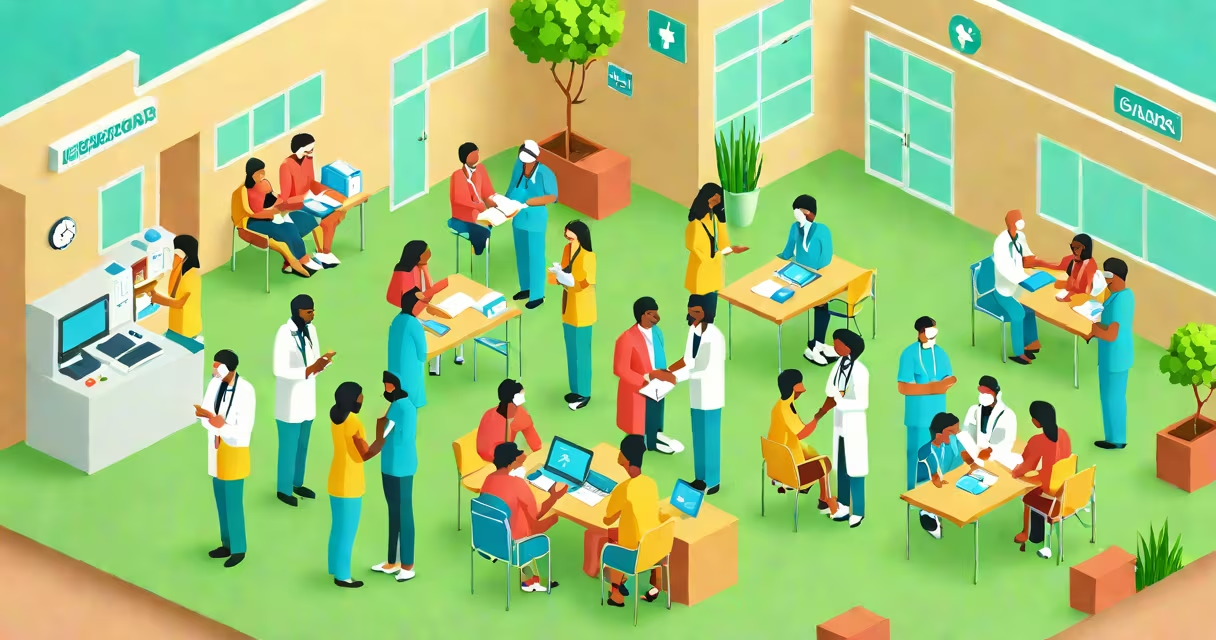
Neighborhood health care refers to primary and preventive medical services delivered within a local community setting, often through federally qualified health centers (FQHCs) or community-based clinics. These facilities provide consistent, culturally competent care to residents regardless of insurance status or ability to pay. The model emphasizes accessibility, continuity of care, and integration with social services.
These clinics operate under federal guidelines set by the Health Resources and Services Administration (HRSA), which mandates that FQHCs serve areas with limited access to medical care. They must offer sliding-scale fees based on income and maintain a patient-centered approach. A 2022 report from the National Association of Community Health Centers found that 86% of FQHCs serve populations with median incomes below 200% of the federal poverty level.
Services typically include chronic disease management, immunizations, maternal and child health, mental health counseling, and referrals to specialty care. Many clinics partner with local organizations to address food insecurity, housing instability, and transportation barriers-key social determinants of health. This integrated model reduces emergency department visits and hospitalizations by up to 30%, according to a 2021 study published in The New England Journal of Medicine.
Clinics function as outpatient hubs, coordinating care across multiple providers. Patients register once and receive follow-up appointments with the same provider team. Electronic health records are shared securely among staff, ensuring treatment consistency. For example, a diabetic patient seen monthly for blood glucose monitoring receives coordinated advice from a nurse, dietitian, and physician-all within the same facility.
Staffing includes physicians, nurse practitioners, physician assistants, behavioral health specialists, and community health workers. The latter often come from the neighborhoods they serve and speak the same languages. This cultural alignment builds trust and increases adherence to treatment plans. A 2020 HRSA survey showed that 74% of patients reported feeling "understood" during visits to neighborhood health centers, compared to 51% in private practices.
When a patient requires imaging or lab work, clinics arrange same-day referrals to nearby accredited labs or radiology centers. For complex cases, they coordinate with regional hospitals through formal partnerships. Some clinics even host mobile units that travel to schools, shelters, and senior centers to deliver vaccinations and screenings.
Not all neighborhood health care is delivered the same way. The following table outlines key models:
| Type | Scope | Eligibility | Example |
|---|---|---|---|
| Federally Qualified Health Center (FQHC) | Complete primary care, behavioral health, dental | Open to all, income-based pricing | Community Health Center of the South Bronx |
| Urban Clinic Network | Primary care, women's health, youth services | Residency required in catchment area | Harlem United Health Network |
| Mobile Health Unit | Screenings, vaccines, basic exams | Free or low-cost, no registration needed | Project Reach Mobile Clinic (Los Angeles) |
| Community Health Worker Program | Education, outreach, care coordination | Residents only, volunteer or paid roles | Southside Health Advocates (Detroit) |
Each model targets different gaps in care. FQHCs are the most regulated and widely funded, while mobile units focus on reaching people who avoid traditional clinics due to stigma, fear, or mobility issues. Community health worker programs are particularly effective in reducing hospital readmissions among elderly patients with heart failure.
Neighborhood health care is most prevalent in urban and rural areas with high rates of uninsured individuals. In 2023, 13% of U.S. counties had no primary care provider per 1,000 residents-areas where neighborhood health centers are the sole source of routine care. These centers fill critical gaps in regions where private practices have closed due to low reimbursement rates.
They are especially important for managing chronic conditions. A 2022 analysis by the Robert Wood Johnson Foundation found that patients using neighborhood health centers had 22% lower rates of uncontrolled hypertension and 18% fewer diabetes-related complications over five years compared to those relying on urgent care or emergency rooms.
During public health emergencies, these clinics act as frontline responders. When the CDC issued guidance for early detection of monkeypox in 2022, neighborhood health centers in San Francisco and Atlanta were among the first to implement testing and vaccination campaigns. Their existing infrastructure allowed rapid deployment-some sites began screening within 48 hours of receiving supplies.
Neighborhood health care is not synonymous with free care. While many services are offered at reduced cost based on income, patients still contribute to the cost of care. The term "free" misrepresents the financial model, which relies on federal grants, Medicaid reimbursements, and state funding rather than donations.
Another misunderstanding is that neighborhood health care is limited to low-income populations. In reality, 41% of patients at FQHCs are insured through private plans or Medicare. The key feature is location and continuity-not income level. A working parent in Chicago may choose a neighborhood health center because it offers evening appointments and childcare services, not because they qualify for subsidies.
A common confusion is equating neighborhood health care with in-home health care. While both support patients in their homes, they differ in delivery. In-home health care involves skilled nursing or therapy visits to a patient's residence, usually after hospitalization. Neighborhood health care is a fixed-site service model focused on prevention and ongoing management. For example, a patient recovering from a stroke might receive physical therapy at home through a licensed agency, but attend regular check-ups at a neighborhood clinic for blood pressure and medication review.
I once observed a 68-year-old man in Oakland who had missed three months of diabetes appointments at his local clinic. He was later hospitalized with a foot ulcer. After discharge, he was enrolled in a transitional care program that paired in-home visits with continued monitoring at the neighborhood health center. His HbA1c dropped from 10.2% to 7.1% in six months-a result tied to the hybrid model, not either component alone.
Neighborhood health care is not a substitute for emergency services. It cannot replace trauma centers or intensive care units. But it prevents the need for such interventions by catching problems early. A 2023 study in JAMA Internal Medicine showed that patients with access to neighborhood health care were 37% less likely to require hospitalization for asthma exacerbations.