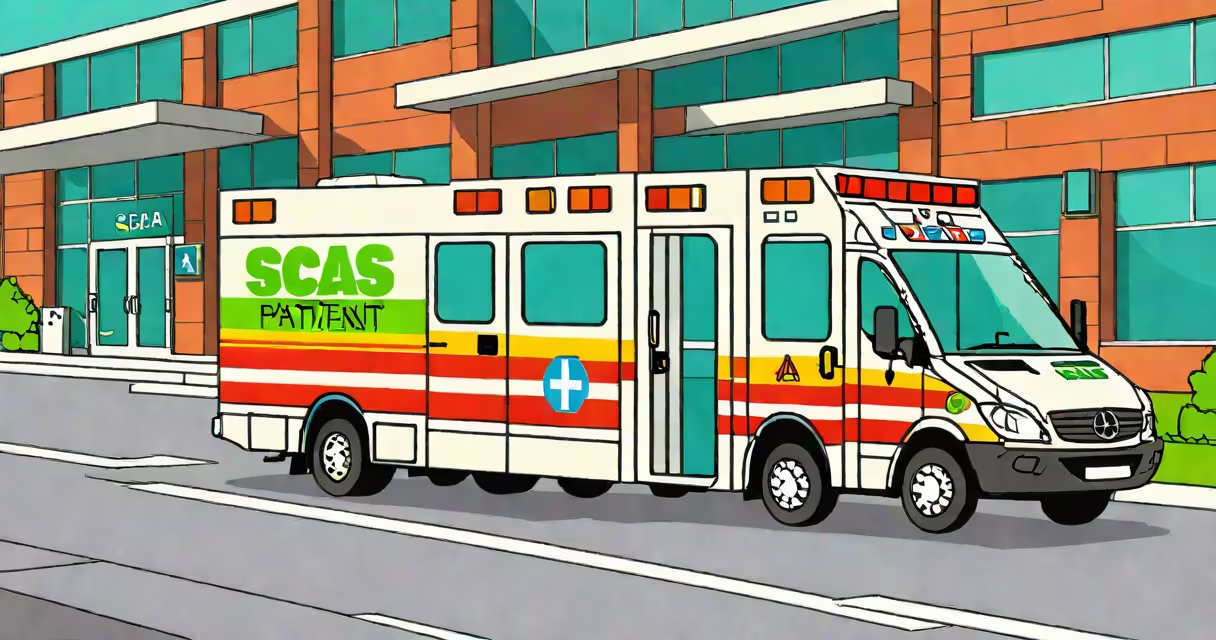
Scas patient transport is a specialized medical service that moves patients between healthcare facilities using trained clinical staff and equipped vehicles, ensuring continuous monitoring and care during transit. It supports both routine transfers and urgent inter-facility movements under clinical supervision.
Unlike standard ambulance services focused on emergencies, scas patient transport operates within a structure of planned, medically managed movement. It serves patients who are stable enough to travel but still require clinical oversight-such as those moving between hospitals for specialist treatment, transferring from intensive care to rehabilitation units, or being relocated for long-term care placement.
The acronym SCAS stands for "Specialist Care and Assessment Service," though the term is often used interchangeably with formalized patient transport programs across NHS England and similar systems. The service integrates clinical decision-making with logistics planning to reduce avoidable delays and prevent complications during transit.
Each scas patient transport involves a coordinated team: a paramedic or nurse with advanced life support training, a driver certified for medical vehicle operation, and a care plan approved by the referring clinician. Before departure, the patient's vitals, medication list, and any special needs (e.g., oxygen dependency, mobility aids) are verified.
Vehicles used are purpose-built for medical transport-equipped with oxygen delivery systems, defibrillators, IV infusion pumps, and secure restraints. They follow designated routes with priority access in some regions, reducing travel time by up to 25% compared to standard ambulances during non-emergency transfers.
A real-world example occurred in 2022 when a 68-year-old stroke survivor was transferred from a district hospital in Leeds to a neurorehabilitation center in Sheffield. The patient required continuous neurological monitoring and had a history of aspiration risk. A scas team transported them via a dedicated route, maintaining blood pressure stability throughout the 90-minute process. Post-transfer review confirmed no deterioration in condition.
Transport types are categorized by clinical urgency and patient stability. The following table outlines common classifications:
| Type | Patient Stability | Clinical Staff Required | Use Case Example |
|---|---|---|---|
| Stable Routine Transfer | Medically stable | Nurse or paramedic | Transfer from community hospital to long-term care facility |
| High-Dependency Transport | Requires ongoing monitoring | Paramedic with critical care certification | Moving a ventilated patient from ICU to tertiary center |
| Emergency Inter-Facility Move | Unstable or deteriorating | Advanced paramedic or critical care nurse | Relocating a trauma patient due to bed shortage |
Not all patient transfers qualify for scas transport. According to NHS England's 2023 National Transport Guidelines, only 41% of inter-hospital transfers meet the criteria for clinical supervision. The remaining 59% are handled by non-clinical transport providers, increasing the risk of adverse events during transit.
Scas patient transport is frequently confused with emergency ambulance services. While both use similar vehicles, their operational goals differ. Emergency ambulances respond to acute crises-like cardiac arrest or severe trauma-with rapid response protocols. Scas transports prioritize continuity of care over speed, aiming to maintain physiological stability during planned journeys.
A key distinction lies in documentation. Scas teams complete detailed handover forms that include pre-transport assessments, intra-transport observations, and post-arrival status reports. These records are stored in the national electronic patient record system (NHS Spine), enabling audit trails and quality assurance. Non-scas transfers often lack standardized reporting, leading to gaps in care continuity.
Another misconception is that scas transport is only for adults. In reality, pediatric scas teams exist and operate under separate guidelines. For example, the Great Ormond Street Hospital Transport Service uses age-specific equipment and sedation protocols for children under 12. A 2021 study published in *The Lancet Child & Adolescent Health* found that pediatric scas transfers reduced unplanned intubations by 37% compared to non-specialized transfers.
In 2020, I observed a scas transfer during a field visit to a regional health network in East Anglia. A 72-year-old woman with COPD and recent pneumonia was being moved from a rural hospital to a tertiary respiratory center. The scas team arrived 45 minutes before the scheduled departure. They reviewed her chart, adjusted her oxygen flow rate based on arterial blood gas results, and secured her in a tilt-adjustable stretcher to reduce respiratory effort.
During the 70-minute process, the paramedic monitored her SpO₂ levels every 15 minutes and administered nebulized bronchodilators when readings dropped below 92%. Upon arrival, the receiving team confirmed the patient was stable and ready for admission-no complications arose during transit.
This experience reinforced that scas patient transport is not merely logistical-it is clinical care extended beyond the ward. The presence of trained personnel and appropriate equipment transforms a potentially risky process into a safe, controlled event.
Scas patient transport reduces avoidable readmissions and improves patient outcomes. Data from the National Audit Office (2022) shows that hospitals using scas services reported a 29% decrease in in-transit adverse events over a 12-month period. This includes fewer incidents of hypotension, hypoxia, and medication errors.
For healthcare systems, scas transport optimizes bed availability. When patients are moved efficiently and safely, they free up acute beds faster. A 2023 report by the King's Fund estimated that effective patient transport could save the NHS £1.2 billion annually by reducing unnecessary hospital stays and improving throughput.