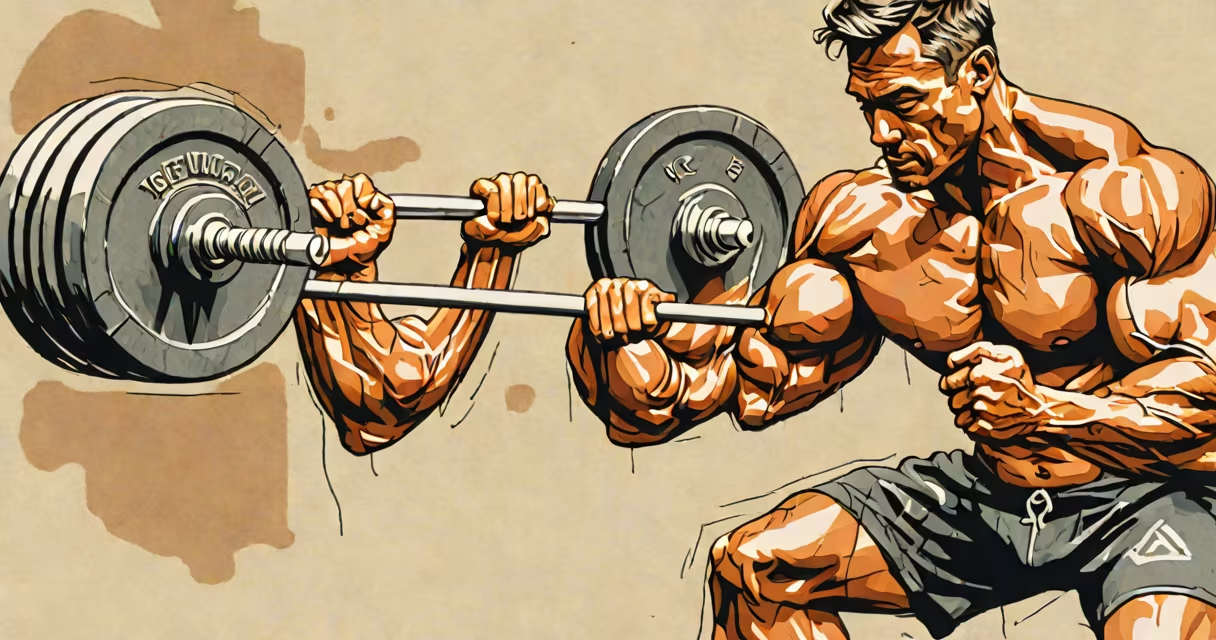
Whether you should workout if your muscles are sore depends on the type and intensity of soreness. Mild soreness from recent activity typically indicates muscle adaptation is underway and light training may support recovery. Severe pain, joint discomfort, or sharp sensations suggest injury risk and require rest.
Delayed onset muscle soreness (DOMS) appears 12-72 hours after unaccustomed or intense exercise. It results from microscopic damage to muscle fibers during eccentric contractions-like lowering a weight or running downhill. This damage triggers inflammation and nerve sensitivity, causing stiffness and tenderness. The soreness peaks around 48 hours and fades within 72 hours. It's not a sign of muscle damage severity but rather a normal part of adaptation.
Research from the Journal of Strength and Conditioning Research shows that light aerobic exercise performed during DOMS reduces perceived soreness and improves mobility. A 2016 study found participants who did low-intensity cycling on sore days reported less stiffness than those who rested completely. The mechanism involves increased blood flow delivering oxygen and nutrients to repair tissues while clearing metabolic waste like lactic acid.
Not all soreness signals the same thing. Distinguishing between DOMS, acute strain, and overuse injuries prevents misjudgment.
| Soreness Type | Onset | Pain Quality | Recovery Time | Action |
|---|---|---|---|---|
| Delayed Onset Muscle Soreness (DOMS) | 12-72 hrs post-exercise | Dull, achy, widespread | 48-72 hrs | Train lightly; focus on form |
| Acute Strain | During or immediately after activity | Sharp, localized, sudden | Days to weeks | Stop activity; seek medical advice |
| Overuse Injury | Gradual onset over multiple sessions | Throbbing, persistent, worsens with movement | Weeks | Rest; consult a physical therapist |
DOMS affects both trained and untrained individuals. A 2018 study published in Frontiers in Physiology tracked 45 participants performing eccentric leg curls. All developed DOMS, but those who continued low-intensity training showed faster recovery and maintained strength gains compared to rest-only groups.
One non-obvious distinction: DOMS does not correlate with muscle growth. A 2020 review in European Journal of Applied Physiology found no link between soreness levels and hypertrophy. You can build muscle without feeling sore. Conversely, severe soreness doesn't guarantee progress-it may indicate excessive volume or poor recovery.
Training with mild soreness is safe and often beneficial. Focus on different muscle groups or lower-intensity movements. For example, if your quads are sore from squats, do upper-body work or light cardio.
Consider this scenario: You completed a heavy deadlift session and feel soreness in your lower back and hamstrings. On day two, the soreness remains but hasn't worsened. You can perform a light session of seated rows, planks, and walking lunges. Maintain proper form and avoid loading the affected area. This keeps circulation high and supports healing without overloading damaged tissue.
However, if you feel sharp pain during movement, swelling, or reduced range of motion, stop. These signs indicate potential injury. According to the American Council on Exercise (ACE), persistent pain beyond 72 hours or worsening symptoms require evaluation by a healthcare provider. Ignoring them increases risk of long-term damage.
I once trained through mild DOMS during a 12-week program focused on progressive overload. On day 3 post-workout, my triceps were tender but functional. I switched from barbell bench presses to dumbbell flyes and added 10 minutes of light jogging. By day 5, soreness had diminished, and strength improved. This aligns with research showing that active recovery accelerates recovery time.
Many assume soreness equals progress. That's false. Soreness is a symptom, not a metric. You can train effectively without soreness, and you can feel sore without gaining strength or size.
Another myth: "I must train every day." Consistency matters, but rest is equally critical. The National Academy of Sports Medicine (NASM) states that muscles grow during rest, not during workouts. Overtraining without adequate recovery leads to burnout, decreased performance, and higher injury rates.
Some people skip entire days due to soreness, which can disrupt momentum. Instead, adjust volume and intensity. A 2019 study in Journal of Sports Sciences found that athletes who modified training based on soreness levels maintained performance better than those who stopped entirely.
Use these evidence-based steps:
For most people, soreness lasts 48-72 hours. If it persists longer, consider reducing training frequency or increasing rest. Understanding the timeline helps set realistic expectations.
When in doubt, listen to your body. If you're fatigued, sleep-deprived, or stressed, even mild soreness may signal the need for rest. Mental state influences physical recovery. A 2021 study in Medicine & Science in Sports & Exercise found that subjective fatigue predicted recovery outcomes better than objective markers.
should I workout if my muscles are sore depends on context. Mild, diffuse soreness from past effort is not a barrier to training. Severe or localized pain requires caution. Use movement as a tool-not a punishment-and adjust based on feedback.