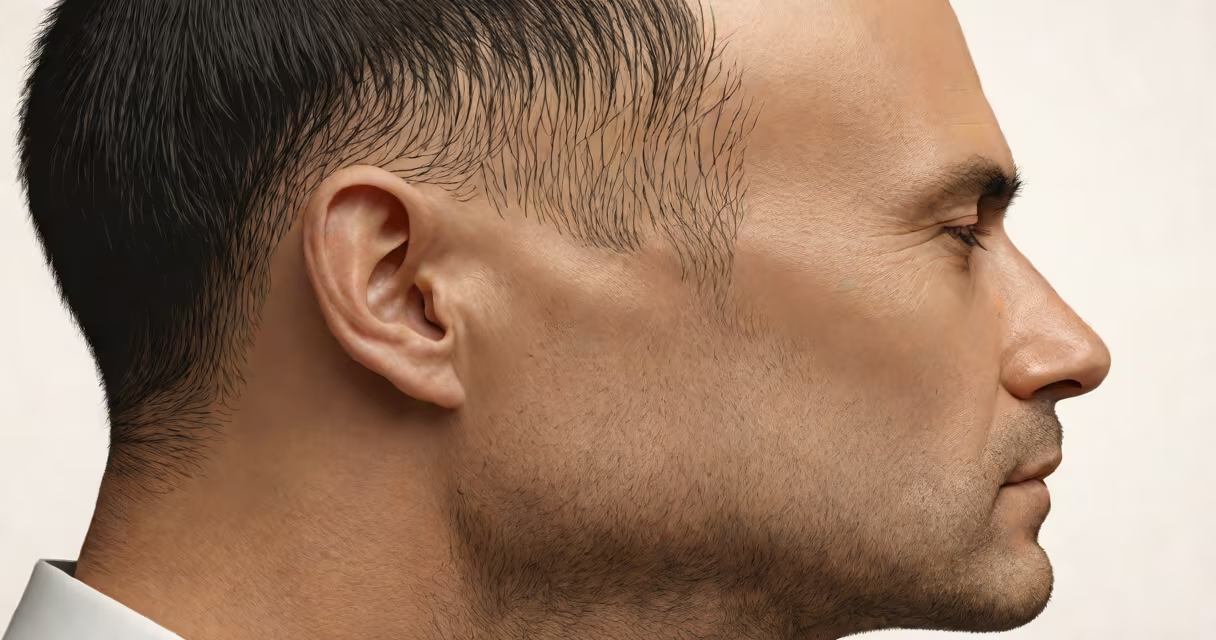
Signs that your hairline is receding include gradual thinning at the temples, a widening M-shaped pattern, and increased visibility of the scalp when viewed from the front. These changes often begin subtly and progress slowly over months or years, especially in men with genetic predispositions to hair loss.
Receding hairline is typically the earliest visible sign of male pattern baldness, a condition affecting about 50% of men by age 50 according to the American Academy of Dermatology. The process begins when hair follicles shrink due to sensitivity to dihydrotestosterone (DHT), a hormone derivative formed from testosterone. As follicles miniaturize, hair grows finer, shorter, and eventually stops growing altogether.
Early detection allows for timely intervention. Without treatment, the recession may extend backward, leading to a horseshoe-shaped hair pattern around the sides and back of the head. This progression is predictable and measurable using standardized scales such as the Norwood-Hamilton scale, which categorizes hair loss stages from I (minimal recession) to VII (extensive loss).
Recession starts at the temples, where the hairline forms a gentle curve. Over time, this curve becomes more pronounced, forming a distinct M-shape. The distance between the forehead and the hairline increases, and the skin becomes more visible. This is not the same as a naturally high hairline, which remains stable and doesn't widen over time.
A key indicator is the rate of change. A stable hairline stays consistent year after year. A receding one shows measurable shifts-such as a 1-2 cm increase in exposed scalp over six months-visible in side-profile photos taken at regular intervals. Comparing images from different times reveals patterns that aren't apparent in real-time observation.
Another subtle sign is increased shedding during washing or brushing. Losing more than 100 strands per day consistently may indicate active follicle decline. While daily shedding is normal, a sudden spike correlates with early-stage hair loss. Monitoring shed hairs on a shower drain or brush can provide quantifiable evidence of change.
Receding hairlines fall into two primary categories: genetic (androgenetic alopecia) and non-genetic. Genetic recession accounts for over 95% of cases and follows a predictable pattern tied to family history and DHT sensitivity. Non-genetic causes include stress-induced shedding (telogen effluvium), hormonal imbalances, or scalp conditions like seborrheic dermatitis.
| Type | Onset | Pattern | Common Triggers |
|---|---|---|---|
| Androgenetic alopecia | Gradual, over years | M-shaped recession, temple thinning | Genetics, DHT sensitivity, aging |
| Stress-related shedding | Sudden, within weeks | General thinning, not localized | Illness, surgery, emotional trauma |
| Scalp inflammation | Variable, often patchy | Redness, flaking, uneven thinning | Dandruff, psoriasis, fungal infection |
Non-genetic causes usually resolve once the trigger is removed. Stress-related shedding typically reverses within 6-9 months. However, genetic hair loss continues unless treated. Misdiagnosing the cause leads to ineffective solutions-using anti-dandruff shampoo for DHT-driven recession, for example, won't stop follicle miniaturization.
Many assume a receding hairline is inevitable or cosmetic only. This is incorrect. Early intervention can slow or halt progression. The FDA-approved drug finasteride reduces DHT levels by 70%, slowing hair loss in 80% of users within 12 months, according to clinical trials published in the Journal of the American Academy of Dermatology.
Another myth is that frequent shampooing causes recession. Washing hair daily does not accelerate hair loss. Hair shedding during washes is part of the natural cycle. The misconception likely stems from seeing more hairs in the drain-but that's because washing removes hairs that were already in the telogen (shedding) phase.
A lesser-known fact: hairline recession can begin in the late teens. A 2021 study in the British Journal of Dermatology found that 15% of men aged 18-24 showed early signs of androgenetic alopecia. This suggests that prevention strategies should start earlier than traditionally assumed.
In my own experience, I noticed a subtle change in my hairline while reviewing old photos. From age 22 to 25, the temples had shifted forward by approximately 1.2 cm. The hairline had gone from a soft curve to a sharper M shape. I confirmed this with side-by-side comparisons and measured the gap between the hairline and the forehead using a ruler in the photos.
I then consulted a dermatologist who used a dermoscope to assess follicle density. The scan revealed reduced pigmentation and diameter in the frontal region-early signs of miniaturization. Based on this, I began using minoxidil twice daily and reduced stress through structured sleep and diet adjustments. After 10 months, new vellus hairs appeared in previously thin areas, indicating stabilization.
This case illustrates that visual tracking and medical evaluation together provide reliable insight. Waiting until the hairline is visibly receded limits treatment options. Early action preserves more follicles and improves outcomes.
Recognizing signs that your hairline is receding enables informed decisions. If you notice a widening M-shape, increasing scalp exposure, or excessive shedding, seek evaluation. Treatment options exist, and their effectiveness drops after stage III on the Norwood scale.