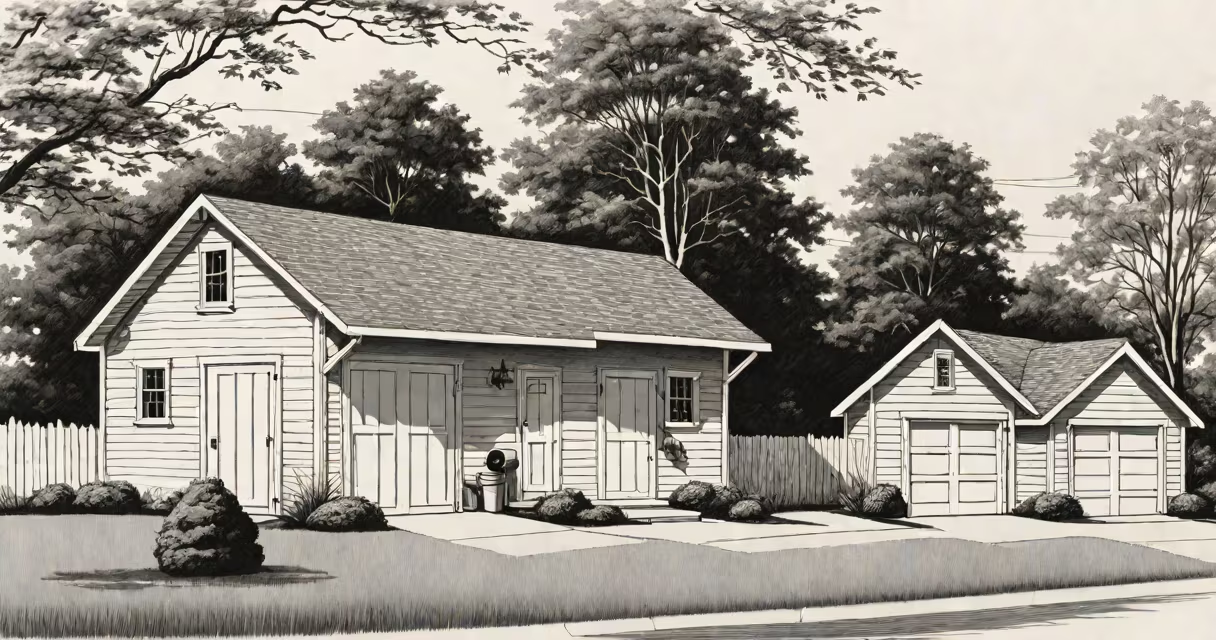
"Other structures" on homeowners insurance refers to detached buildings on your property not attached to the main house, such as garages, sheds, fences, or detached decks. This coverage protects these structures against specified perils listed in your policy, including fire, windstorm, hail, lightning, and vandalism.
This coverage is part of the dwelling protection section of a standard homeowners policy (HO-3 or HO-5). It typically provides up to 10% of the dwelling coverage limit. For example, if your home is insured for $300,000, other structures coverage is usually $30,000. The amount is automatically calculated unless you adjust it through an endorsement.
Homeowners policies exclude certain types of structures from "other structures" coverage. Pools, hot tubs, landscaping, and outdoor lighting are not covered under this category. These require separate endorsements or additional coverage. A fence damaged by a storm may be covered, but only if it's not part of a larger field project.
The coverage applies when a covered peril damages a detached structure. If a tree falls on your detached garage during a windstorm, the policy pays for repairs up to the limit. You must file a claim and provide documentation like photos, receipts, and estimates.
Reimbursement follows actual cash value (ACV) or replacement cost value (RCV), depending on your policy. ACV accounts for depreciation, meaning you receive less than the original cost. RCV reimburses the full cost to replace the structure, minus the deductible. Most modern policies offer RCV for other structures, but confirm this with your insurer.
For example, a $15,000 detached storage shed is destroyed by fire. With RCV coverage and a $1,000 deductible, the insurer pays $14,000. If the policy uses ACV, depreciation reduces the payout based on the shed's age and condition.
Common structures covered under "other structures" include:
Structures excluded from standard coverage include:
A key distinction: a carport with a permanent foundation may be classified as a "structure" but not a "detached building." Insurers often treat them differently. Always verify with your provider whether your carport qualifies.
| Structure Type | Covered Under Other Structures? | Notes |
|---|---|---|
| Detached 2-car garage | Yes | Typically covered up to 10% of dwelling limit |
| Wooden garden shed (10x12 ft) | Yes | Must be freestanding and not connected to main house |
| Concrete pool deck | No | Part of pool system; requires separate endorsement |
| Chain-link fence | Yes | Only if damaged by a covered peril, not wear and tear |
| Outdoor kitchen with grill and sink | Yes | Only if permanently installed and detached |
Many policyholders assume all outdoor structures are covered. That's incorrect. A common mistake is assuming a detached garage is automatically protected. Without proper coverage, repairs can cost thousands out of pocket.
According to the Insurance Information Institute (III), nearly 40% of homeowners who file claims involving detached structures report insufficient coverage. In one 2022 case study, a homeowner lost a $25,000 detached workshop to fire. The policy had only $10,000 in other structures coverage. The homeowner paid $15,000 in out-of-pocket expenses.
Another issue arises when structures are used commercially. A garage converted into a small auto repair shop is not covered under standard homeowners policies. If a fire occurs, the insurer denies the claim due to business use. This exclusion is rarely mentioned in policy summaries.
Review your declarations page. Look for "Other Structures" under the dwelling section. The amount listed should be 10% of your dwelling coverage. If it's too low, increase it via an endorsement.
Some insurers allow you to add a "personal property" rider for high-value detached structures. For example, a $50,000 detached art studio with valuable equipment may need a separate endorsement beyond the standard 10% limit.
I once reviewed a policy for a client with a large barn used for storing vintage tractors. Standard coverage was $20,000. After evaluating the barn's contents and location, we added a $100,000 personal property endorsement. When a storm damaged the roof, the claim was fully covered.
"Other structures" is often mistaken for "personal property," which covers belongings inside the home. A shed full of tools is covered under other structures, not personal property. Personal property covers items like furniture, electronics, and clothing.
Also, "other structures" does not cover liability. If someone slips on your icy detached deck, the injury claim goes under liability coverage, not other structures. Liability limits are separate and typically start at $300,000.
Finally, some think "other structures" includes sidewalks or driveways. They do not. Damage to paved surfaces from freezing or shifting soil is not covered unless you have a separate "foundation" or "earth movement" endorsement.
Upgrade other structures coverage if you've added significant detached structures. Examples:
For a $200,000 home, 10% coverage equals $20,000. If your detached garage costs $60,000 to rebuild, you're underinsured. Contact your agent to adjust the limit. Increasing coverage is inexpensive-typically $50-$100 annually for an extra $20,000.
Always document your structures. Take photos, keep purchase receipts, and update your policy whenever you build or modify. This ensures accurate valuation and faster claims processing.