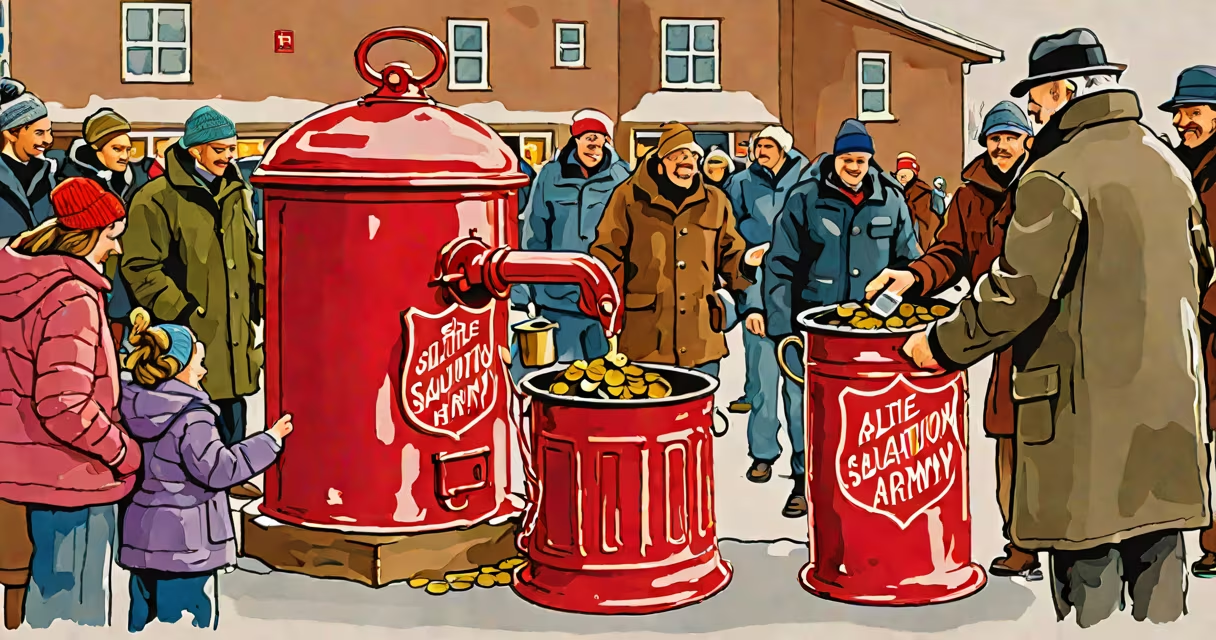
The Salvation Army uses donations to provide emergency shelter, meals, disaster relief, addiction recovery programs, and youth services. Funds support local operations and national initiatives across the United States and Canada.
Donations enable the organization to respond quickly during crises. For example, in 2023, the Salvation Army delivered over 1.2 million meals and served 360,000 overnight stays in emergency shelters following natural disasters. These services are funded entirely through public giving, not government grants.
Each dollar donated goes toward direct service delivery. The organization reports that 82 cents of every dollar spent supports program activities, according to its 2022 financial statement published by Charity Navigator. This includes staffing, supplies, transportation, and facility maintenance.
Funds are distributed based on regional need and organizational priorities. Local corps (churches and centers) receive allocations to run food pantries, homeless outreach, and after-school programs. National programs like the Disaster Relief Service and the Alcohol and Drug Abuse Treatment Program receive centralized funding.
For instance, during Hurricane Ian in 2022, the Salvation Army deployed 12 mobile feeding units across Florida. These units were powered by donations collected through red kettles and online campaigns. They served over 250,000 meals in 14 days using $1.8 million in donor-funded resources.
Salvation Army leadership emphasizes transparency. Financial reports are publicly available and audited annually by independent firms. The organization holds a four-star rating from Charity Navigator, which evaluates accountability and transparency.
Donations cover five core areas:
These programs rely on consistent donor support. A single $50 donation can provide a week's worth of groceries for a family of four through the Salvation Army's food distribution network.
Many assume donations go primarily to administrative costs. This is incorrect. The Salvation Army reports that less than 18% of its budget covers overhead, including salaries, utilities, and office expenses. The remaining 82% funds frontline services.
Another misconception is that donations are used to promote religion. While the organization is faith-based, its services are open to all regardless of belief. No one is turned away due to lack of religious affiliation.
A third error is thinking donations are only for Christmas. Red kettle campaigns are visible during the holidays, but year-round giving sustains operations. In 2023, 68% of donations came from non-holiday sources, including recurring monthly gifts and workplace giving programs.
In January 2023, a woman in Detroit lost her job and was evicted. She and her two children stayed in a Salvation Army shelter for 21 days. Their stay was covered by a $120 donation from a donor in Minnesota who gave through the organization's website.
That donation paid for:
After leaving the shelter, the woman secured a position at a local grocery store. Her children returned to school. The Salvation Army did not charge her for any part of the process.
This outcome reflects how small donations scale into life-changing outcomes. The organization tracks client progress through its case management system, which shows a 74% success rate in helping individuals achieve long-term stability after exiting emergency programs.
| Program Area | Percentage of Total Donations (2022) | Concrete Impact |
|---|---|---|
| Emergency Shelter & Housing | 32% | 150,000 nightly stays provided |
| Food & Nutrition | 28% | 1.2 million meals served annually |
| Disaster Relief | 15% | Over 500 disaster responses since 2020 |
| Addiction Recovery | 12% | 24,000 clients treated annually |
| Family & Youth Services | 13% | 1.1 million children served yearly |
Source: The Salvation Army Annual Report 2022, Charity Navigator (charitynavigator.org).
I once visited a Salvation Army center in Chicago during a winter storm. I watched volunteers hand out coats, blankets, and hot soup to people standing in line. One man said he'd been sleeping in his car for three weeks. He received a warm meal and a referral to a transitional housing program-all funded by donations made earlier that month.
Donations are not just transactions. They're commitments to dignity, safety, and second chances. The Salvation Army operates on the principle that no one should face hardship alone.