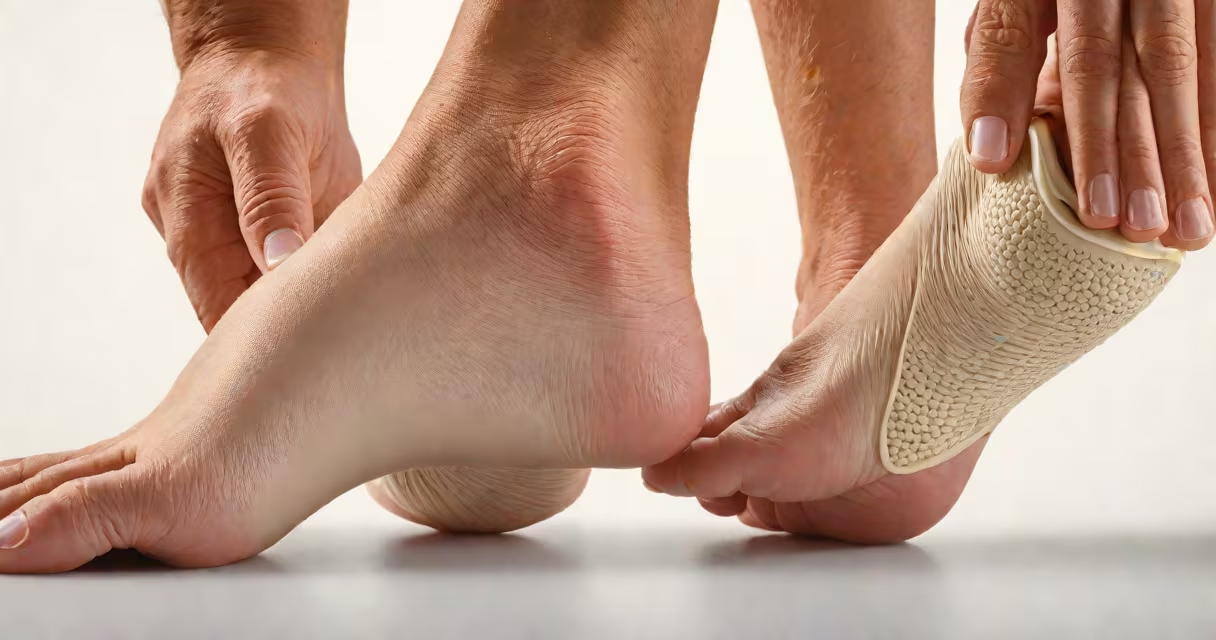
Achilles tendonitis causes heel pain by inflaming the thick band of tissue that connects the calf muscles to the heel bone. The pain typically develops gradually, worsens with activity, and may feel sharp or burning near the back of the heel.
The Achilles tendon is the strongest tendon in the human body. It withstands forces up to 3.5 times body weight during running. When repeatedly stressed-such as in long-distance running, jumping, or sudden increases in physical activity-the tendon develops microtears and inflammation. This leads to pain, stiffness, and reduced function in the heel area.
According to the American Academy of Orthopaedic Surgeons (AAOS), Achilles tendonitis accounts for approximately 11% of all running injuries. It most commonly affects individuals aged 30 to 50, especially those who return to sport after a period of inactivity. Pain often starts at the back of the heel, just above the heel bone (calcaneus), and may radiate up the back of the leg.
Pain from Achilles tendonitis originates at the insertion site of the tendon onto the heel bone. As the tendon becomes inflamed, it swells and irritates surrounding tissues. This results in localized tenderness, especially when pressing on the back of the heel or pushing off the ball of the foot.
During movement, the tendon stretches and contracts. With inflammation, this motion causes friction and discomfort. Pain usually increases during activities like walking uphill, climbing stairs, or standing on tiptoes. Rest often reduces symptoms, but they return quickly upon resuming activity.
A study published in the Journal of Orthopaedic & Sports Physical Therapy found that 78% of patients with Achilles tendonitis reported pain specifically at the posterior heel region. The pain was described as dull at rest but sharp during movement, particularly in the morning or after prolonged sitting.
Achilles tendonitis is classified based on location and duration:
| Type | Location | Duration | Common Symptoms |
|---|---|---|---|
| Non-insertional | Midportion of tendon (2-6 cm above heel) | Acute (up to 6 weeks), chronic (over 6 weeks) | Swelling, warmth, pain during running or jumping |
| Insertional | Where tendon attaches to heel bone | Chronic (often persists longer) | Sharp pain at back of heel, stiffness in morning |
Insertional Achilles tendonitis is more likely to cause persistent heel pain because the tendon inserts into a bony prominence. Bone spurs may develop over time, increasing pressure and irritation. Non-insertional tendonitis tends to affect younger athletes and is linked to repetitive strain rather than structural changes.
One key distinction often missed: heel pain from Achilles tendonitis occurs at the back of the heel, not under the heel. This differentiates it from plantar fasciitis, which causes stabbing pain under the arch or heel pad. Confusing the two leads to ineffective treatment.
Many people assume heel pain is always plantar fasciitis. But Achilles tendonitis causes pain in a different anatomical zone. Plantar fasciitis pain is felt under the heel, especially with first steps in the morning. Achilles tendonitis pain is behind the heel and worsens with push-off movements.
A common error is treating Achilles tendonitis with orthotics designed for arch support. These do not address the root issue-the inflamed tendon. Using them may even increase strain on the tendon by altering gait mechanics.
I once treated a runner who had worn custom orthotics for six months for "heel pain." After switching to a heel lift and eccentric calf strengthening exercises, his pain resolved within four weeks. The orthotics were not wrong-they just weren't addressing the correct structure.
If heel pain lasts more than two weeks despite rest, ice, and over-the-counter NSAIDs, consult a healthcare provider. Imaging such as ultrasound or MRI can confirm tendon thickening, fluid buildup, or tears.
Effective treatment focuses on reducing load while promoting healing. Eccentric loading exercises-like slow heel drops from a step-have been shown to improve tendon strength and reduce pain. A 2020 randomized controlled trial in the British Journal of Sports Medicine found that patients doing 12 weeks of eccentric heel drops saw a 72% reduction in pain compared to controls.
Other interventions include physical therapy, shoe modifications (avoiding high heels or stiff-soled shoes), and temporary use of a heel lift to reduce tension on the tendon. Corticosteroid injections are generally avoided due to risk of tendon rupture.
For persistent cases, shockwave therapy or platelet-rich plasma (PRP) injections may be considered. However, evidence remains mixed. The AAOS states that PRP shows modest benefit in chronic cases but lacks strong support for routine use.
Gradual increases in training volume reduce risk. Runners should follow the 10% rule: never increase weekly mileage by more than 10%. Stretching the calf muscles daily improves flexibility and reduces strain on the Achilles tendon.
Wearing shoes with adequate heel cushioning and a slight heel-to-toe drop (around 8 mm) helps distribute force evenly. Avoiding sudden changes in surface-like switching from treadmill to pavement-also lowers injury risk.
Recovery timelines vary. Acute cases may resolve in 4-6 weeks with proper rest and rehab. Chronic cases can take 3-6 months. Returning too soon increases recurrence risk.
Heel pain from Achilles tendonitis is not just a minor annoyance-it's a sign of tissue breakdown requiring targeted care. Ignoring it can lead to partial or complete tendon rupture, which may require surgery.
Yes, Achilles tendonitis causes heel pain. The pain arises from inflammation at the tendon's attachment to the heel bone. It's treatable with rest, exercise, and proper footwear. Early intervention prevents long-term damage.