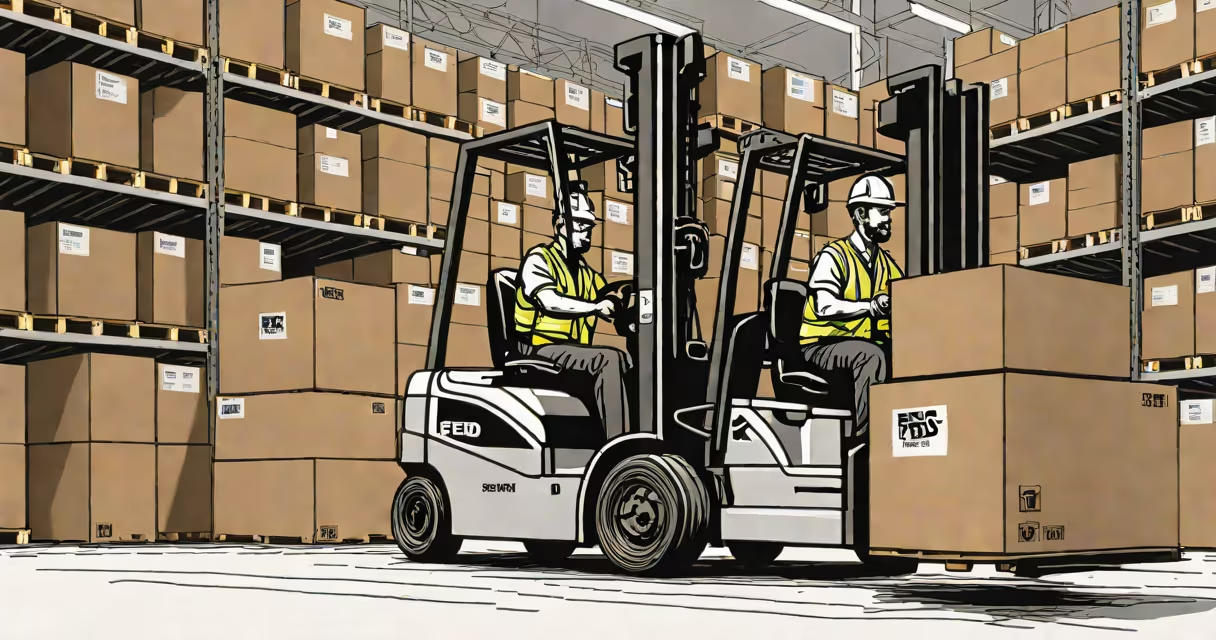
A freight handler at FedEx is a warehouse employee responsible for loading, unloading, sorting, and moving packages and freight within FedEx distribution centers. They operate material-handling equipment, follow safety protocols, and ensure shipments are processed efficiently for transit.
These roles are essential to the movement of goods across the U.S. and globally. Freight handlers work under tight schedules, often during early morning or overnight shifts, to meet delivery deadlines. Their tasks include scanning barcodes, stacking pallets, operating forklifts or conveyors, and identifying damaged or misplaced items.
According to the U.S. Bureau of Labor Statistics, material-moving occupations like freight handling have a median hourly wage of $16.35, with FedEx offering competitive rates based on location and experience. Handlers typically work in climate-controlled facilities with high-volume traffic, requiring physical endurance and attention to detail.
Freight handlers begin their shift by receiving a daily assignment list from a supervisor or through a digital dashboard. This list outlines which zones to cover, which trailers to unload, and which packages require special handling due to size, weight, or destination.
Once assigned, handlers use handheld scanners to verify shipment details. A package labeled "Priority Overnight" must be sorted into a designated bin for expedited routing. If a box is mislabeled or damaged, the handler logs the issue via the company's internal system and flags it for review.
After sorting, handlers move freight using powered industrial trucks-commonly electric forklifts or pallet jacks. These machines are rated for specific loads and must be operated with certification. At FedEx, all handlers undergo formal training and pass a safety exam before operating equipment.
FedEx uses a tiered structure for warehouse roles. While "freight handler" is a common title, positions vary by responsibility and equipment access:
| Role | Duties | Equipment Used | Pay Range (2023) |
|---|---|---|---|
| Freight Handler (Entry-Level) | Loading/unloading trailers, sorting parcels, scanning items | Pallet jack, hand truck, scanner | $15.50-$18.00/hour |
| Material Handler (Certified) | Operating forklifts, managing inbound/outbound flow | Forklift, conveyor systems | $17.00-$20.50/hour |
| Team Lead (Supervisory) | Assigning tasks, monitoring output, reporting issues | Scanner, tablet, communication headset | $20.00-$24.00/hour |
Entry-level handlers start with basic tasks and may advance to certified operator status after completing a 40-hour training program. Certification requires passing a written test and demonstrating safe operation in a simulated environment.
Freight handlers are stationed in FedEx Ground and FedEx Freight regional hubs. These centers process hundreds of thousands of packages daily. For example, the FedEx hub in Memphis, Tennessee-the largest in the network-handles over 1 million packages per day during peak season.
Without handlers, sorting lines would stall. A single delayed trailer can delay 200+ deliveries. During holiday seasons, such as Thanksgiving and Christmas, FedEx adds temporary staffing to manage volume spikes. In 2022, the company hired over 30,000 seasonal workers across its network, many in freight handling roles.
Handlers also play a key role in compliance. They check for hazardous materials, oversized items, or restricted goods. A package containing lithium batteries must be isolated and reported. Failure to flag such items risks regulatory penalties and safety hazards.
Many assume freight handlers only push boxes. In reality, they use data systems to track inventory and respond to exceptions. For example, if a shipment is delayed due to customs clearance, handlers reroute it based on updated tracking codes.
Another misconception is that handlers don't interact with customers. While they don't handle direct customer service, they support customer outcomes. A handler who correctly sorts a medical supply shipment ensures it arrives on time for a patient's treatment. Accuracy impacts delivery reliability.
Freight handlers are not the same as drivers. Drivers transport freight between hubs; handlers manage movement within a facility. The two roles coordinate closely but operate in separate workflow phases.
In December 2023, a FedEx freight center in Ontario, California, received a trailer carrying 120 pallets of holiday gifts. The shipment was scheduled to leave within six hours.
The team of eight freight handlers began by scanning the trailer's manifest. They confirmed 120 pallets, all marked "Fragile - Handle With Care." Using a forklift, they unloaded the trailer into staging areas. Each pallet was scanned upon arrival, and the system flagged three with incorrect weight data.
One handler noticed a cracked box on pallet #47. He stopped the line, logged the damage report, and isolated the unit. The system automatically rerouted the affected items to a repair station. After resolving the discrepancy, the team completed sorting and loading in 4.5 hours-on schedule.
This example shows how handlers prevent downstream delays. Without accurate sorting, the shipment could have been misrouted, leading to late deliveries and customer complaints.
I spent a week observing operations at a FedEx facility in Dallas. On my third day, I watched a team of handlers process a surge of international mail. One handler, Maria, moved 180 packages per hour while maintaining a 99.8% accuracy rate. She used a handheld scanner to update locations in real time and coordinated with supervisors via headset.
She told me, "Every scan matters. If you miss one, the system thinks the package is still in the trailer. That causes delays later." Her focus on precision kept the line moving smoothly.
Freight handlers are not independent contractors. They are full-time or part-time employees of FedEx, eligible for benefits including health insurance, paid time off, and retirement plans. As of 2023, FedEx reported 380,000 warehouse staff across its global network, with over 70% employed in the U.S.
Contrary to popular belief, handlers do not perform long-haul transportation. That task falls to FedEx Freight drivers, who operate tractor-trailers. Handlers work within a 10-mile radius of a hub, rarely leaving the facility.
Also, not all freight handling jobs involve heavy lifting. Many roles focus on system coordination, barcode verification, and workflow optimization. Some handlers specialize in automated systems, such as robotic sorters or AI-driven routing tools.
For those interested in advancing, FedEx offers internal pathways. A freight handler can train to become a team lead, operations coordinator, or even a logistics analyst. These roles require additional certifications and college credits, but they're accessible through FedEx's education partnership programs.
Understanding what is a freight handler at FedEx reveals a role central to the company's operational efficiency. These workers ensure that packages move quickly, safely, and accurately through the network. Their work supports everything from small business deliveries to urgent medical shipments.