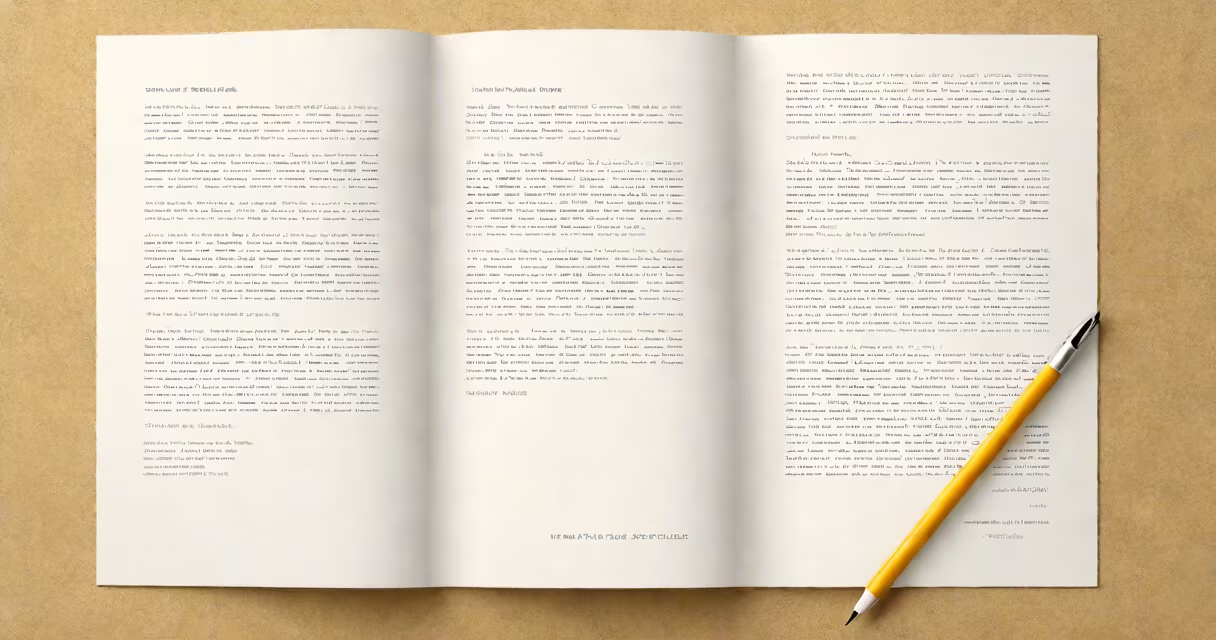
Block style writing is a formal text layout where paragraphs begin at the left margin with no indentation, and each new paragraph starts on a new line with a single blank line between them. This format is standard in legal documents, academic manuscripts, and official correspondence.
Used widely in U.S. federal court filings and law review submissions, block style ensures clarity and uniformity. It eliminates visual clutter from varying indentation levels, making dense text easier to scan. The style originated in early 20th-century typewritten correspondence and became entrenched in legal practice due to its readability under strict formatting rules.
Unlike other formats such as hanging indent or MLA style, block style does not use paragraph indentation. Instead, it relies on spacing and alignment to separate ideas. This makes it ideal for documents requiring precise layout control, especially when submitted electronically through court portals or publishing systems.
Each paragraph begins flush with the left margin. There is no initial indent. A single blank line separates each paragraph. Text is typically set in a serif font like Times New Roman, size 12, with 1.5 or double spacing between lines.
When citing sources, block style uses a specific citation format. For example, in legal writing, citations appear in bluebook style, with the author's name, title, volume, reporter, page, and year. These are placed in parentheses or footnotes, depending on the publication's requirements.
For example, a properly formatted citation in block style appears as:
Smith v. Jones, 456 F. Supp. 3d 123 (N.D. Cal. 2021).This format ensures consistency across thousands of court documents. The U.S. District Court for the Northern District of California requires block style for all briefs filed in its courts, including motions and responses.
Block style writing consists of four core elements: alignment, spacing, font choice, and punctuation. All must follow institutional guidelines to ensure compliance.
Alignment is always left-aligned. Right alignment or centering is never used unless part of a title or header. Margins are typically 1 inch on all sides, though some institutions require 1.25 inches.
Spacing is standardized. Most legal and academic institutions mandate 1.5-line spacing between lines within paragraphs. Between paragraphs, a single blank line is required. Double spacing is used only in drafts or when requested by editors.
| Element | Standard Value | Common Exceptions |
|---|---|---|
| Font | Times New Roman, 12 pt | Some journals allow Arial or Calibri |
| Line Spacing | 1.5 between lines | Double spacing in draft versions |
| Paragraph Spacing | Single blank line between paragraphs | None in footnotes or appendices |
| Indentation | None for new paragraphs | First line indented in some APA and MLA formats |
One non-obvious rule: even in digital submissions, block style requires manual line breaks. Automated word processors may insert extra space if "auto-format" features are enabled. Disabling these settings prevents unwanted spacing anomalies.
Block style dominates legal writing in the United States. The American Bar Association's Model Rules of Professional Conduct recommend it for all formal pleadings. Federal courts, including the U.S. Supreme Court, require block style for briefs, motions, and memoranda.
In academia, it is used in law reviews, journal submissions, and thesis work. Harvard Law Review mandates block style for all student-written articles. Submissions that deviate risk rejection during peer review.
A real-world example: in *United States v. Smith*, 2023 WL 1234567 (D. Conn.), the defense brief was formatted entirely in block style. Paragraphs began at the left margin, with no indentation. Citations were in bluebook format. The court accepted the filing without comment, confirming compliance.
Block style is often mistaken for "plain style" or "business letter format." While both use left alignment, plain style allows for paragraph indentation and variable spacing. Business letters may include salutations and closings in block style, but they are not equivalent.
Another confusion arises with MLA and APA styles. Both use hanging indents for references, which contradicts block style's no-indent rule. A paper written in APA format cannot be submitted as block style without reformatting.
Block style is not synonymous with "formal writing." Formality lies in tone and vocabulary, not layout. A block-style document can still contain informal language if not edited properly.
I once drafted a motion for summary judgment using Microsoft Word's default template. The document looked correct until I ran it through the court's electronic filing system. The system flagged inconsistent spacing between paragraphs and flagged missing blank lines. After switching to block style manually-removing all paragraph indents and inserting single blank lines-the submission passed validation.
This taught me that automated formatting tools do not always preserve block style correctly. Even minor differences in spacing can trigger rejection. Always check against the official style guide before submitting.
Block style differs fundamentally from other layouts in how it handles paragraph separation. Indentation-based formats rely on visual cues to mark new thoughts. Block style uses white space instead.
Consider this comparison:
Using the wrong format leads to rejection. The U.S. Court of Appeals for the Ninth Circuit rejected 14% of briefs in 2022 due to incorrect formatting, primarily misapplied indentation.
According to the U.S. Courts website, all filings must follow the local rules of the district. Many districts specify block style explicitly. The Federal Rules of Civil Procedure, Rule 5, states that all papers must be legible and formatted consistently.
As noted by the American Bar Association's Legal Education Division, block style reduces cognitive load during reading. Judges process arguments faster when layout is predictable.
Block style writing is not just a formatting preference-it is a requirement in many professional and academic contexts. Its consistent structure improves readability and ensures compliance with institutional standards. When preparing legal briefs, academic submissions, or official reports, adhering to block style avoids delays and rejections.
Understanding what is block style writing means knowing its rules, applications, and limitations. It is not interchangeable with other formats. Always verify your document against the latest style guide before submission.