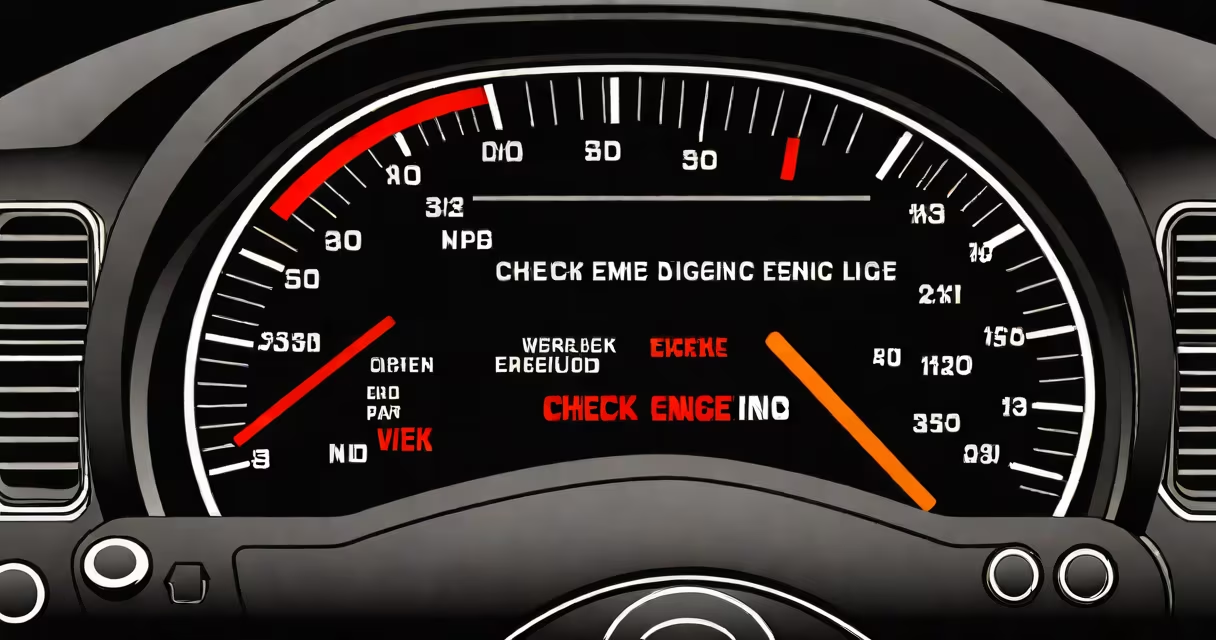
The check engine light activates when your car's onboard diagnostic system detects a fault in the engine, emissions control, or related systems. It signals a malfunction that may affect performance, fuel efficiency, or emissions compliance.
This warning is triggered by the OBD2 (On-Board Diagnostics II) system, which monitors sensors and actuators across the powertrain. When a sensor reading falls outside acceptable parameters-such as oxygen levels, catalytic converter efficiency, or fuel mixture-the light illuminates. The light may flash or stay solid depending on severity.
For example, a loose gas cap can trigger the light because it allows fuel vapors to escape, reducing emissions control effectiveness. A faulty oxygen sensor might cause the light to stay on continuously, indicating a persistent issue. The system logs a trouble code (like P0171 for lean fuel mixture) that mechanics can read with a scanner.
Your car's electronic control unit (ECU) runs continuous checks on hundreds of components. When a sensor reports data outside normal ranges-such as a mass airflow sensor reading too low or a knock sensor detecting abnormal combustion-the ECU stores a trouble code and turns on the check engine light.
There are two states: steady glow and flashing. A steady light indicates a non-critical issue that requires attention within a few days. A flashing light means a severe problem-usually misfiring-that could damage the catalytic converter if ignored. Driving with a flashing light risks expensive repairs.
Modern vehicles use standardized OBD2 protocols. Any compliant scan tool can access the stored codes. These codes follow a format: a letter (P, C, B, or U) followed by four digits. P codes relate to powertrain issues-like P0300 for random cylinder misfire. C codes are for chassis systems, B for body, and U for network communication faults.
Not all check engine lights indicate serious problems. Some are minor, others require immediate action. Here are frequent triggers:
| Code Prefix | System Affected | Common Cause | Severity |
|---|---|---|---|
| P0171 | Powertrain | Lean fuel mixture due to vacuum leak or dirty MAF sensor | Moderate |
| P0420 | Powertrain | Catalytic converter efficiency below threshold | High |
| P0300 | Powertrain | Random cylinder misfire detected | High |
| P0440 | Emissions | Evaporative emission control system leak | Moderate |
A loose or damaged gas cap is responsible for about 10% of check engine light activations, according to the National Institute for Automotive Service Excellence (ASE). Replacing the cap and driving for 20 miles often resets the light if the issue was purely mechanical.
However, ignoring a P0420 code-indicating a failing catalytic converter-can lead to reduced engine performance and failed emissions tests. The Environmental Protection Agency (EPA) notes that a clogged converter increases backpressure, which can cause engine overheating or stalling.
First, assess the light's behavior. If it's flashing, stop driving and have the vehicle towed to a mechanic. Continuing to drive risks damaging the catalytic converter or engine internals.
If the light is steady, monitor for symptoms: rough idling, decreased fuel economy, hesitation during acceleration. These signs suggest a developing issue. Use a basic OBD2 scanner-available for under $30-to retrieve the trouble code. Many auto parts stores offer free code reading services.
I once diagnosed a P0171 code on a 2012 Honda Civic. The owner reported poor fuel mileage and occasional sputtering. After scanning, I found a vacuum hose disconnected near the intake manifold. Reconnecting it cleared the code and restored fuel efficiency to 30 mpg-down from 22 mpg.
Do not assume the light will reset itself. The system may continue running in "limp mode" to protect the engine, limiting speed and power. Resetting the light manually via disconnecting the battery often fails because the underlying fault remains.
Many drivers think the check engine light means "service required." That's false. The light specifically indicates a fault in the emissions or powertrain systems-not routine maintenance. Oil changes, tire rotations, and brake inspections do not trigger it.
Another myth: "The light goes off automatically after a few drives." This only happens if the fault condition no longer exists. If the root cause persists-like a cracked exhaust manifold-the light will return after 10-20 driving cycles.
Some people try to bypass the light by unplugging the bulb or using aftermarket devices that disable the warning. This violates federal law under the Clean Air Act. The EPA prohibits tampering with emissions controls. Doing so can result in fines and void warranties.
Finally, don't confuse the check engine light with other dashboard warnings. The battery light (red symbol with a minus sign) indicates charging issues. The oil pressure light (yellow oil can icon) warns of low lubrication. These are separate systems and require different responses.