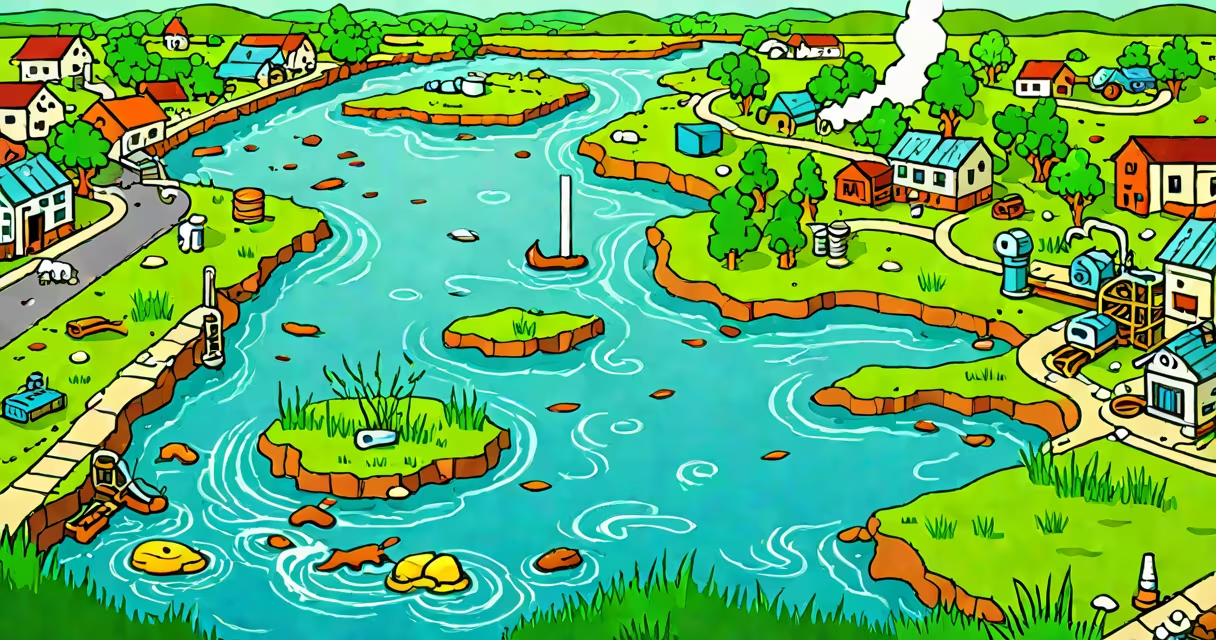
Water pollution is the contamination of water bodies-rivers, lakes, oceans, groundwater-by harmful substances that degrade water quality and threaten ecosystems and human health. It results from direct discharge of pollutants or runoff carrying toxins into aquatic environments.
When factories release untreated chemicals, agricultural runoff deposits fertilizers and pesticides, or sewage flows unchecked into rivers, the water becomes unsafe for drinking, swimming, fishing, or supporting wildlife. The presence of pathogens, heavy metals, plastics, and synthetic compounds alters natural processes and disrupts food chains.
According to the World Health Organization, over 2 billion people globally use a drinking water source contaminated with feces, leading to diseases like cholera and dysentery. The U.S. Environmental Protection Agency (EPA) identifies industrial discharges, urban stormwater, and agricultural runoff as primary contributors to water pollution in the United States.
Pollutants enter water systems through point sources-specific locations like factory outfalls-or non-point sources such as rainwater washing over farmland or city streets. Once in water, contaminants spread via currents and settle in sediments, entering the food web through bioaccumulation.
For example, mercury from coal-fired power plants settles in rivers and transforms into methylmercury, which accumulates in fish. Humans consuming contaminated fish absorb the toxin, risking neurological damage-especially in fetuses and young children.
Water's ability to dilute and break down pollutants is limited. Some substances, like polychlorinated biphenyls (PCBs), persist for decades. Others, like nitrogen compounds, trigger algal blooms that deplete oxygen, creating dead zones where marine life cannot survive.
Water pollution stems from multiple categories of contaminants. The most common include:
| Type | Common Sources | Environmental Impact |
|---|---|---|
| Organic Waste | Sewage, food processing effluent | Depletes oxygen levels; kills fish |
| Nutrients (Nitrogen, Phosphorus) | Fertilizers, detergents | Causes eutrophication and algal blooms |
| Heavy Metals | Industrial discharge, mining runoff | Builds up in organisms; causes toxicity |
| Plastics and Microplastics | Improper disposal, synthetic textiles | Enters food chain; harms wildlife |
| Pathogens | Untreated sewage, animal waste | Spreads disease in humans and animals |
One non-obvious fact: microplastics are now detected in tap water worldwide. A 2017 study by Orb Media found microplastics in 83% of tap water samples from 14 countries-including the U.S., Canada, and Germany. These particles originate from degraded plastic packaging, clothing fibers, and industrial abrasives.
Another misconception is that pollution only happens in developing nations. In 2022, the EPA reported that 40% of U.S. rivers and streams were too polluted to support safe fishing or swimming. The Flint water crisis in Michigan, where lead leached from aging pipes, illustrates how infrastructure failure can turn clean water sources into toxic ones.
Water pollution affects every continent. The Ganges River in India supports over 400 million people yet receives 600 million liters of untreated sewage daily. In China, the Yangtze River basin faces severe degradation due to industrial expansion and dam construction.
Marine ecosystems suffer disproportionately. The Great Pacific Garbage Patch-a swirling mass of floating debris covering 1.6 million square kilometers-is largely composed of discarded fishing nets and plastic fragments. Marine animals ingest or become entangled in this waste, leading to injury or death.
Human health consequences are measurable. In Bangladesh, arsenic-contaminated groundwater affects over 20 million people. Long-term exposure leads to skin lesions, cancer, and cardiovascular disease. The WHO estimates that 1.8 million deaths annually result from waterborne diseases linked to poor sanitation and polluted water.
People often confuse water pollution with water scarcity. While both are critical issues, they differ: scarcity refers to insufficient supply; pollution refers to contamination of available water. A region can have abundant water but still face health crises due to pollution.
Another error is assuming that natural water bodies can self-cleanse. Rivers and lakes have resilience limits. The Cuyahoga River in Ohio famously caught fire in 1969 due to oil and chemical buildup-proof that even flowing water cannot neutralize high pollutant loads.
There's also a belief that bottled water eliminates risk. In reality, plastic bottles contribute to microplastic pollution. A 2021 study published in *Environmental Science & Technology* found that 93% of bottled water samples contained microplastics, with average levels of 325 particles per liter.
In the late 1970s, residents of Love Canal, New York, began reporting rashes, birth defects, and respiratory problems. Investigation revealed that the neighborhood had been built atop a landfill containing 21,000 tons of toxic waste, including dioxins and PCBs. Rainwater seeped through the site, contaminating groundwater and spreading toxins into homes.
The EPA declared Love Canal a federal emergency in 1978. Over 800 families were evacuated. This event led to the creation of the Superfund program, which funds cleanup of hazardous waste sites across the U.S.
Today, the site remains a cautionary tale about long-term consequences of unregulated industrial dumping. It also shows how water pollution doesn't stay isolated-it spreads through soil, air, and human exposure.
Effective control requires regulation, infrastructure investment, and public awareness. The Clean Water Act of 1972 set national standards for wastewater discharge and established permits for industrial and municipal facilities. Since then, U.S. rivers have seen measurable improvements-though challenges remain.
Technologies like membrane filtration, ultraviolet disinfection, and constructed wetlands help remove pollutants. In Sweden, a pilot project using algae-based bioreactors reduced nitrogen levels in wastewater by 90% while producing biomass for biofuel.
Individual actions matter. Reducing single-use plastics, properly disposing of medications, and avoiding lawn fertilizer near storm drains prevent pollutants from reaching waterways. Communities can also advocate for better local regulations and monitor water quality through citizen science programs.
Understanding the meaning of water pollution reveals a clear pattern: human activity determines water quality. When we treat water as disposable, we pay the price in health, biodiversity, and economic cost. Addressing it demands accountability, innovation, and sustained effort-not just policy, but behavior change.