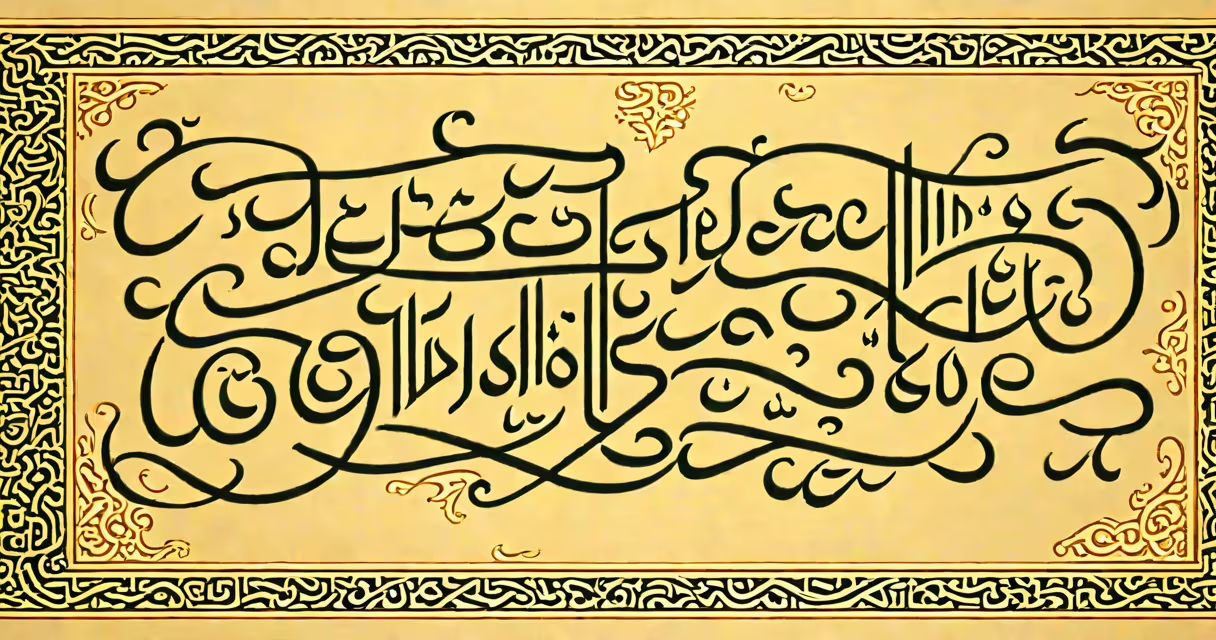
Persian is a Indo-Iranian language spoken by approximately 60 million people across Iran, Afghanistan, Tajikistan, and diaspora communities. It evolved from Old Persian and Middle Persian, with modern forms including Farsi (Iran), Dari (Afghanistan), and Tajik (Tajikistan). The language uses a modified Arabic script with unique letters and diacritics.
Persian originated in the region of Persia, now modern-day Iran, and was the administrative and literary language of the Achaemenid, Sassanian, and later Islamic empires. Its literary tradition spans over 1,300 years, with poets like Ferdowsi, Rumi, and Hafez shaping global literature. Today, Persian remains a living language used in government, education, media, and daily communication across multiple countries.
The term "Persian" refers to both the linguistic family and the cultural identity tied to it. It is not a single monolithic language but a group of closely related varieties with distinct regional norms in pronunciation, vocabulary, and orthography. These variants share core grammar and syntax but differ in phonology and lexical choice.
Persian follows a subject-object-verb (SOV) word order. Sentences typically begin with the subject, followed by the object, then the verb. For example, "He saw the bird" translates as "او پرنده را دید" (ū parande rā did), where "ū" = he, "parande" = bird, "rā" = accusative marker, "did" = saw.
Persian uses a system of vowel reduction and consonant clusters common in Indo-Iranian languages. Vowels are often unstressed and shortened in rapid speech. Consonants like /z/, /ʃ/, and /q/ appear frequently, especially in native words. Loanwords from Arabic, Turkish, and European languages have introduced new sounds and spelling patterns.
Grammar relies heavily on suffixes and prefixes rather than inflectional changes. Verbs conjugate based on tense, mood, and subject agreement. The past tense uses the suffix -d for third-person singular, as in "dīdam" (I saw), while the present tense adds -am/-i/-ad for first-, second-, and third-person singular respectively.
Modern Persian exists in three primary standardized forms, each with official status in a country:
| Variant | Country | Script | Key Features |
|---|---|---|---|
| Farsi | Iran | Nastaliq (modified Arabic) | Uses 32 letters; includes unique characters like ژ, چ, and گ; standardizes spelling via Academy of Persian Language and Literature. |
| Dari | Afghanistan | Arabic script (Perso-Arabic) | Retains many classical loanwords; influenced by Pashto and Urdu; spoken in urban centers like Kabul and Herat. |
| Tajik | Tajikistan | Cyrillic script | Official language since 1929; uses Cyrillic alphabet with added letters for Persian-specific sounds; influenced by Russian and Central Asian Turkic languages. |
Despite differences in script and official status, all three forms share a high degree of mutual intelligibility among educated speakers. A native speaker of Farsi can generally understand Dari with minimal exposure, and Tajik speakers can follow Farsi texts with moderate effort due to shared lexicon and syntax.
A lesser-known variant, Shirazi Persian, emerged in southern Iran during the 14th century and features distinct phonological shifts, such as the loss of final vowels and palatalization of certain consonants. This dialect is preserved in historical poetry and regional oral traditions.
Persian is the official language of Iran, where it is taught in schools, used in court proceedings, and broadcast on national television. Over 80% of Iran's population speaks Persian as a first or second language. It is also the medium of instruction in universities and the primary language of literature and film.
In Afghanistan, Dari serves as one of two official languages alongside Pashto. It is used in federal government documents, judicial rulings, and public signage. According to UNESCO, Dari is spoken by about 25 million people, making it one of the most widely used Persian varieties.
Tajik, written in Cyrillic, is the state language of Tajikistan. The government mandates its use in education and administration. However, many Tajiks also speak Uzbek, Russian, or Kyrgyz due to proximity and migration history. Despite this, Persian remains central to national identity and cultural expression.
Outside national borders, Persian is spoken by diaspora communities in Turkey, India, the United States, Canada, and Western Europe. In cities like Los Angeles, London, and Toronto, Persian-language newspapers, radio stations, and cultural associations maintain linguistic continuity.
Many assume that "Farsi" and "Persian" are interchangeable terms. While they refer to the same language, "Farsi" is the endonym used by native speakers in Iran. "Persian" is the exonym used internationally. This distinction matters in academic and diplomatic contexts.
Another misconception is that Persian is a dead language. It is not. Modern Persian is actively evolving. New words enter the lexicon through technology, social media, and global trade. For example, "کوییک" (kuyik) is a slang term derived from "quick" used in Iranian youth culture to describe something fast or efficient.
Some confuse Persian with Arabic due to shared script and religious texts. But Persian is not a Semitic language. It belongs to the Indo-European family, specifically the Iranian branch. Its vocabulary contains thousands of words from Sanskrit, Greek, and Latin, reflecting centuries of cultural exchange.
A non-obvious fact: Persian has no grammatical gender. Unlike French or German, nouns are not classified as masculine or feminine. Instead, pronouns distinguish gender. For example, "او" (ū) means "he" or "she," depending on context. This feature simplifies learning for non-native speakers compared to gendered languages.
I once attended a poetry reading in Tehran where a young poet recited a piece using modern slang and internet memes. The audience responded with laughter and applause. That moment confirmed what I'd read in Language and Identity in Contemporary Iran by Farzaneh R. M. (University of California Press, 2021): Persian is not frozen in time-it adapts, grows, and reflects lived experience.
Understanding what is Persian requires recognizing it as a changing, living language shaped by geography, politics, and personal expression. Whether written in Nastaliq script on a calligrapher's scroll or typed in digital chat apps, Persian continues to serve as a bridge between past and present.
What is Persian? It is a language of rich heritage, ongoing evolution, and widespread use across continents. From the courts of ancient Persepolis to the classrooms of modern Tehran, Persian remains a important mode of human connection.