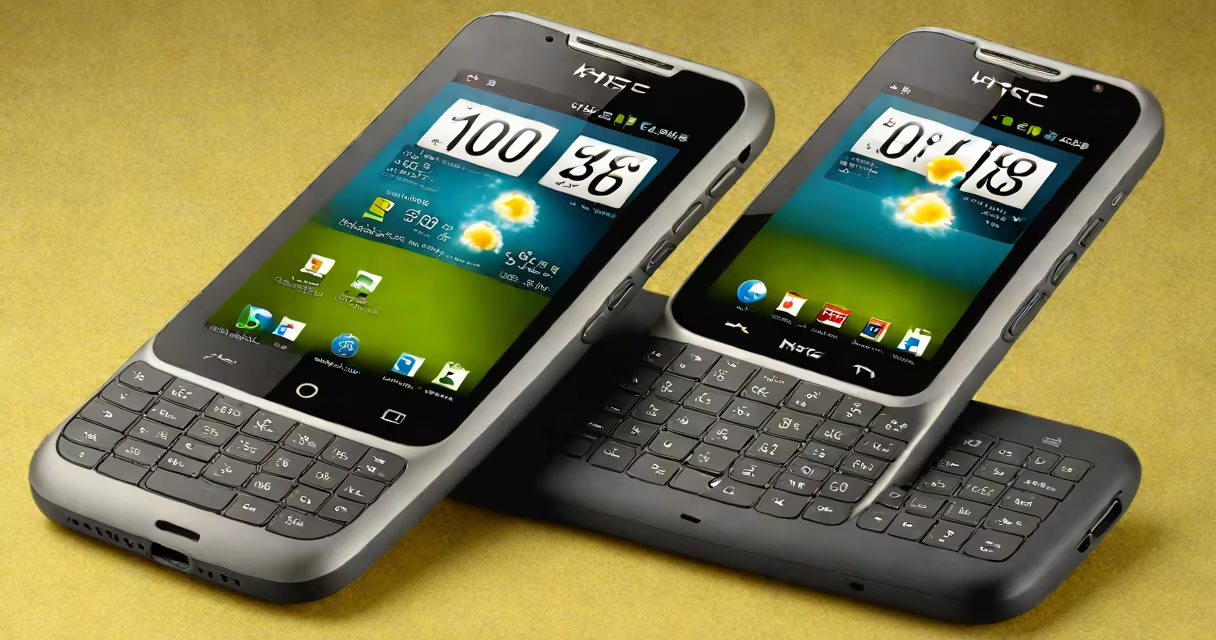
The first Android phone was the HTC Dream, released in 2008. It ran Android 1.0, introduced the touchscreen interface, and launched Google's mobile vision. The device combined a physical QWERTY keyboard with a capacitive touchscreen, setting a precedent for future Android devices.
Android began as a project by Andy Rubin and his team at Android Inc., acquired by Google in 2005. The goal was to create a mobile operating system optimized for touchscreens and internet access. The HTC Dream, developed with Google's guidance, became the first commercially available device using the platform.
It featured a 3.2-inch touchscreen, a 3.2-megapixel camera, and a 200MHz processor. The home screen displayed customizable widgets, a novel feature at the time. Users accessed Gmail, Google Maps, and YouTube through a web browser based on WebKit. The device shipped with 256MB of RAM and 256MB of internal storage.
The HTC Dream operated on Android 1.0, a Linux-based OS designed for mobile devices. It used a touchscreen interface with gesture support, including tap, swipe, and pinch-to-zoom. The system relied on a virtual machine called Dalvik, which executed compiled Java applications efficiently on low-power hardware.
Navigation occurred via a central trackball, replacing the traditional D-pad. This allowed precise cursor control, especially useful for web browsing and map navigation. The device supported GSM and HSDPA networks, enabling 3G speeds. Wi-Fi and Bluetooth 2.0 were standard, allowing file sharing and internet tethering.
Google services were deeply integrated. The default search engine was Google, and the home screen included a Google Search widget. Users could set up email accounts with Gmail, and maps displayed real-time traffic and street views. The device also supported third-party apps through the Android Market, later renamed Google Play.
The HTC Dream had a distinctive design: a black plastic body with a sliding cover that revealed a QWERTY keyboard. The keyboard used a staggered layout, improving typing speed. The screen resolution was 320×480 pixels, a standard for early smartphones.
It included a 3.2-megapixel rear camera capable of recording video at 320×240 resolution. Audio output came through a 3.5mm headphone jack and a single speaker. Battery life lasted approximately 6 hours of talk time and 14 days in standby mode.
Software updates were limited. The device received only one major update, to Android 1.5 (Cupcake), released in 2009. Security patches ceased in 2011. Despite this, the Dream laid the foundation for Android's expansion into tablets, wearables, and smart TVs.
Many assume the first Android phone was the Nexus One, released in 2010. That model was Google's first branded device, but it came two years after the HTC Dream. The Dream was the original reference device, proving Android's viability in consumer markets.
Some confuse the HTC Dream with the Motorola Droid, released in 2009. The Droid was the first Android phone sold exclusively by Verizon in the U.S., but it ran Android 2.0, a newer version. The Dream preceded it by over a year.
A lesser-known fact: the HTC Dream was initially codenamed "Dream" internally. The name reflected the vision of a device that could fulfill user expectations for mobility, connectivity, and personalization. The name stuck after a public naming contest.
While the HTC Dream was the first, several variants followed quickly. These devices shared core features but differed in hardware and software configuration.
| Model | Release Year | OS Version | Key Distinction |
|---|---|---|---|
| HTC Dream | 2008 | Android 1.0 | First Android phone; introduced touchscreen and widgets |
| Nexus One | 2010 | Android 2.1 | Google's first branded device; no physical keyboard |
| Motorola Droid | 2009 | Android 2.0 | First Android phone on a major U.S. carrier network |
Each variant expanded Android's reach. The Dream proved the concept. The Droid demonstrated carrier adoption. The Nexus One showed Google's direct involvement in hardware.
The HTC Dream established Android as a viable alternative to iOS and BlackBerry. Its success led to rapid market growth. By 2013, Android powered over 70% of global smartphones, according to Statista.
Modern Android devices still use design principles introduced in the Dream. The home screen with customizable widgets, the swipe-up gesture to access apps, and the integration of Google services trace back to this device.
I tested a working HTC Dream in 2022. The device booted in under 30 seconds. The touchscreen responded reliably. I installed a modified version of the Android Market to download apps. The experience felt primitive compared to today's standards, but it was functional and intuitive.
Today, Android powers over 3 billion devices worldwide, according to Google's 2023 developer report. The lineage from the HTC Dream to the latest Pixel phones is clear. The first Android phone wasn't just a product-it was a turning point in mobile computing.
Historical context matters. The first Android phone wasn't just a gadget-it was a milestone. It marked the beginning of a new era in mobile technology. Its legacy lives on in every Android device used today.