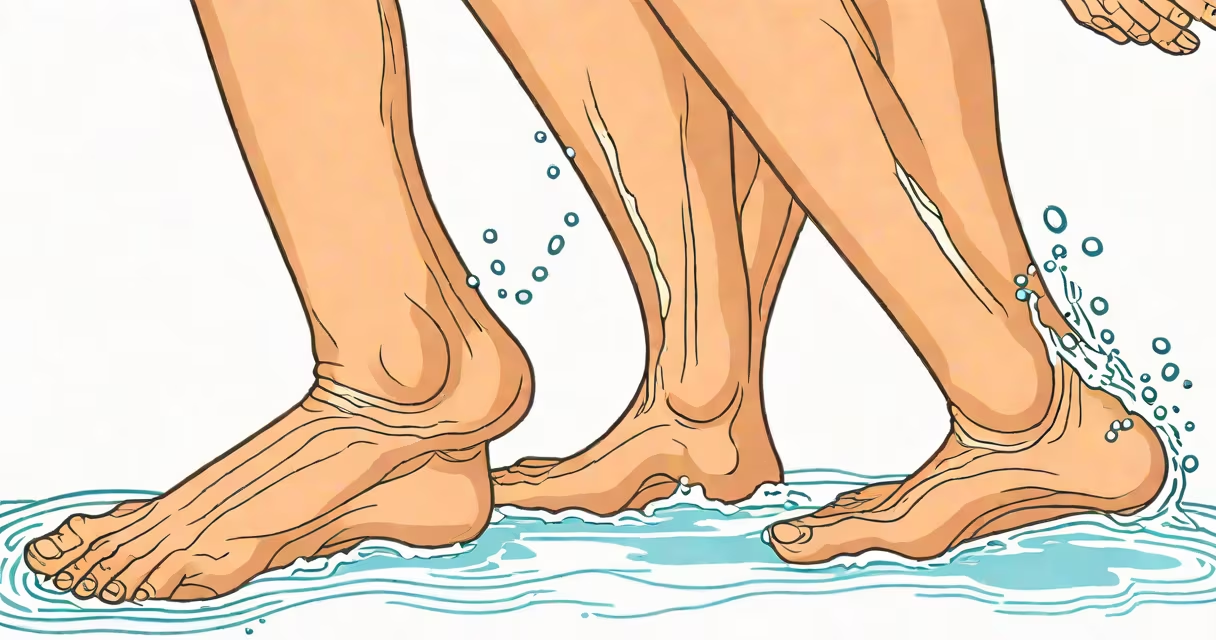
The fluid in swelling is excess interstitial fluid that accumulates in tissues due to increased capillary pressure, damaged vessel walls, or impaired lymphatic drainage. This fluid is typically clear, watery, and composed of plasma proteins, electrolytes, and water. It causes visible puffiness, tightness, and sometimes pain in affected areas like legs, ankles, or arms.
Swelling occurs when fluid leaks from blood vessels into surrounding tissues faster than the lymphatic system can remove it. The most common cause is venous insufficiency, where weakened valves in leg veins allow blood to pool and increase pressure in capillaries. This forces fluid out into the interstitial space. Other triggers include prolonged standing, injury, infection, or systemic conditions such as heart failure or kidney disease.
According to the National Institute of Health (NIH), approximately 10% of adults over 65 experience chronic edema, often linked to reduced cardiac output or renal sodium retention. The American Heart Association notes that bilateral leg swelling in older adults should prompt evaluation for left-sided heart failure, especially if accompanied by shortness of breath or fatigue.
Fluid moves between compartments via hydrostatic and oncotic pressures. Hydrostatic pressure pushes fluid out of capillaries, while oncotic pressure-mainly due to albumin-pulls fluid back in. When hydrostatic pressure exceeds oncotic pressure, fluid escapes into tissues.
For example, in congestive heart failure, the heart's reduced pumping ability increases venous pressure. This raises capillary pressure in the legs, forcing fluid into the interstitium. Over time, this leads to pitting edema-when pressing a finger into the swollen area leaves a temporary dent.
A 2021 study published in Circulation found that patients with New York Heart Association Class III or IV heart failure had a 68% higher incidence of peripheral edema compared to those with milder disease. This correlation underscores the role of hemodynamic stress in fluid leakage.
Not all swelling fluid is the same. The composition and origin differ based on the underlying condition:
| Type | Appearance | Common Causes | Key Difference |
|---|---|---|---|
| Transudate | Clear, thin, protein-poor | Heart failure, cirrhosis, nephrotic syndrome | Leaked due to pressure imbalance, not inflammation |
| Exudate | Cloudy, thick, high protein | Infection, trauma, autoimmune disorders | Leaked due to inflamed, permeable vessels |
| Chylous fluid | White, milky | Lymphatic obstruction (e.g., after surgery) | Contains triglycerides from fat digestion |
Transudates dominate in heart-related swelling. Exudates appear in inflammatory conditions like cellulitis. Chylous fluid is rare but serious-it suggests damage to the thoracic duct, often seen after neck or chest surgery.
One non-obvious distinction: swelling from heart failure tends to be symmetrical and worsen after prolonged sitting or standing. Swelling from deep vein thrombosis (DVT) is usually unilateral and painful, with redness and warmth. Misdiagnosing DVT as heart-related edema delays anticoagulant treatment and risks pulmonary embolism.
Not all swelling requires intervention. Mild, transient swelling from long flights or hot weather resolves quickly. But persistent or worsening swelling-especially if pitting, asymmetrical, or associated with weight gain, shortness of breath, or skin changes-needs medical evaluation.
For instance, a 62-year-old man with a history of hypertension developed bilateral ankle swelling over two weeks. He reported gaining 4 pounds and feeling fatigued. A physical exam revealed pitting edema and elevated jugular venous pressure. An echocardiogram confirmed a reduced ejection fraction of 35%, indicating systolic heart failure. His fluid was transudate-clear and low in protein-consistent with volume overload.
Another case involved a woman with sudden right leg swelling and fever. Her fluid was cloudy and contained high levels of white blood cells. Cultures grew Staphylococcus aureus. She had a skin abscess causing exudative edema. Antibiotics resolved both the infection and swelling within five days.
As noted in UpToDate, the presence of skin discoloration, ulceration, or induration (hardening) in swollen limbs should raise suspicion for lymphedema or venous stasis dermatitis-conditions requiring specialized care.
Many assume swelling fluid is "toxic" or "bad." In reality, it's a physiological response. The body uses fluid to deliver nutrients and immune cells to injured areas. However, when regulation fails, fluid accumulates pathologically.
Some believe all swelling fluid drains through the kidneys. While the kidneys regulate fluid balance, they do not directly remove interstitial fluid. That task falls to the lymphatic system. Lymph nodes filter debris and return fluid to circulation. If lymphatics are blocked-by cancer, surgery, or infection-fluid builds up in tissues.
I once observed a patient with stage III breast cancer who developed severe arm swelling after axillary node removal. The fluid was serosanguinous and drained slowly. Compression garments and manual lymphatic drainage reduced swelling by 60% over six weeks. This case highlighted that even after surgical removal of lymph nodes, the body can adapt-but not always quickly.
Another misconception: swelling always improves with elevation. While elevating limbs reduces venous pressure and temporarily decreases swelling, it doesn't treat the root cause. For heart failure, diuretics are needed. For DVT, anticoagulants are essential. Relying solely on elevation can delay diagnosis and worsen outcomes.
If swelling persists beyond 48 hours, spreads rapidly, or is accompanied by pain, redness, or difficulty breathing, seek medical attention. Swelling that doesn't improve with rest, elevation, or over-the-counter anti-inflammatories may signal a deeper issue.
Understanding the fluid in swelling reveals more than just discomfort-it points to the body's internal balance. Identifying whether it's transudate, exudate, or chylous fluid guides treatment. Recognizing patterns in onset, symmetry, and associated symptoms prevents misdiagnosis and supports timely care.
The fluid in swelling is not a single entity. It's a symptom, a signpost. Its nature reflects the underlying mechanism-be it vascular, inflammatory, or lymphatic. Knowing this helps separate harmless puffiness from conditions needing urgent attention.