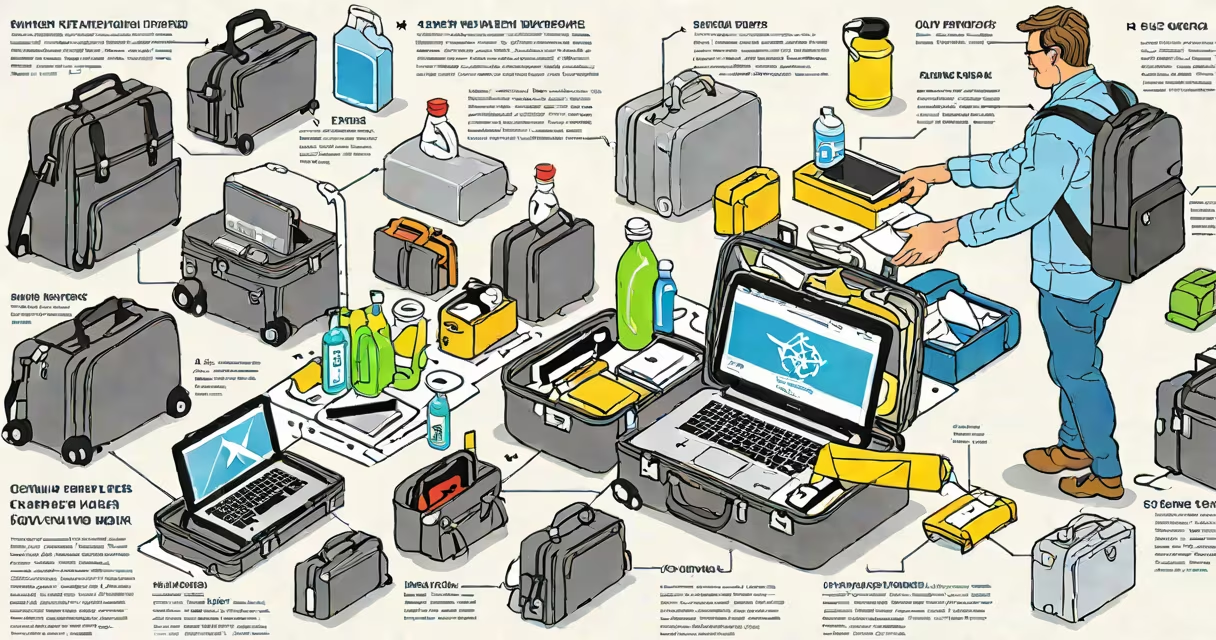
At TSA checkpoints, remove laptops, large liquids, and outerwear from your carry-on bag. Place them in separate bins for screening. This applies to all domestic flights in the U.S.
TSA agents screen carry-on bags using X-ray machines and physical inspection. Items that obscure or interfere with imaging must be removed. The goal is to identify threats quickly while minimizing passenger delays.
The process begins when you place your bag on the conveyor belt. You then remove specific items and place them in bins. These include electronics larger than a smartphone, liquids exceeding 3.4 ounces, and outer layers like jackets or coats. Failure to remove these items triggers a secondary screening.
Every carry-on bag enters a scanner that produces a color-coded image. Bright red areas indicate metal or dense materials. Green zones show organic material. Gray zones represent low-density objects. Agents interpret these images to detect potential threats.
If a bag contains a suspicious item, such as a knife or a battery-powered device, the agent may pause the line and request a manual search. This happens most often when electronics are left inside a bag during scanning.
For example, a traveler carrying a tablet in a backpack may trigger an alert because the device's battery creates a shadow on the scan. Removing the tablet beforehand avoids this issue. TSA reports that 68% of carry-on bags require secondary screening due to improper item removal.
Items requiring removal fall into three categories: electronics, liquids, and clothing. Each category has specific rules based on safety and detection accuracy.
Liquids: All liquids, gels, and aerosols must be in containers under 3.4 ounces (100 ml). They must fit in a single clear quart-sized bag. This is the 3-1-1 rule. A 12-ounce water bottle fails this test. Even toothpaste counts as a gel and must follow the rule.
Electronics: Devices larger than a smartphone-including tablets, laptops, and e-readers-must be removed from bags and placed in bins. This ensures the X-ray can capture the internal components. A laptop left inside a backpack may appear as a solid mass, leading to a manual check.
Clothing: Outerwear such as jackets, coats, and sweaters must be removed. Metal zippers and buttons interfere with scanning. A traveler wearing a winter coat may be asked to step aside for a pat-down. Removing the jacket before reaching the checkpoint prevents this.
| Item Type | Must Be Removed? | Why |
|---|---|---|
| Liquids over 3.4 oz | Yes | Prevents false positives in X-ray scans |
| Laptop | Yes | Enables detailed imaging of internal parts |
| Jacket or coat | Yes | Reduces interference from metal and fabric |
| Shoes | Optional | Only required if requested by agent |
Some items are exempt. Small personal electronics like smartphones or keys do not need to be removed. TSA allows these to stay in pockets or bags. However, placing them in bins improves detection accuracy.
Travelers often assume that TSA will allow exceptions for medical needs. While medications and baby formula are permitted, they still must be declared and screened separately. A traveler once carried a 12-ounce insulin syringe in their pocket. The agent detected the liquid and asked for documentation. The syringe passed, but the delay could have been avoided by declaring it earlier.
Another misconception is that TSA checks every bag. Only 10% of carry-ons undergo physical inspection. Most bags pass through automated systems. But even if your bag passes the scanner, you may still be selected for a random check. TSA uses risk-based targeting, meaning behavior and travel patterns influence selection.
A non-obvious fact: TSA does not require you to remove your shoes unless they trigger an alarm. Many airports have shoe bins, but they're optional. A traveler at Atlanta Hartsfield-Jackson Airport once kept their shoes on and cleared security in under five minutes. The agent did not ask for removal.
In March 2023, a passenger arrived at Los Angeles International Airport with a carry-on containing a 16-ounce energy drink, a tablet, and a leather jacket. The drink was in a plastic container, not a clear bag. The tablet stayed in the backpack. The jacket remained on.
The X-ray showed a dense mass in the bag. The agent flagged the bag for secondary screening. The passenger was asked to remove the jacket, empty the drink into a cup, and take the tablet out. After 12 minutes, the bag passed. The delay could have been avoided by following the 3-1-1 rule and removing electronics and outerwear beforehand.
This incident reflects a common pattern. According to TSA's 2022 annual report, 43% of passengers who experienced delays at checkpoints had failed to remove one or more required items.
TSA does not ban all sharp objects. Nail clippers, tweezers, and small scissors are allowed in carry-ons. However, knives with blades longer than 4 inches must go in checked luggage. A butter knife is acceptable. A chef's knife is not.
Prohibited items include firearms, explosives, and flammable liquids. Gasoline, lighter fluid, and aerosol cans are banned. Even a small can of hairspray exceeds the 3.4-ounce limit and must be packed in checked baggage.
One mistake people make is assuming that TSA will accept a sealed container of alcohol. Liquids over 3.4 ounces cannot be carried on, regardless of seal integrity. A 12-ounce bottle of whiskey must be checked. This rule applies even if the bottle is unopened.
I once watched a traveler attempt to bring a 16-ounce bottle of perfume through security. The agent asked her to open it. She refused. The bag was denied entry. She later checked the bag and paid $30 in fees. The rule exists to prevent tampering and ensure consistency.
Before entering a TSA checkpoint, verify these items:
Following these steps reduces wait times and avoids unnecessary inspections. The average time to clear a checkpoint is 9 minutes. Passengers who prepare in advance spend 3 minutes less on average.