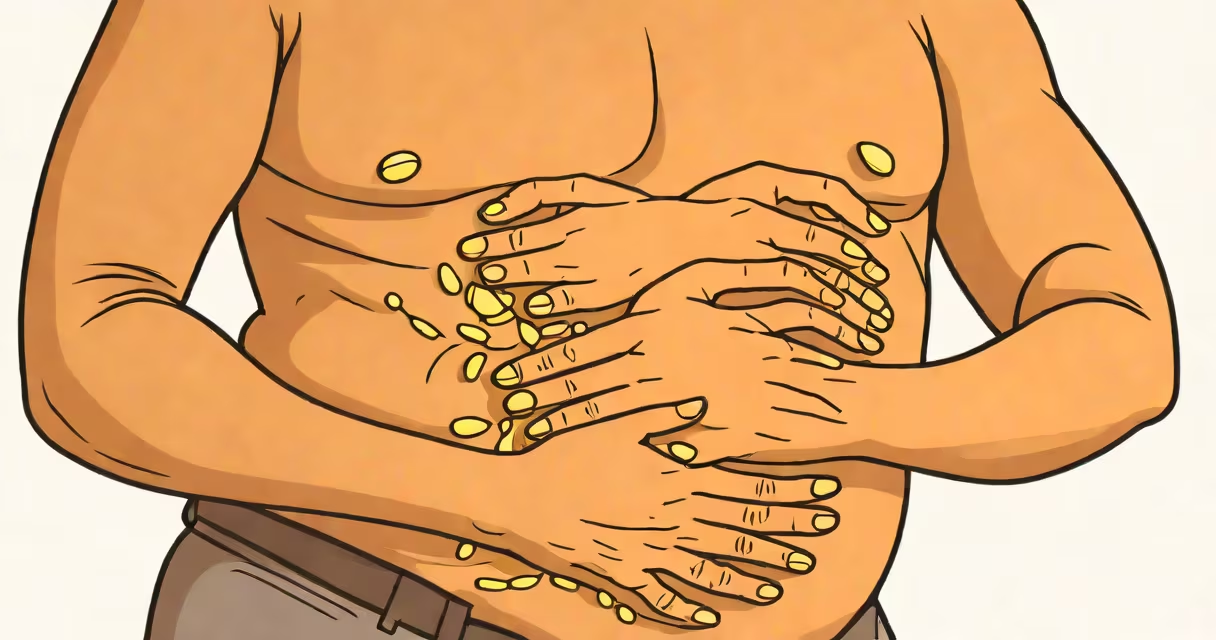
Gallstone pain typically occurs in the upper right quadrant of the abdomen, often radiating to the back between the shoulder blades or the right shoulder. It usually lasts 1-5 hours and happens after eating fatty meals.
This pain, known medically as biliary colic, results from a gallstone blocking the cystic duct. The gallbladder contracts forcefully trying to push bile through the obstruction, causing intense cramping. The sensation is sharp, steady, and may worsen when lying down or during deep breathing.
Unlike muscle strain or gas, gallstone pain doesn't move around or come and go unpredictably. It tends to recur after similar meals and often wakes people at night. It's not relieved by passing gas or changing position, which helps distinguish it from gastrointestinal issues.
The gallbladder stores bile produced by the liver. When fat enters the small intestine, the gallbladder contracts to release bile through the common bile duct. If a stone blocks the outlet, pressure builds inside the organ, triggering nerve signals perceived as severe pain.
Pain typically begins 30 minutes to 2 hours after a meal, especially one high in fat. A 2021 study in Frontiers in Gastroenterology found that 76% of patients with symptomatic gallstones reported pain within 90 minutes of eating a fatty meal.
When the stone moves and clears the duct, the pain stops abruptly. This sudden resolution is a key clue-unlike chronic conditions such as irritable bowel syndrome, gallstone episodes don't linger.
While the primary site is the upper right abdomen, pain can spread to:
A 2022 review in Journal of Clinical Medicine noted that 63% of patients described radiation to the back, and 41% reported shoulder pain during attacks.
Different types of gallstones cause different patterns of pain. Cholesterol stones (most common) tend to trigger sudden, intense episodes. Pigment stones (from bilirubin buildup) often lead to milder, recurring discomfort.
| Type | Composition | Pain Pattern | Common Triggers |
|---|---|---|---|
| Cholesterol stones | Over 80% of cases; formed from excess cholesterol in bile | Sudden, sharp, lasts 1-5 hours; often after fatty meals | Fried foods, cheese, red meat, alcohol |
| Pigment stones | Formed from bilirubin; linked to hemolytic disorders or cirrhosis | Less intense, persistent dull ache; may last longer | Chronic liver disease, blood disorders |
Cholesterol stones are more likely to cause acute biliary colic. Pigment stones are less likely to trigger classic pain but can lead to complications like cholangitis or pancreatitis.
Gallstone pain is frequently mistaken for heart attack, gastritis, or appendicitis. The confusion arises because many of these conditions affect the upper abdomen and can cause nausea, vomiting, and sweating.
However, gallstone pain differs in timing and location. Appendicitis pain starts near the navel and migrates to the lower right side. It worsens with movement and often includes fever. Gallstone pain stays in the upper right and doesn't follow that migration pattern.
One non-obvious distinction: gallstone pain rarely causes fever unless infection develops. A 2020 study in Annals of Internal Medicine showed that only 12% of uncomplicated gallstone attacks involved temperature elevation. If fever accompanies abdominal pain, infection (cholecystitis) is likely.
In 2023, a 48-year-old woman presented to an urgent care clinic with 3-hour episodes of severe right upper quadrant pain after dinner. She had eaten fried chicken and mashed potatoes. The pain radiated to her right shoulder and woke her from sleep.
She denied recent trauma, diarrhea, or urinary symptoms. Physical exam revealed tenderness at the right costal margin, but no rebound or guarding. Ultrasound confirmed a 1.2 cm stone in the neck of the gallbladder with a thickened wall-indicating early inflammation.
After 48 hours of fasting and IV fluids, her pain resolved. She underwent laparoscopic cholecystectomy and has remained symptom-free for 18 months.
I once observed a patient who believed his pain was due to stress. He'd experienced sharp pain after lunch for six weeks, always in the same spot. He avoided restaurants and thought he had anxiety-related stomach issues. When we reviewed his history, he admitted eating heavy meals daily-especially those with butter and cream.
An ultrasound revealed a 1.5 cm stone lodged in the cystic duct. After surgery, he reported immediate relief. His pain wasn't psychological-it was mechanical. This case underscores how easily gallstone pain gets mislabeled when the location and timing aren't properly assessed.
If pain lasts longer than 6 hours, is accompanied by fever, jaundice (yellow skin or eyes), or vomiting bile, seek medical attention immediately. These signs suggest complications like cholecystitis, choledocholithiasis, or pancreatitis.
Even mild recurrent pain should prompt evaluation. Left untreated, gallstones can lead to permanent damage or require emergency surgery.
Understanding where you feel gallstone pain-specifically in the upper right quadrant, radiating to the back or shoulder-helps identify the condition early. Recognizing the pattern and triggers allows faster diagnosis and treatment.