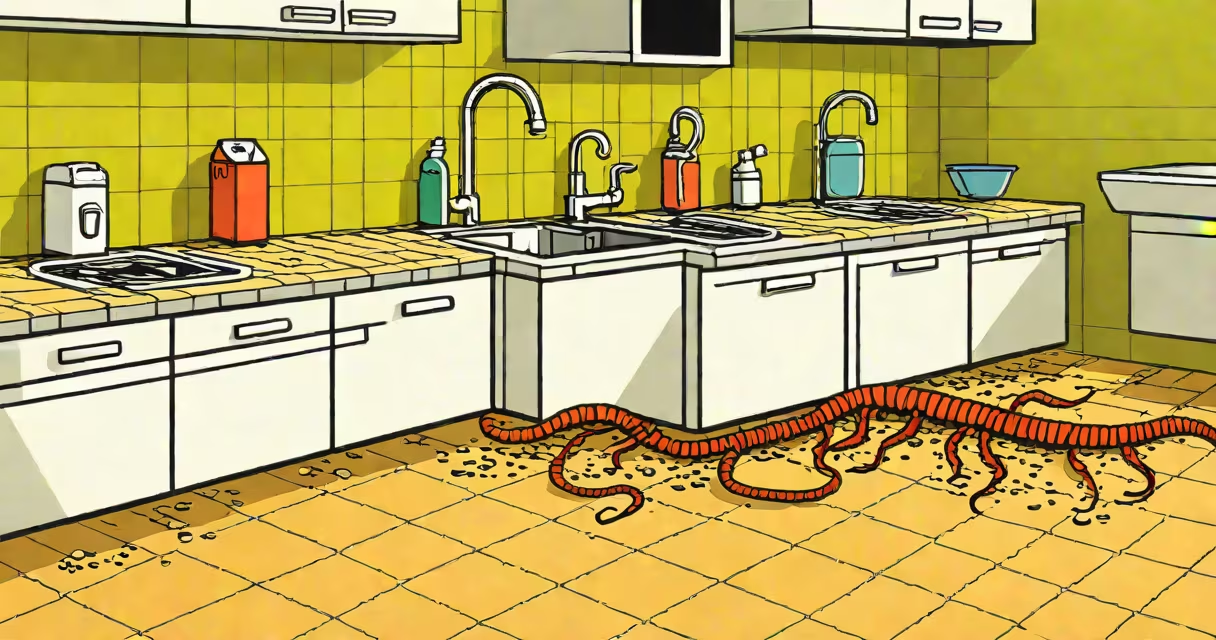
Centipedes enter homes seeking moisture and prey like spiders, ants, and silverfish. They are not pests by choice-they are survivors adapting to indoor environments where conditions mimic their natural outdoor habitats.
These multi-legged arthropods thrive in dark, humid spaces. A single centipede in your home often signals a larger issue: high moisture levels or an existing insect population. They don't live long indoors-typically 2-5 years-but can reproduce quickly if conditions remain favorable.
According to the University of California Agriculture and Natural Resources, centipedes are beneficial in gardens because they eat pest insects. Indoors, however, their presence indicates environmental conditions that may also attract other unwanted creatures.
Centipedes move through tiny gaps-cracks in foundations, gaps under doors, or openings around pipes. They don't fly or jump. Instead, they crawl through spaces as narrow as 1/8 inch (3 mm).
They follow moisture gradients. When soil outside becomes too dry or flooded, they migrate indoors. Basements, bathrooms, laundry rooms, and kitchens are common entry points due to humidity and plumbing leaks.
A 2022 study by the Entomological Society of America found that 68% of indoor centipede sightings occurred within 3 feet of a water source-sinks, toilets, or leaky pipes. This confirms that moisture is the primary driver, not food availability.
Most indoor centipedes belong to the genus *Scutigera*, known as house centipedes. They have long legs, a flattened body, and can grow up to 2 inches (5 cm) long. Their color ranges from yellowish-brown to dark gray.
Other species, like *Lithobius* and *Geophilus*, are less common indoors. These are typically smaller (under 1 inch), darker, and prefer deeper soil layers. They rarely enter homes unless disturbed.
| Type | Size | Legs | Common Location | Behavior |
|---|---|---|---|---|
| House centipede (*Scutigera*) | Up to 2 in (5 cm) | 15 pairs | Bathrooms, basements, behind sinks | Fast-moving, nocturnal, avoids light |
| Ground centipede (*Lithobius*) | 0.5-1 in (1.3-2.5 cm) | 15 pairs | Under rocks, logs, mulch | Slow, prefers damp soil |
| Soil centipede (*Geophilus*) | 1-2 in (2.5-5 cm) | 15-17 pairs | Deep soil, leaf litter | Very rare indoors |
House centipedes are the most likely to appear in homes. They're not aggressive but can deliver a painful bite if handled. The venom is mild-similar to a bee sting-and causes localized pain, redness, and swelling in rare cases.
Many people assume centipedes are dangerous or indicate a severe infestation. This is false. A single centipede sighting doesn't mean you have an infestation. They are solitary hunters and do not form colonies.
Another myth: centipedes multiply rapidly indoors. In reality, they lay eggs in soil or under debris and require specific humidity and temperature ranges to hatch. Indoor environments rarely support sustained breeding cycles.
Centipedes do not eat wood, paper, or fabrics. They consume live prey-small insects and arachnids. Their presence often means other pests are already present, which is why controlling them requires addressing the root cause: moisture and insect populations.
In March 2023, a homeowner in Portland reported seeing four centipedes in their basement over three days. The basement had a leaking pipe under the laundry sink and a window well filled with standing water after rain.
After sealing the pipe and installing a dehumidifier, centipede sightings dropped to zero within 14 days. The local extension office confirmed that reducing indoor humidity below 60% reduces centipede activity.
This case illustrates that centipedes are indicators-not causes. Fixing the underlying moisture problem eliminated both the centipedes and the conditions that attracted them.
Eliminate access points. Seal cracks around windows, doors, and utility lines using silicone caulk or expanding foam. Focus on areas near plumbing and drains.
Reduce indoor humidity. Maintain levels between 40% and 60%. Use dehumidifiers in basements and bathrooms. Clean gutters and ensure downspouts direct water away from the foundation.
Control insect populations. Vacuum regularly, store food in sealed containers, and fix leaky faucets. Eliminating their prey makes your home less appealing.
I once observed a centipede in my own bathroom during a week of heavy rainfall. After cleaning the drain and placing a dehumidifier in the room, the centipede did not return. The solution wasn't a pesticide-it was environmental control.
If you see more than five centipedes in a week across multiple rooms, consult a pest control professional. This suggests a larger moisture or insect issue.
Do not use broad-spectrum insecticides. They kill beneficial insects and can lead to secondary pest outbreaks. Instead, focus on exclusion and moisture management.
Understanding why centipedes appear in your house leads to effective solutions. They are not a threat to humans, but their presence reveals environmental imbalances. Addressing moisture and insect activity resolves the issue permanently.
Centipedes in your house are not a sign of dirtiness-they are signs of dampness and small prey. Solving the root cause stops them for good.