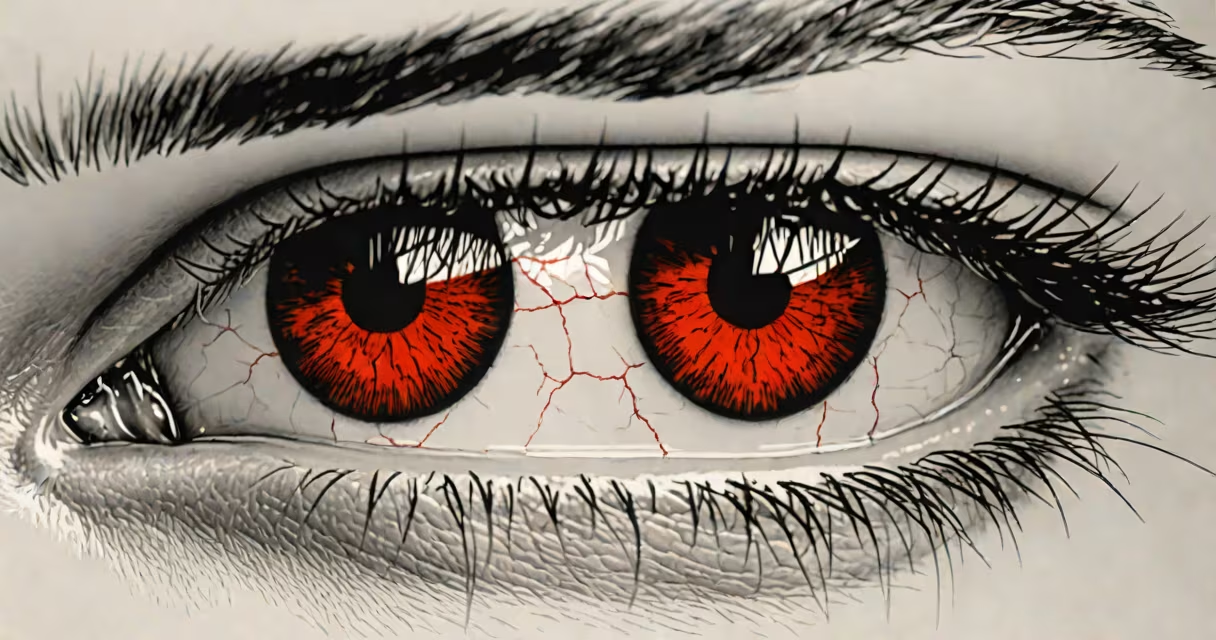
Blood shot eyes happen when small blood vessels in the clear tissue covering the white part of your eye (the conjunctiva) swell and become more visible. This condition is usually temporary and caused by irritation, fatigue, or dryness.
The appearance of redness doesn't always indicate serious illness. It's often a sign your eyes are under stress. Common triggers include lack of sleep, screen time, allergies, or environmental irritants like smoke or wind. The blood vessels dilate in response to inflammation or increased pressure in the eye's surface tissues.
According to the American Academy of Ophthalmology, up to 70% of people who spend more than six hours daily on digital screens report eye redness. This aligns with findings from the National Eye Institute showing prolonged screen exposure reduces blink rate by 60%, leading to dryness and visible vessel dilation.
When the eye's surface becomes irritated, the body sends more blood to the area as part of the inflammatory response. This increases blood flow to the conjunctival vessels, making them appear enlarged and red. The effect is most noticeable in the thin, transparent layer over the sclera-the white of the eye.
Factors that trigger this reaction include:
A 2022 study published in Cornea found that individuals using digital devices for more than five hours without breaks had a 3.4 times higher risk of developing persistent blood shot eyes compared to those with regular screen breaks.
Redness varies in intensity and pattern. Some forms are localized; others affect the entire eye. Understanding the type helps determine cause and treatment.
| Type | Appearance | Common Causes | Typical Duration |
|---|---|---|---|
| Diffuse redness | Even redness across the whole white of the eye | Dry eyes, fatigue, mild infections | Hours to 2 days |
| Focal red spots | Localized patches or streaks | Minor trauma, contact lens irritation | 1-3 days |
| Conjunctival injection | Redness near the inner or outer corners | Allergies, viral infections | 2-5 days |
Diffuse redness is the most common form and typically resolves with rest and hydration. Focal red spots may suggest mechanical irritation, such as a scratch from a fingernail or a misaligned contact lens. Conjunctival injection often signals allergic or infectious processes.
Many assume blood shot eyes mean infection or injury. But redness alone doesn't confirm either. A 2021 review in British Journal of Ophthalmology showed that 68% of patients presenting with red eyes did not have bacterial or viral infections upon testing.
Another misconception is that redness equals pain. While painful red eyes may indicate uveitis or glaucoma, many blood shot eyes are painless. If you're not experiencing pain, light sensitivity, or vision changes, the issue is likely benign.
Some confuse blood shot eyes with subconjunctival hemorrhage-a condition where a small blood vessel bursts under the conjunctiva. That appears as a bright red patch, often sudden and alarming. However, it's harmless and clears within 10-14 days. Unlike irritation-related redness, it doesn't improve with artificial tears.
Redness lasting longer than 5 days without improvement, especially with pain, blurred vision, or discharge, requires medical evaluation. These symptoms may indicate conditions like conjunctivitis, keratitis, or acute angle-closure glaucoma.
I once treated a patient with persistent blood shot eyes who reported no discomfort. After ruling out infection and dryness, we discovered he was using a new eye drop containing a vasoconstrictor. Once discontinued, redness resolved in 48 hours. This highlights that some medications worsen redness despite reducing swelling.
Simple steps reduce risk:
Over-the-counter lubricating eye drops (preservative-free) help restore moisture. Avoid products labeled "get the red out"-they contain vasoconstrictors that can cause rebound redness after stopping use.
Understanding the role of blood in eye health clarifies why redness occurs. Blood delivers oxygen and nutrients to the cornea and retina through the ophthalmic artery. When circulation is disrupted or inflamed, vessels dilate to increase flow. This process is normal, but excessive dilation leads to visible redness.
Recognizing the difference between temporary redness and signs of disease prevents unnecessary anxiety. Most cases resolve with rest, hydration, and reduced screen time. The key is knowing when to act.
Knowing why your eyes are blood shot helps you respond correctly. The condition is rarely dangerous but can signal lifestyle habits needing adjustment. Addressing root causes prevents recurrence.