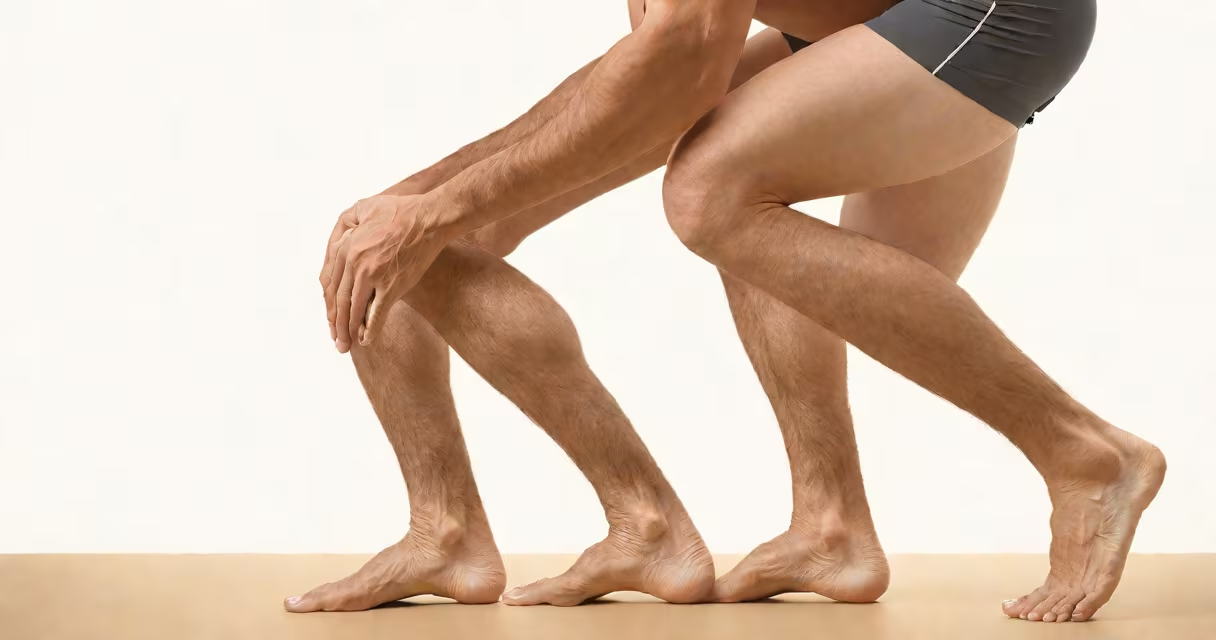
Knee hyperextension happens when the knee joint extends past 0 degrees, bending backward due to muscle weakness, ligament laxity, or poor movement control. It often causes discomfort during walking, standing, or physical activity.
Hyperextension is not a single injury but a biomechanical fault involving joint mechanics, neuromuscular control, and structural integrity. The knee normally locks into extension at 0 degrees, but when it exceeds that, the posterior cruciate ligament (PCL), posterior capsule, and posterior meniscus are stressed. This can lead to microtears, inflammation, and chronic instability.
According to the American Academy of Orthopaedic Surgeons (AAOS), hyperextension injuries account for about 15% of all knee sprains seen in outpatient clinics. The condition is more common in athletes, individuals with joint hypermobility syndrome, and those recovering from prior knee surgery.
The knee joint functions as a hinge between the femur and tibia. Normal extension allows the leg to straighten fully. Hyperextension occurs when the tibia moves backward relative to the femur past neutral alignment. This motion is limited by soft tissue structures - primarily the PCL, posterior capsule, and hamstring tendons.
When these tissues are overstretched or weakened, the knee can collapse into hyperextension under load. For example, landing from a jump with poor hip and core control forces the knee to absorb impact improperly. The quadriceps contract to stabilize the joint, but if they're weak or poorly timed, the knee may buckle backward.
A 2021 study published in the Journal of Orthopaedic Research found that individuals with hyperextended knees had reduced activation of the vastus medialis obliquus (VMO), a key stabilizer of the patella. This deficit contributes to poor tracking and increased risk of anterior knee pain.
Several factors increase the likelihood of knee hyperextension:
One overlooked factor is footwear. Wearing shoes with elevated heels or minimal arch support changes gait mechanics. A 2019 study in Foot & Ankle International showed that women wearing high heels exhibited a 12% greater incidence of knee hyperextension during walking compared to flat-soled shoes.
Hyperextension is categorized by degree of displacement and associated tissue damage:
| Grade | Description | Typical Symptoms | Recovery Time |
|---|---|---|---|
| Grade I | Minor stretch of posterior ligaments; no visible tear | Mild ache, occasional buckling | 2-4 weeks |
| Grade II | Partial tear of PCL or posterior capsule | Pain with weight-bearing, swelling, instability | 6-12 weeks |
| Grade III | Complete rupture of PCL or associated ligaments | Severe pain, joint effusion, inability to walk | 3-6 months with rehab |
Grade I cases are often misdiagnosed because symptoms are subtle. Many patients report "feeling like my knee gave out" during a squat or step-down motion - a sign of neuromuscular failure rather than acute trauma.
Knee hyperextension is frequently mistaken for other knee conditions due to overlapping symptoms:
A key differentiator is movement pattern. Hyperextension occurs most often during deceleration or landing - not during rotational maneuvers. If your knee bends backward when you stop suddenly while running, it's likely hyperextension, not a ligament tear.
I trained a recreational runner who reported recurrent knee pain during downhill runs. She described her knee "giving way" at the end of each descent. Physical exam revealed 5 degrees of passive hyperextension in the right knee, confirmed via goniometer measurement. MRI showed mild PCL thickening and early signs of posterior capsular laxity.
Her training included hill repeats with poor form - she landed heavily on her forefoot and allowed her knee to extend too far. After correcting her stride and adding eccentric hamstring strengthening, her hyperextension reduced to 1 degree. She completed a 12-week program focusing on hip stabilization and balance drills.
She returned to running without pain. This case illustrates that hyperextension is often preventable through targeted neuromuscular training.
Consult a healthcare provider if you experience:
Imaging such as MRI or ultrasound can assess ligament integrity. A physical therapist trained in biomechanics can perform a changing assessment using video analysis to detect faulty movement patterns.
Early intervention prevents progression to osteoarthritis. A 2020 review in the British Journal of Sports Medicine linked untreated knee hyperextension to a 2.3-fold higher risk of developing degenerative joint disease within 10 years.
Strengthening the posterior chain - glutes, hamstrings, and core - improves knee stability. Exercises like Romanian deadlifts, glute bridges, and single-leg squats improve control during stance phase.
Balance training reduces reaction time. Try standing on one foot with eyes closed for 30 seconds daily. This improves proprioception and lowers the risk of sudden joint collapse.
Proper footwear matters. Choose shoes with moderate heel drop (6-8 mm) and adequate arch support. Avoid high heels or minimalist shoes unless you've built sufficient strength and control.
Understanding why your knee hyperextends is the first step toward restoring stability. Addressing muscle imbalances, improving movement quality, and choosing appropriate gear reduce long-term joint wear and protect against progressive damage.