Acidic water treatment neutralizes water with a pH below 6.5 by adding alkaline chemicals or using natural buffering agents to raise pH to safe levels for discharge, reuse, or human contact. This process prevents corrosion, protects aquatic life, and meets regulatory standards.
Water becomes acidic when it dissolves carbon dioxide, sulfur dioxide, or other acidic gases, or when it leaches metals from soil and rock. The most common cause in industrial settings is acid mine drainage, where sulfide minerals oxidize upon exposure to air and water, producing sulfuric acid. Left untreated, such water can damage pipelines, kill fish, and contaminate groundwater.
Acidic water treatment typically involves adding alkaline substances like lime (calcium hydroxide), sodium hydroxide, or limestone (calcium carbonate) to increase pH. The amount required depends on the initial pH, alkalinity, and volume of water. For example, treating 10,000 gallons of water with a pH of 3.5 may require 200 pounds of hydrated lime to reach a pH of 7.0. Dosing systems use sensors and automated controls to maintain precise chemical addition.
The core principle is acid-base neutralization. Acids release hydrogen ions (H⁺), which lower pH. Alkaline materials accept H⁺ ions, raising pH toward neutrality. The reaction between sulfuric acid (H₂SO₄) and calcium hydroxide (Ca(OH)₂) produces calcium sulfate (gypsum) and water:
H₂SO₄ + Ca(OH)₂ → CaSO₄ + 2H₂OThis reaction reduces acidity and forms a precipitate that settles out. The treated water then undergoes clarification and filtration to remove solids before discharge or reuse.
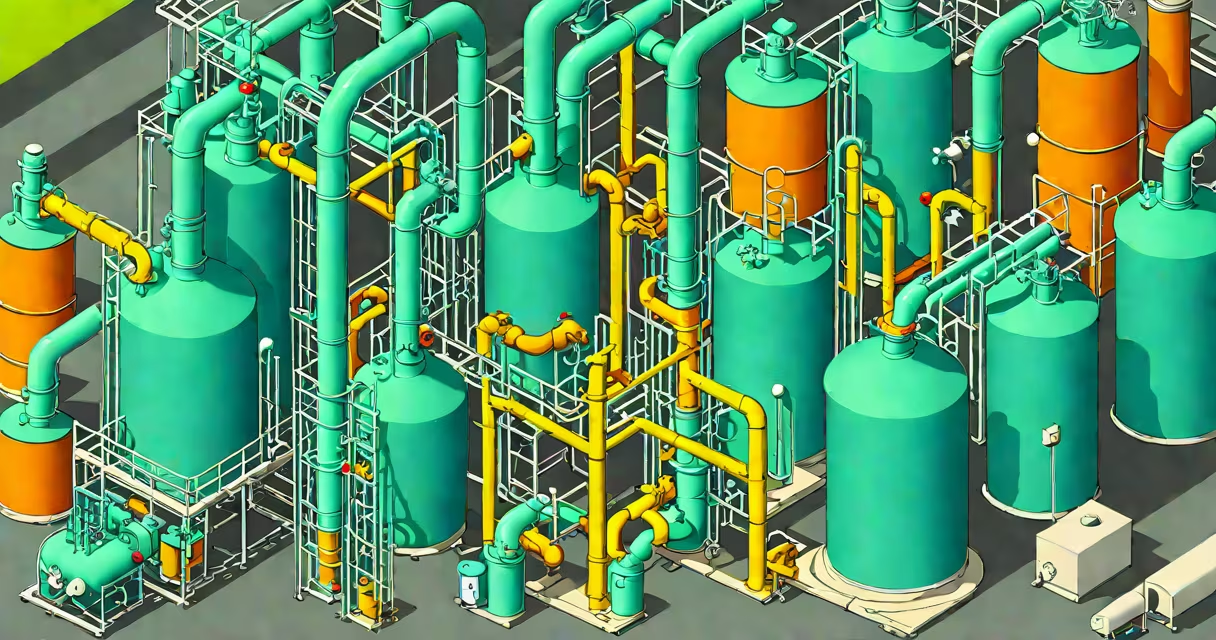
Treatment systems vary by scale and application. Small-scale setups use batch reactors or simple dosing tanks. Large facilities employ continuous flow systems with mixing chambers, settling basins, and sludge handling units. Some systems integrate passive methods like constructed wetlands or limestone beds, which naturally buffer acidity over time.
Three primary approaches exist: chemical addition, passive treatment, and hybrid systems. Each suits different environments and constraints.
| Type | Best For | Chemical Input | Operating Cost | Example Use Case |
|---|---|---|---|---|
| Active Chemical Treatment | High-acidity streams, rapid response needed | Lime, NaOH, Na₂CO₃ | High | Mining operations with pH 2.0-3.5 effluent |
| Passive Treatment | Low-flow, remote sites, long-term management | Natural limestone, organic matter | Low | Abandoned mine drainage in forested areas |
| Hybrid Systems | Variable flow, fluctuating acidity | Combination of chemical and passive elements | Moderate | Industrial park wastewater with seasonal spikes |
Passive systems rely on natural geochemical processes. A typical example is a limestone drain, where acidic water flows through crushed limestone. As water passes through, calcium carbonate reacts with H⁺ ions, forming CO₂ gas and calcium ions. This method requires minimal maintenance but takes longer to achieve stable pH and may clog over time.
Hybrid systems combine both methods. One plant in Pennsylvania uses a lime dosing unit upstream of a constructed wetland. The chemical step raises pH quickly, while the wetland provides biological filtration and further neutralization. This dual approach reduced operational costs by 30% compared to full chemical treatment, according to a 2021 EPA report.
Many assume acidic water treatment is purely about adjusting pH. In reality, it also manages metal solubility. Low pH increases the concentration of dissolved heavy metals like iron, aluminum, and manganese. Neutralizing pH causes these metals to precipitate as hydroxides, removing them from solution. Without proper treatment, even neutralized water can contain high metal loads.
A second misconception is that all neutralization produces hazardous sludge. While sludge formation is common, modern systems recover and stabilize waste products. For example, gypsum produced during lime neutralization can be sold as a byproduct for construction or agriculture. The U.S. Environmental Protection Agency (EPA) reports that 60% of large-scale mining operations now recycle at least 40% of their treatment sludge.
Another error is equating "safe" pH with "clean" water. A pH of 7.0 doesn't guarantee low toxicity. Water may still contain pathogens, suspended solids, or residual chemicals. Complete testing includes parameters like turbidity, conductivity, and metal concentrations. The EPA's National Pollutant Discharge Elimination System (NPDES) permits require monitoring of multiple indicators, not just pH.
In 2019, a coal mine in Fayette County discharged water with a pH of 2.8 and iron levels exceeding 120 mg/L. The site implemented a hybrid system: lime was added to raise pH to 6.5, followed by a series of aerated limestone channels. After six months, iron dropped to 0.3 mg/L, and pH stabilized around 7.2. The treated water met state discharge limits and supported native trout populations downstream.
Monitoring data showed that the system reduced annual chemical costs by $18,000 compared to full chemical treatment. The success relied on consistent sensor calibration and scheduled maintenance. One failure in the dosing pump led to a temporary spike in acidity, triggering an alarm and automatic shutdown. This incident highlighted the importance of redundancy in control systems.
I visited a treatment plant in Montana that handles runoff from a copper mine. The facility uses a combination of lime injection and a cascade of limestone beds. During a site tour, I watched a technician adjust the pH probe calibration. A small error caused the system to over-dose lime, increasing pH to 9.1. The alarm sounded within 90 seconds. The system automatically switched to manual mode, and operators corrected the setting before significant sludge formed. This experience confirmed that real-time feedback loops are essential for stable operation.
Acidic water treatment differs from acid rain mitigation. Acid rain results from atmospheric pollutants like SO₂ and NOₓ reacting with moisture. Its pH averages 4.2-5.0 and affects ecosystems over wide areas. Acid rain is addressed through emissions regulations, not on-site water treatment. In contrast, acidic water treatment targets localized discharges with measurable pH and contaminant levels.
Another key difference: acidic water treatment often involves solids separation. Acid rain doesn't produce sludge. Treating acidic mine water generates significant amounts of metal hydroxide sludge. Handling and disposal of this material represent a major cost and environmental risk. Proper dewatering and stabilization are critical steps.