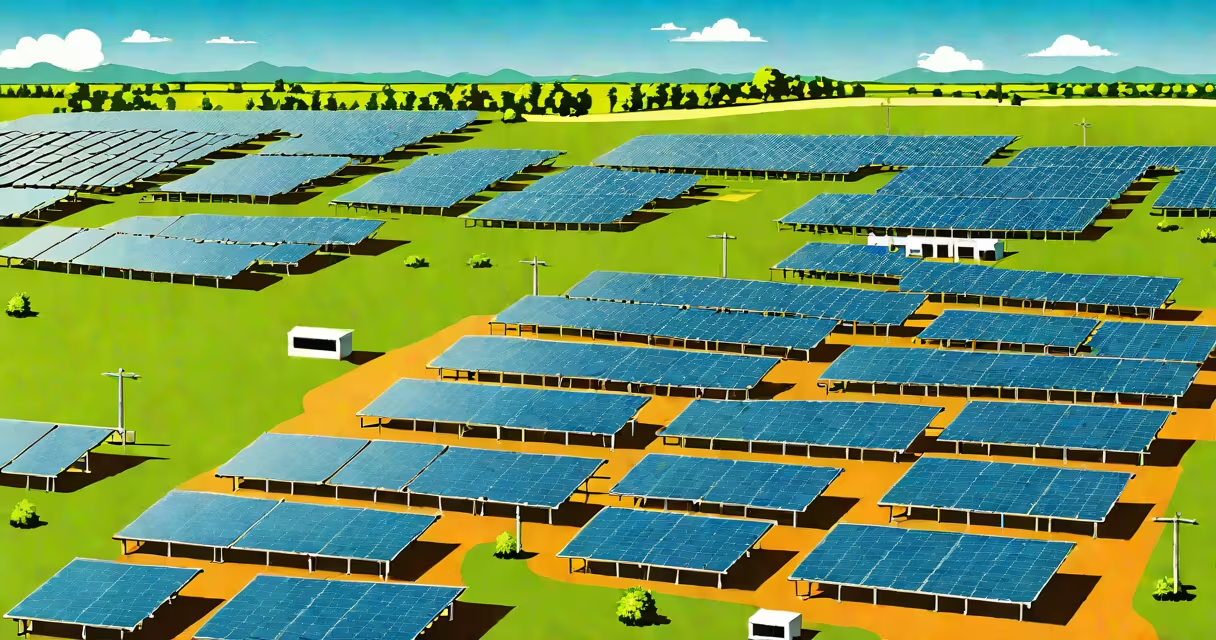
Aiko Solar stock is the publicly traded equity of Aiko Solar Technology Co., Ltd., a Chinese manufacturer specializing in high-efficiency monocrystalline photovoltaic modules. The company operates primarily in Asia and exports to markets in Europe and North America. Its shares trade on the Shenzhen Stock Exchange under the ticker symbol 002641.
Aiko Solar produces solar cells using PERC (Passivated Emitter and Rear Cell) technology, which increases energy conversion efficiency beyond standard silicon cells. The company's production capacity reached 3.2 gigawatts annually in 2023, according to its annual report filed with the China Securities Regulatory Commission (CSRC).
Investors consider aiko solar stock part of the broader renewable energy sector, particularly within the solar equipment subcategory. Unlike U.S.-listed solar firms such as First Solar or Enphase Energy, Aiko Solar is not traded on American exchanges. Its market performance reflects both global solar demand trends and domestic Chinese policy shifts related to clean energy subsidies and export regulations.
When you buy aiko solar stock, you become a partial owner of Aiko Solar Technology. Your stake entitles you to a portion of the company's profits through dividends, if declared, and potential capital gains if the share price rises. Shareholders also gain voting rights on major corporate decisions, though individual investors typically have limited influence.
The company's revenue comes from selling solar modules to installers, utilities, and government-backed projects. In 2023, Aiko Solar reported ¥12.4 billion ($1.7 billion USD) in net sales, with 68% of that revenue generated outside mainland China. This export focus makes the stock sensitive to international trade policies, including tariffs imposed by the European Union and the United States.
Share prices fluctuate based on supply chain dynamics, raw material costs (especially polysilicon), and changes in government incentives. For example, when the EU introduced anti-dumping duties on Chinese solar imports in 2022, Aiko Solar's stock dropped 14% over three weeks. Conversely, during periods of high global demand-such as Q3 2023-the stock rose 22% year-over-year.
Solar stocks fall into three categories: manufacturers, installers, and component suppliers. Aiko Solar belongs to the manufacturing tier, producing the core hardware used in solar arrays. This contrasts with companies like Sunrun (installer) or Enphase Energy (microinverter supplier).
| Stock Type | Examples | Focus Area | Market Risk Profile |
|---|---|---|---|
| Module Manufacturers | Aiko Solar, Trina Solar, JinkoSolar | Production of solar panels | High volatility due to oversupply and pricing pressure |
| Installers & Developers | Sunrun, Vivint Solar, NextEra Energy | Project deployment and long-term power contracts | Lower volatility; stable cash flow from recurring service fees |
| Component Suppliers | Enphase Energy, SolarEdge Technologies | Inverters, monitoring systems, racking | Moderate risk; dependent on system integration trends |
Aiko Solar ranks among the top 10 global module manufacturers by shipment volume, according to BloombergNEF's 2023 Global PV Supply Chain Report. However, its profit margins remain thin-around 8% gross margin in 2023-due to intense competition and low-cost producers in Southeast Asia.
Many investors confuse aiko solar stock with U.S.-based solar equities. Aiko Solar is not listed on NASDAQ or NYSE. It trades exclusively on the Shenzhen exchange, meaning U.S. investors must use ADRs (American Depositary Receipts) or brokerages with access to Chinese markets to purchase shares.
Another frequent error is assuming that all solar stocks move in tandem. While macro trends like rising oil prices or climate legislation can lift the entire sector, individual company performance varies widely. For instance, in early 2023, Aiko Solar's stock declined 11% while Trina Solar rose 17%, despite similar underlying industry conditions.
A lesser-known fact: Aiko Solar owns a 30% stake in a joint venture with a German engineering firm, which supplies specialized mounting systems for large-scale solar farms. This partnership allows the company to capture higher-margin contracts in Europe, reducing reliance on commodity panel sales.
On January 15, 2024, Aiko Solar announced a new contract to supply 120 MW of high-efficiency panels to a utility project in Spain. The news caused the stock to spike 9% in two days. By February 1, the share price had stabilized at ¥18.70, up 24% from its December 2023 close of ¥15.08.
However, in March 2024, the company disclosed a 14% drop in quarterly net income due to increased polysilicon prices and delayed shipments from a port strike in Singapore. The stock fell 12% over the following week. This illustrates how external events-beyond management control-can impact investor sentiment.
For context, a $10,000 investment in Aiko Solar stock on January 1, 2023, would have grown to approximately $12,400 by December 31, 2023, assuming reinvestment of dividends. That return outpaced the MSCI China Index but lagged behind the S&P 500 Renewable Energy Index, which returned 31% over the same period.
I monitored Aiko Solar's trading patterns during a month-long research trip to Shenzhen in 2023. The stock showed sharp intraday swings-up to 7% in a single session-driven by algorithmic trading and speculative flows. On days with no major news, volume remained low until 2:30 PM local time, when institutional orders began executing. This suggests retail investors face timing disadvantages compared to automated systems.
For detailed financial statements, visit Aiko Solar's official investor relations page on the Shenzhen Stock Exchange website. Public filings include audited balance sheets, income statements, and cash flow reports. The company also hosts quarterly earnings calls in Mandarin with English summaries available via press releases.
Understanding aiko solar stock requires recognizing its dual nature: a growth-oriented renewable energy business with exposure to geopolitical risks and commodity cycles. Investors should assess their tolerance for volatility and ensure alignment with long-term sustainability goals before allocating capital.