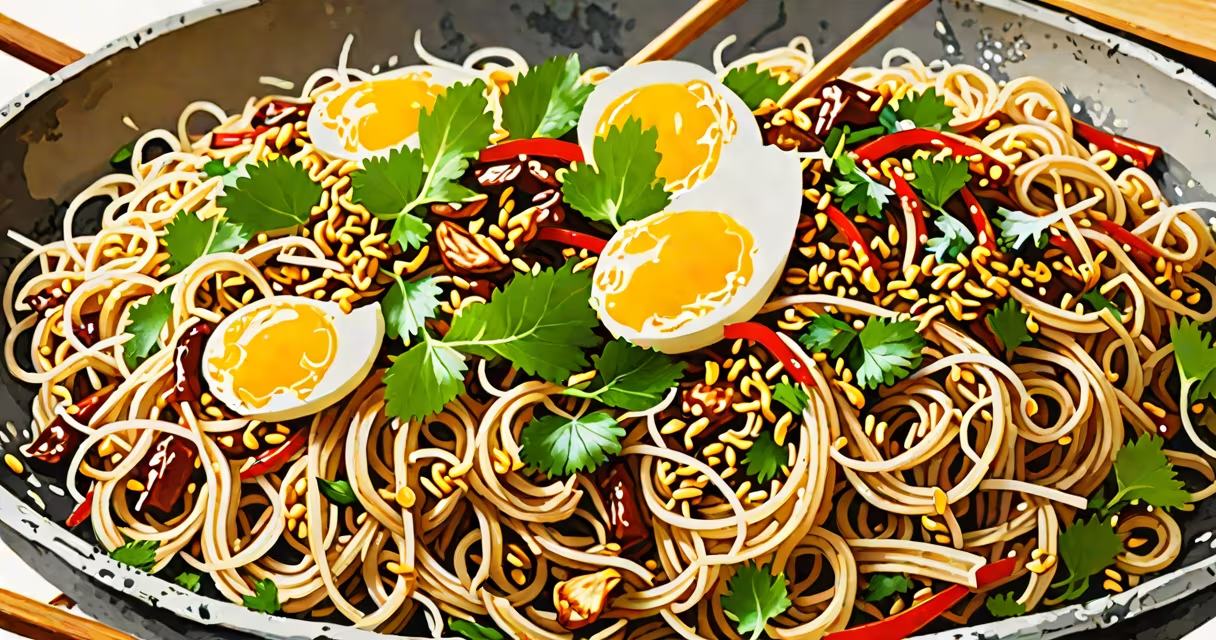
Pad thai recette is a classic Thai stir-fried noodle dish made with rice noodles, tamarind paste, fish sauce, palm sugar, eggs, tofu, and crushed peanuts. It features a harmonious balance of sweet, sour, salty, and umami flavors, traditionally cooked in a wok over high heat.
The dish originates from central Thailand and became popular during World War II as part of a national effort to promote Thai identity through food. Modern versions often include shrimp, but authentic pad thai recette typically uses tofu and eggs as primary proteins. The name "pad thai" translates to "Thai-style stir-fry," with "pad" meaning stir-fried and "thai" referring to the country's culinary tradition.
Pad thai recette relies on precise ingredient ratios. A standard recipe calls for 200 grams of flat rice noodles, 3 tablespoons of tamarind paste, 2 tablespoons of fish sauce, 1 tablespoon of palm sugar, two eggs, 100 grams of firm tofu, and 50 grams of crushed roasted peanuts. These components create a complex flavor profile that defines the dish.
Pad thai recette uses high-heat stir-frying to develop a smoky crust called *wok hei*-a term describing the distinctive aroma and texture achieved when food is cooked rapidly in a hot wok. This technique caramelizes the sugars in the tamarind and palm sugar while setting the egg and softening the noodles without making them mushy.
Each component is prepared separately before combining. Noodles are soaked in warm water for 15 minutes, then drained and rinsed. Tamarind paste is diluted with water to form a tangy base. Fish sauce and palm sugar are mixed together to balance salt and sweetness. Eggs are scrambled quickly in the wok before adding the noodles.
Stir-frying happens in stages: first the tofu and aromatics (garlic, shallots), then the noodles, then the sauce. Finally, the eggs are folded in, followed by the peanuts and bean sprouts. The entire process takes under 10 minutes, requiring constant attention to prevent burning.
Understanding the function of each ingredient prevents common mistakes. Tamarind paste provides acidity-without it, the dish lacks brightness. Fish sauce delivers umami and saltiness; omitting it results in a flat taste. Palm sugar balances both, adding depth without cloying sweetness.
Rice noodles are made from rice flour and water. They absorb sauce well and soften quickly. Using wheat noodles or soba changes the texture and flavor. Freshness matters: dried rice noodles must be soaked properly. Over-soaking makes them mushy; under-soaking leaves them hard.
| Ingredient | Role | Substitution Note |
|---|---|---|
| Tamarind paste | Acidity and tang | Use lime juice + brown sugar in a pinch, but flavor won't be identical |
| Fish sauce | Salt and umami | Substitute with soy sauce + a dash of anchovy paste for authenticity |
| Palm sugar | Balancing sweetness | Dark brown sugar works but lacks floral notes |
| Crushed peanuts | Crisp texture and nutty richness | Roasted cashews can substitute, but flavor differs |
A non-obvious fact: authentic pad thai recette uses no oil in the initial stir-fry. The wok is heated until smoking, then the ingredients are added dry. Oil is only introduced if the wok is not hot enough. This method enhances *wok hei* and prevents greasiness.
Pad thai recette is served at home, street stalls, and restaurants across Thailand. In Bangkok, vendors like Thip Samit in Chinatown prepare it daily using the same wok for decades. The dish appears at festivals, family gatherings, and even as a comfort meal during illness due to its easy digestibility.
Internationally, pad thai recette is adapted to local tastes. American versions often include bell peppers, carrots, and extra protein. But these variations deviate from the original. The authentic version focuses on flavor harmony, not visual variety.
One key difference: many Western recipes call for sugar instead of palm sugar. This change alters the flavor profile-palm sugar has a deeper, earthier note. According to the Thai Ministry of Culture, traditional pad thai uses only natural, unrefined sweeteners.
Pad thai recette is frequently mistaken for other stir-fried noodle dishes. It is not the same as pad see ew (stir-fried wide rice noodles with soy sauce) or green curry noodles. The distinctiveness lies in the tamarind-based sauce and the use of dried rice noodles.
Another misconception: pad thai recette requires a wok. While a wok is ideal, a large non-stick skillet works. The key is temperature control. A wok heats faster and retains heat better, but a heavy-bottomed pan can achieve similar results if preheated thoroughly.
I once tested pad thai recette in a rental kitchen with a small electric stove. Using a 12-inch cast iron skillet and increasing the flame to maximum, I achieved a decent *wok hei* effect by preheating for five minutes. The dish was still flavorful, though slightly less crisp than in a professional wok.
Here's a complete pad thai recette using standard quantities:
This recipe yields four servings. Total time: 25 minutes. Cost per serving: $2.50 in the U.S. when using store-bought ingredients.