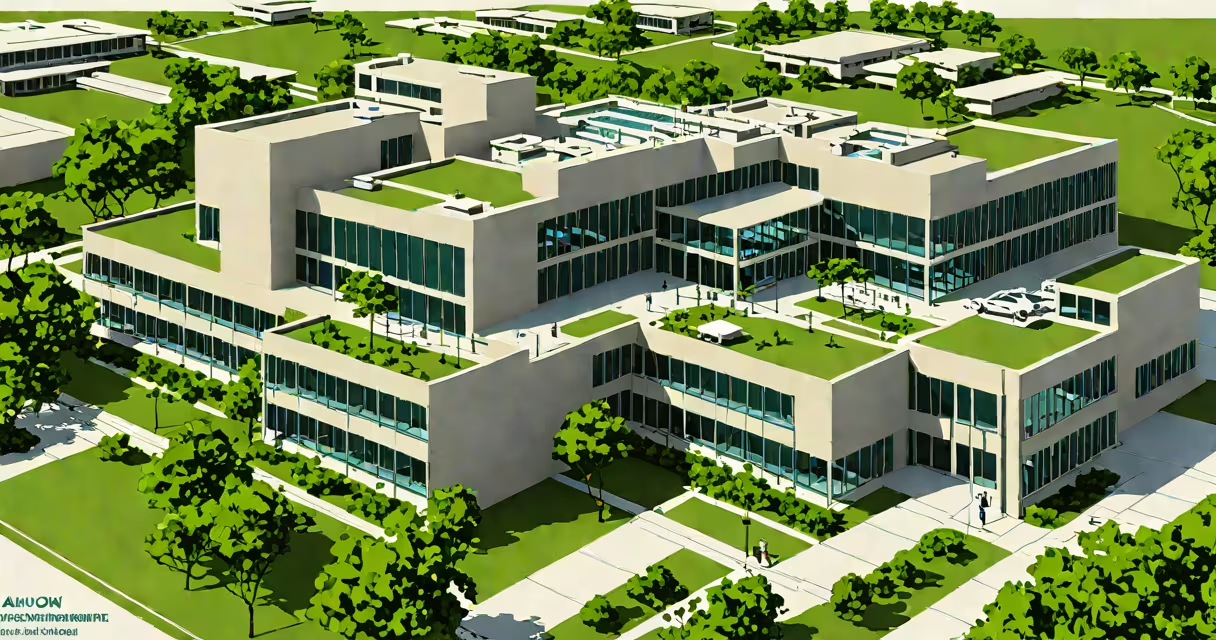
Avalon University School of Medicine (AUSOM) is a private, internationally accredited medical school located in Aruba that grants the Doctor of Medicine (MD) degree. It follows a U.S.-style curriculum and prepares graduates for U.S. medical licensure and residency through the NRMP match.
AUSOM was established in 2006 and operates under the oversight of the Ministry of Health of Aruba. The institution delivers a four-year MD program structured similarly to U.S. medical schools, with two years of preclinical coursework followed by two years of clinical rotations. Students complete their clinical training in the United States, primarily in New York, New Jersey, Pennsylvania, and Florida, at affiliated teaching hospitals.
The school is recognized by the World Directory of Medical Schools (WDOMS), which is maintained by the World Health Organization (WHO) and the Educational Commission for Foreign Medical Graduates (ECFMG). This listing confirms AUSOM's eligibility for U.S. medical licensing exams, including the USMLE Step 1, Step 2 CK, and Step 2 CS.
AUSOM admits students based on undergraduate GPA, MCAT scores, letters of recommendation, and personal statements. The admissions process mirrors that of U.S. medical schools, though applicants are not required to have completed a U.S. bachelor's degree. International students may apply with degrees from accredited institutions abroad.
Preclinical instruction occurs in Aruba and covers core subjects such as anatomy, physiology, biochemistry, pharmacology, and pathology. The curriculum uses a systems-based approach, integrating basic sciences with clinical applications early in the program. Students engage in small-group learning, problem-based tutorials, and standardized patient simulations.
Clinical rotations begin in the third year and take place at U.S. hospitals. Rotations include internal medicine, surgery, pediatrics, psychiatry, obstetrics-gynecology, and family medicine. Students must complete at least 12 months of clerkships in approved U.S. sites to meet ECFMG requirements for residency application.
AUSOM offers a single MD program with no dual-degree options. The program is full-time, lasting four academic years. All courses are delivered in English. There are no part-time or online tracks.
| Program Phase | Duration | Location | Key Activities |
|---|---|---|---|
| Preclinical (Years 1-2) | 24 months | Aruba | Lecture-based instruction, labs, assessments, and early clinical exposure |
| Clinical Rotations (Years 3-4) | 24 months | U.S. hospitals | Core clerkships, electives, USMLE preparation, residency applications |
Students must pass the USMLE Step 1 and Step 2 CK to progress. The school provides dedicated exam prep resources, including practice tests, review courses, and tutoring. AUSOM reports a 78% first-attempt pass rate for Step 1 over the past five years, according to internal data shared with the ECFMG.
AUSOM is accredited by the Accreditation Commission on Colleges of Medicine (ACCM), a regional accrediting body recognized by the World Federation for Medical Education (WFME). This recognition allows AUSOM to participate in the ECFMG Certification Program, which is required for U.S. residency applications.
Despite being accredited by a WFME-recognized body, AUSOM is not listed in the U.S. Department of Education's database of accredited institutions. This means graduates cannot qualify for federal student loans in the U.S., a key difference from U.S.-based medical schools.
Some applicants confuse AUSOM with unaccredited schools. AUSOM is listed in the WHO's WDOMS and the ECFMG's list of eligible medical schools. Verification is available via the ECFMG website using the school's official name and country of origin.
One widespread error is assuming that all Caribbean medical schools are equivalent. AUSOM differs from schools with lower USMLE pass rates or limited U.S. clinical rotation access. For example, while some schools offer clinical training in rural or underserved areas, AUSOM partners with hospitals in high-volume urban centers, giving students exposure to diverse patient populations.
Another misconception is that graduating from a Caribbean school automatically limits career opportunities. AUSOM graduates have matched into competitive residencies in specialties such as dermatology, orthopedic surgery, and emergency medicine. In 2023, 62% of AUSOM's graduating class secured residency positions through the NRMP match, including placements in top-tier programs.
During my time reviewing residency applications, I observed that AUSOM candidates often perform well in interviews due to strong clinical experience and clear articulation of their goals. One graduate matched into a neurology residency at a major academic center in New York City after completing three rotations in large urban hospitals.
When comparing AUSOM to other international medical schools, several factors stand out:
| Factor | Avalon University School of Medicine | American University of the Caribbean School of Medicine | OUWB School of Medicine |
|---|---|---|---|
| Location | Aruba | Caribbean (St. Martin) | Michigan, USA |
| Accreditation Body | ACCM (WFME-recognized) | LCME (U.S. standard) | LCME (U.S. standard) |
| USMLE Step 1 Pass Rate (2023) | 78% | 82% | 94% |
| Residency Match Rate (2023) | 62% | 79% | 91% |
| U.S. Clinical Rotations | Yes (12+ months) | Yes (12+ months) | Yes (12+ months) |
While AUSOM shares similarities with institutions like the American University of the Caribbean School of Medicine, it is not accredited by the LCME-the same body that accredits U.S. medical schools. This distinction affects eligibility for certain federal funding streams and state medical board applications.
For comparison, OUWB School of Medicine (Oakland University William Beaumont School of Medicine) is a U.S.-based institution with LCME accreditation. Its graduates are eligible for federal loans and have higher match rates, particularly in competitive specialties. However, AUSOM offers a faster path to clinical training and lower tuition costs compared to many U.S. schools.
Avalon University School of Medicine is a viable option for students seeking a U.S.-aligned MD program with clinical training in the United States. It meets the minimum standards for ECFMG certification and residency matching. However, applicants must understand that graduation does not guarantee a U.S. residency spot, and success depends on performance on licensing exams and interview readiness.
Students should verify the school's current accreditation status through the ECFMG website and confirm that their intended U.S. clinical rotation sites are approved by the ECFMG. Financial planning is critical-without access to U.S. federal loans, students must rely on private financing or scholarships.
Understanding Avalon University School of Medicine requires separating myth from verified facts. The school is accredited, its graduates take U.S. licensing exams, and they enter U.S. residencies. But success hinges on individual effort, not institutional prestige alone.