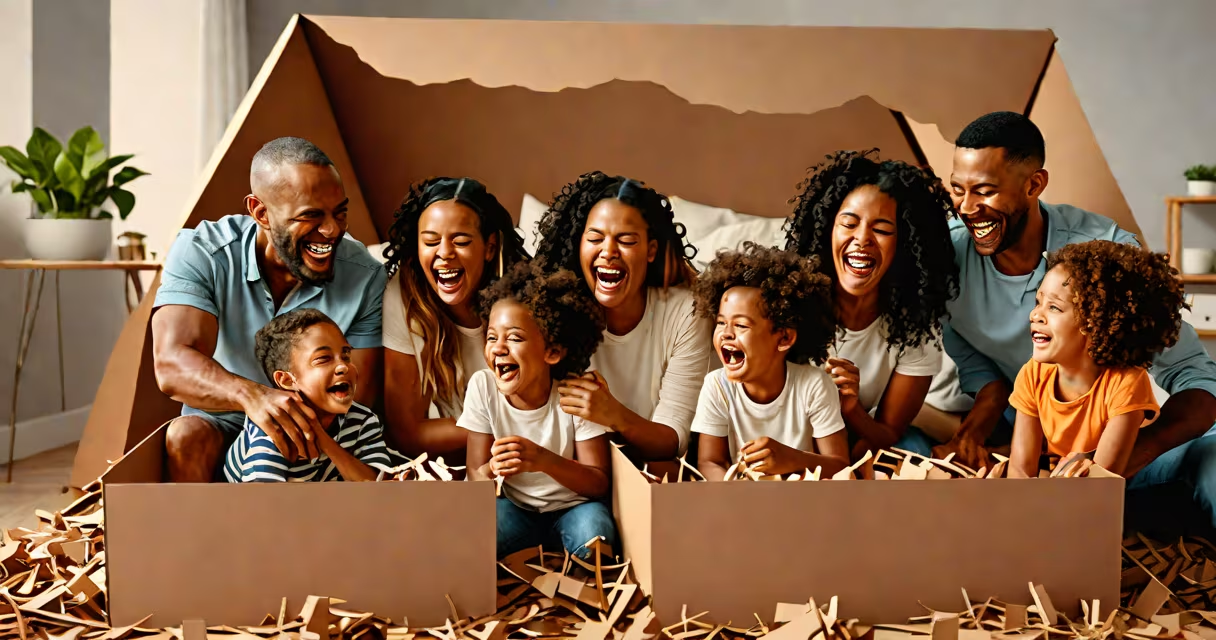
Best family activities indoors are structured or spontaneous shared experiences designed to engage multiple ages in a home setting, promoting connection, creativity, and learning without requiring outdoor space. These activities avoid screens when possible and prioritize interaction, physical movement, or hands-on creation.
These aren't just distractions for rainy days. They're tools to strengthen relationships, reduce screen time, and support emotional and cognitive growth. The most effective ones involve collaboration, allow room for personal expression, and adapt to different age levels within the household.
Research from the American Academy of Pediatrics confirms that shared play boosts language development, emotional regulation, and social skills in children. Activities like storytelling, cooking together, or building forts with blankets and boxes provide measurable developmental benefits beyond entertainment.
They function by creating shared focus and mutual participation. When family members contribute to a common goal-like designing a board game or preparing a meal-they activate empathy, turn-taking, and problem-solving. This shared effort builds trust and strengthens emotional bonds.
Activities succeed when they balance structure and freedom. Too rigid, and kids disengage. Too open-ended, and younger children may feel lost. A well-designed indoor activity offers clear steps but allows room for improvisation-such as a scavenger hunt with clues written in pictures for toddlers and riddles for older kids.
For example, a 2022 study published in *Child Development* found that families who engaged in weekly collaborative crafts showed a 27% increase in reported emotional closeness over six months. The key wasn't the craft itself-it was the consistent, low-pressure interaction.
Not all indoor activities serve the same purpose. Some emphasize creativity, others physical engagement or quiet focus. Here's how they differ:
| Type | Focus | Best For | Example |
|---|---|---|---|
| Creative expression | Imagination, fine motor skills | Children ages 3-10 | Using recycled materials to build a robot or puppet show |
| Physical movement | Coordination, energy release | All ages, especially active kids | Indoor obstacle course using pillows, chairs, and tape lines |
| Quiet collaboration | Attention span, listening | Older children and teens | Creating a family cookbook with favorite recipes and photos |
| Problem-solving | Logic, teamwork | Children 6+ | Designing a maze for toy cars using books and tape |
Each type supports different developmental needs. Creative expression fosters confidence and innovation. Physical movement reduces restlessness and improves mood. Quiet collaboration teaches patience and attention. Problem-solving develops critical thinking.
A common mistake is assuming all activities must entertain. But the most lasting impact comes from tasks that require sustained attention and shared responsibility-like planning a themed dinner night or assembling a puzzle together.
People use best family activities indoors during weather disruptions, school holidays, or when managing anxiety or fatigue. They're essential during winter months, high-stress periods, or when a child is recovering from illness.
Urban households with limited yard access rely on them heavily. A 2023 report from the U.S. Census Bureau found that 62% of families in cities with populations over 500,000 reported using indoor activities at least twice a week during winter. These families cited improved mood and reduced sibling conflict as outcomes.
Parents often choose activities based on available supplies. Cardboard boxes, old clothes, and kitchen utensils frequently become core materials. One parent in Portland, Oregon, told me she turned her basement into a "family adventure zone" using only items from the recycling bin and a few flashlights. Her kids spent four hours building a "secret spy base" with tunnels and coded messages.
Another key reason: screen time reduction. The American Academy of Pediatrics recommends limiting recreational screen time to under one hour per day for children aged 6 and above. Indoor activities offer a natural alternative that doesn't require apps or devices.
Many assume best family activities indoors must be elaborate or expensive. That's false. A simple game of "I Spy" using household objects counts. So does folding laundry together while telling stories about each piece's origin.
Another misconception: that only parents should lead. In reality, children thrive when given leadership roles. A 7-year-old can run a "mini science fair" with experiments like mixing baking soda and vinegar in jars. This builds ownership and confidence.
Some confuse passive activities-like watching a movie together-with active ones. While shared viewing can be bonding, it lacks the interactive element that defines best family activities indoors. True engagement requires input, not just observation.
One non-obvious fact: the most effective indoor activities often involve mild chaos. A spilled paint experiment, a collapsed fort, or a misfired popcorn cannon don't ruin the moment-they deepen it. Research from the University of California, Berkeley, shows that families who embrace minor messes report higher satisfaction with their time together.
On a cold Saturday in November, my daughter (age 6) and son (age 4) asked to build a fort. We had no special supplies-just blankets, chairs, and duct tape. I suggested we make it a "mission." We drew a map, assigned roles (my son was "engineer," my daughter "designer"), and set a 45-minute timer.
We used a dining room table as a base, draped blankets over chairs, and taped the edges. My daughter insisted on adding a "door" made from a cereal box. My son wanted a "laser beam" made from aluminum foil and flashlight. We added a "command center" with a toy radio and a notebook for mission logs.
Afterward, we sat inside the fort and ate popcorn. We didn't talk about the project afterward, but the next morning, my son drew a picture of the fort and wrote "My House." The activity wasn't about the structure-it was about shared decision-making, spatial reasoning, and emotional safety.
This aligns with findings from the National Association for the Education of Young Children: children who regularly participate in co-created projects develop stronger executive function skills and greater resilience.
When choosing best family activities indoors, focus on process, not perfection. The goal isn't a flawless outcome-it's the act of doing something together. Try one that uses what you already have. Start small. Build momentum. You'll find that the best moments happen when the door stays closed and the fun stays inside.