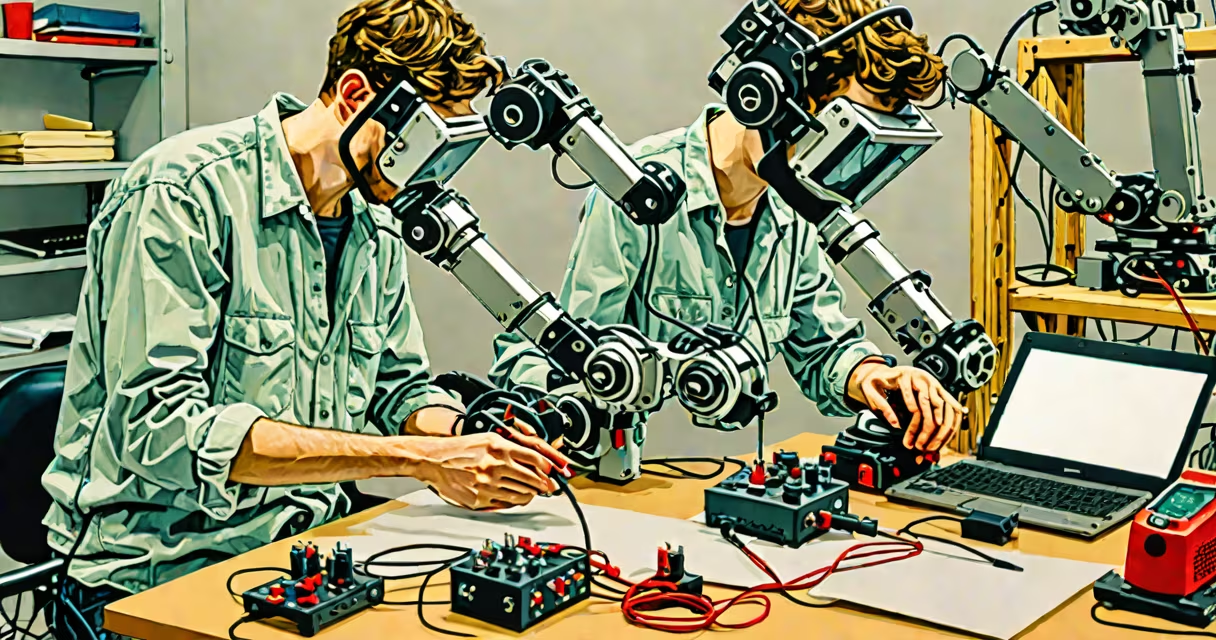
A bs in mechatronics engineering is an undergraduate degree that integrates mechanical engineering, electrical engineering, and computer science to design and build smart, automated systems such as robots, industrial control systems, and autonomous vehicles. The program emphasizes hands-on design, programming, and system integration across physical and digital domains.
Students in this program learn to analyze and solve complex problems involving motion, sensors, actuators, feedback loops, and embedded software. Core courses include dynamics, circuit theory, microcontroller programming, control systems, and robotics. Graduates can work in industries ranging from automotive manufacturing to medical device development, where intelligent machines improve efficiency and precision.
The curriculum typically spans four years of full-time study. Students complete labs, capstone projects, and often internships with companies like Boston Dynamics, Tesla, or Siemens. Accreditation by ABET ensures programs meet national standards for engineering education.
Mechatronics engineering treats automation not as separate disciplines but as interconnected systems. A robot arm, for example, requires mechanical design for movement, electrical circuits to power motors, and software to interpret sensor input and adjust position in real time.
Coursework begins with foundational subjects: calculus, physics, and introductory programming. By the second year, students take specialized classes such as "Embedded Systems Design" and "Robotics Kinematics." In later semesters, they apply knowledge through team-based projects-like building a line-following robot using Arduino or Raspberry Pi platforms.
One key feature is the emphasis on real-world problem solving. At the University of Michigan's mechatronics lab, seniors design a solar-powered drone capable of going through obstacle courses using onboard cameras and PID controllers. This project integrates aerodynamics, battery management, and machine vision-all under a single design constraint.
While most bs in mechatronics engineering programs follow a standard structure, some institutions offer concentrations based on application areas. These specializations allow students to tailor their education toward specific industries.
| Type | Focus Area | Example Course | Industry Application |
|---|---|---|---|
| Industrial Automation | Factory robotics, PLC programming | Advanced Control Systems | Automotive assembly lines |
| Biomedical Robotics | Surgical robots, prosthetics | Human-Machine Interaction | Rehabilitation devices |
| Autonomous Vehicles | LIDAR processing, path planning | Perception and Decision Making | Self-driving car development |
| Consumer Electronics | Smart home systems, wearable tech | Low-Power Embedded Design | IoT product development |
Some schools offer dual-degree tracks. For instance, Georgia Tech allows students to pair their bs in mechatronics engineering with a minor in artificial intelligence, enabling them to focus on adaptive control algorithms and neural network integration in robotic systems.
Industries rely on mechatronics engineers to develop systems that operate with minimal human intervention. In manufacturing, automated guided vehicles (AGVs) transport materials across facilities using laser navigation and obstacle avoidance software. These systems are designed by mechatronics teams who balance weight, speed, energy consumption, and reliability.
In healthcare, mechatronics enables innovations like robotic-assisted surgery tools. The da Vinci Surgical System uses multiple arms controlled via a surgeon's hand movements, with real-time feedback from force sensors and video streams. Engineers trained in mechatronics contribute to the design of the mechanical joints, motor control, and safety interlocks.
One overlooked fact: mechatronics is not limited to large-scale machinery. A small startup in Austin developed a smart wheelchair that adjusts seat height and tilt based on terrain detected by ultrasonic sensors. The team included two recent graduates with bs in mechatronics engineering who designed the control logic and tested prototypes in real homes.
Many assume mechatronics is synonymous with robotics. While both involve moving machines, robotics focuses on autonomy and behavior-such as teaching a robot to walk or recognize faces. Mechatronics centers on the integration of hardware and software to achieve precise, reliable function within physical constraints.
Another misconception is that the degree only leads to factory jobs. In reality, graduates work in diverse fields. According to the National Science Foundation, 38% of mechatronics graduates enter roles in research and development, 22% join startups, and 15% pursue graduate school in areas like biomechanics or AI-driven automation.
There's also confusion about course difficulty. Because the field blends math, physics, and coding, students may struggle early on. But success comes from consistent practice. During my time as a teaching assistant at Penn State, I saw students who initially failed their first circuits exam go on to lead senior design teams by graduation-after attending weekly review sessions and building breadboard prototypes every weekend.
Understanding how bs in mechatronics engineering differs from related degrees helps clarify its unique value.
| Program | Distinguishing Features | Typical Career Paths |
|---|---|---|
| bs in mechanical engineering | Focuses on materials, stress analysis, and structural design. Less emphasis on electronics and software. | Product design, HVAC systems, aerospace components |
| bs in electrical engineering | Deep focus on circuits, signals, and power systems. Limited exposure to mechanical systems. | Power grid operations, semiconductor design, telecommunications |
| bs in computer engineering | Emphasis on processors, memory architecture, and low-level software. Minimal training in physical systems. | Firmware development, chip design, embedded security |
| bs in mechatronics engineering | Integrates all three domains. Requires proficiency in CAD modeling, sensor calibration, and real-time programming. | Robotics, industrial automation, smart device development |
For example, a mechatronics graduate might design a self-balancing scooter using gyroscopes, brushless motors, and a PID algorithm running on a microcontroller. A mechanical engineer would focus on frame strength and wheel alignment. An electrical engineer would handle power distribution. A computer engineer would write the firmware. Only a mechatronics engineer brings all elements together under one design process.
Admission typically requires strong performance in high school math and science. Many programs require a portfolio of personal projects, such as a programmable LED display or a motorized turntable controlled via smartphone app. These demonstrate initiative and basic technical fluency.
Graduates earn salaries averaging $76,000 annually in the U.S., according to the Bureau of Labor Statistics (2023). Entry-level positions in automation and robotics pay $65,000-$85,000 depending on location and company. The demand for mechatronics professionals continues to grow, driven by advancements in Industry 4.0 and smart manufacturing initiatives.
A bs in mechatronics engineering equips individuals to build systems that sense, think, and act-bridging the gap between physical machines and intelligent software. It is not just a degree in engineering. It is a foundation for shaping the future of automation.