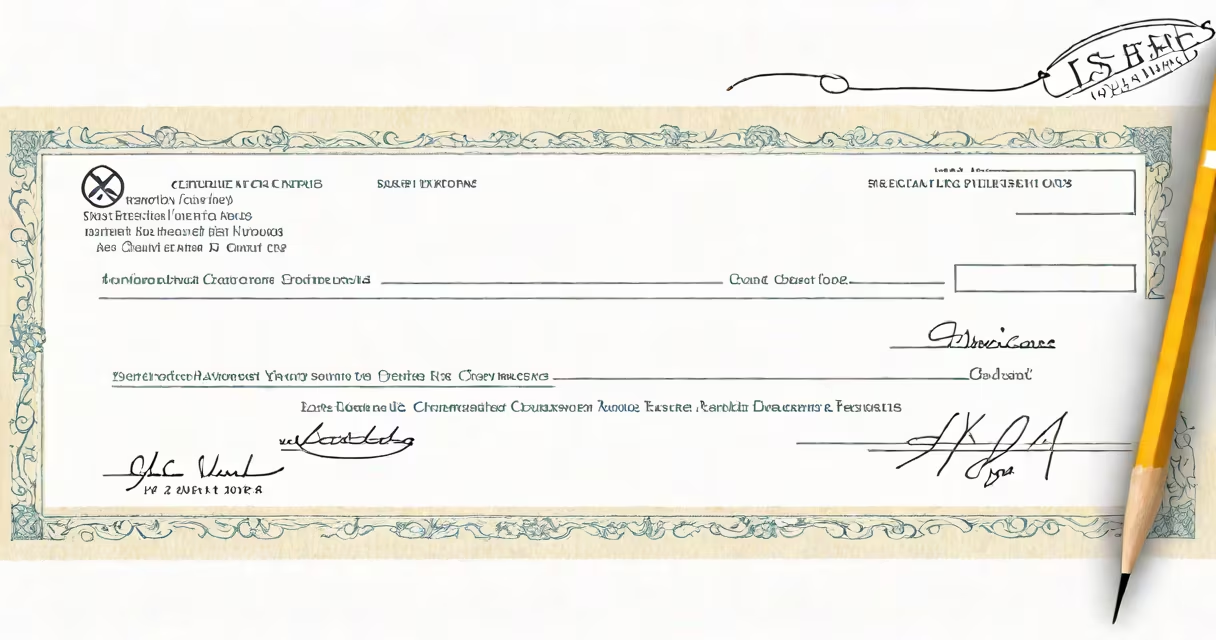
A cheque en blanco is a negotiable instrument issued with the payee name and amount left blank, enabling the holder to complete both fields later. This form of payment is legally recognized in Spain and several Latin American countries but carries significant risk due to potential misuse.
In practice, a cheque en blanco is typically signed by the issuer but lacks specific details required for immediate cashing. The absence of the payee's name and the amount makes it transferable, but not immediately valid unless completed properly. It functions as a conditional promise to pay, subject to completion and acceptance by the bank.
Under Spanish Civil Code Article 618, a cheque must contain the date, amount, and payee name to be enforceable. A blank cheque violates this requirement until filled out. Once completed, it becomes a standard negotiable instrument governed by the same rules as any other cheque.
The process begins when a person or entity signs a cheque but leaves the payee and amount fields empty. The signer retains control of the document and may later authorize someone else to fill in the missing details. Completion requires the payee's name and exact amount written in ink, along with the signature matching the one on file.
Banks do not honor a cheque en blanco unless it is properly completed and verified. Even then, the bank may refuse payment if the account lacks funds or if the signature doesn't match. The payee must deposit or cash the cheque within six months of issue, or it expires under Spanish law.
For example, a business owner issues a cheque en blanco to an employee for travel expenses. The employee fills in their name as payee and $850 as the amount. The employer's bank verifies the signature and account balance before processing the payment. If the account has insufficient funds, the cheque is returned unpaid.
Cheques en blanco are used primarily in private agreements, informal lending, and employment-related disbursements. They are not common in formal commercial transactions due to fraud risks. In Spain, they are often used by individuals who need to make payments but lack immediate access to funds.
| Type | Use Case | Risk Level | Legal Status |
|---|---|---|---|
| Personal | Gifts, family loans, emergency expenses | High | Valid if completed correctly |
| Employment | Travel advances, expense reimbursements | Medium-High | Permitted with internal approval |
| Business | Supplier payments, contractor disbursement | Very High | Prohibited in most contracts |
Despite their utility, cheques en blanco are discouraged in formal settings. The Spanish Ministry of Justice warns that incomplete instruments increase the likelihood of forgery and unauthorized use. According to a 2021 report by the Banco de España, 14% of reported cheque fraud cases involved blank instruments, mostly in personal and domestic contexts.
Many assume a cheque en blanco is equivalent to a loan agreement or a power of attorney. It is not. While it authorizes payment, it does not grant authority to manage accounts or sign other documents. The holder cannot alter the account holder's instructions beyond completing the cheque.
Another myth is that a blank cheque is automatically valid once signed. This is false. A signed blank cheque remains unenforceable until the payee and amount are filled in. Without these, the bank will reject it during clearance. Even if accepted, the payee can challenge the amount or identity of the payee in court.
A critical distinction: a cheque en blanco is not a credit line. It does not allow ongoing access to funds. Each cheque must be issued separately and cleared individually. The holder cannot withdraw money repeatedly from the same document.
I once observed a case in Barcelona where a man handed his daughter a signed cheque en blanco for €1,200. She filled in her name and the amount, intending to buy a car. The bank processed it, but the seller refused to accept it because the date was missing. The daughter had to return to the bank to have the cheque reissued with a proper date.
This incident highlights a key rule: even a completed cheque en blanco must meet all legal requirements. The Spanish Civil Code mandates that a cheque include the date, amount in words and figures, payee name, and signature. Missing any element invalidates the instrument.
Contrary to popular belief, a cheque en blanco is not inherently illegal. It is legally permissible under Article 618 of the Spanish Civil Code, provided it is completed correctly and within the validity period. However, misuse can lead to criminal charges under Article 248 of the Spanish Penal Code, which covers fraudulent use of negotiable instruments.
Another overlooked point: the drawer (issuer) remains liable for the full amount regardless of who completes the cheque. If the payee alters the amount or name, the original issuer is still responsible to the bank and can be sued for the difference.
Finally, many think that a blank cheque can be used internationally. This is untrue. Most foreign banks do not recognize Spanish cheques en blanco unless they are converted into certified or guaranteed instruments through a correspondent bank.
Understanding cheque en blanco requires recognizing both its flexibility and its danger. It is a tool, not a solution. When used responsibly, it offers a way to transfer funds quickly. When misused, it enables theft, fraud, and financial loss.
Always verify the completeness of any cheque before signing or accepting it. A cheque en blanco is not a blank check in the sense of unlimited authority-it is a conditional instrument with strict limits under civil law.